2026-11-04 インペリアル・カレッジ・ロンドン(ICL)
英国インペリアル・カレッジ・ロンドンの研究チームは、折りたたみ式自転車ヘルメットと通常型ヘルメットの頭部保護性能を比較し、折りたたみ式は平均的に重大な頭部損傷に対する保護性能が低いことを明らかにした。研究では、市販のヘルメット30種類(通常型24種類、折りたたみ式6種類)を対象に、実際の事故を想定した4か所の衝撃試験を実施し、頭部の直線運動と回転運動による損傷リスクを評価した。その結果、頭蓋骨骨折などに関連する直線的な損傷リスクは、折りたたみ式が平均24%、通常型が20%だった。主な要因として、折りたたみ式は平均重量が461gと、通常型の294gより57%重いこと、回転衝撃を軽減する保護技術の搭載が少ないことが挙げられた。一方、回転保護技術MIPSを搭載した折りたたみ式製品は、30種類中2位の性能を示した。研究チームは、軽量化と回転保護技術の導入によって折りたたみ式の安全性を改善できると指摘している。なお、試験対象の全製品は既存の安全基準を満たしており、ヘルメットを着用すること自体が頭部保護に重要である。
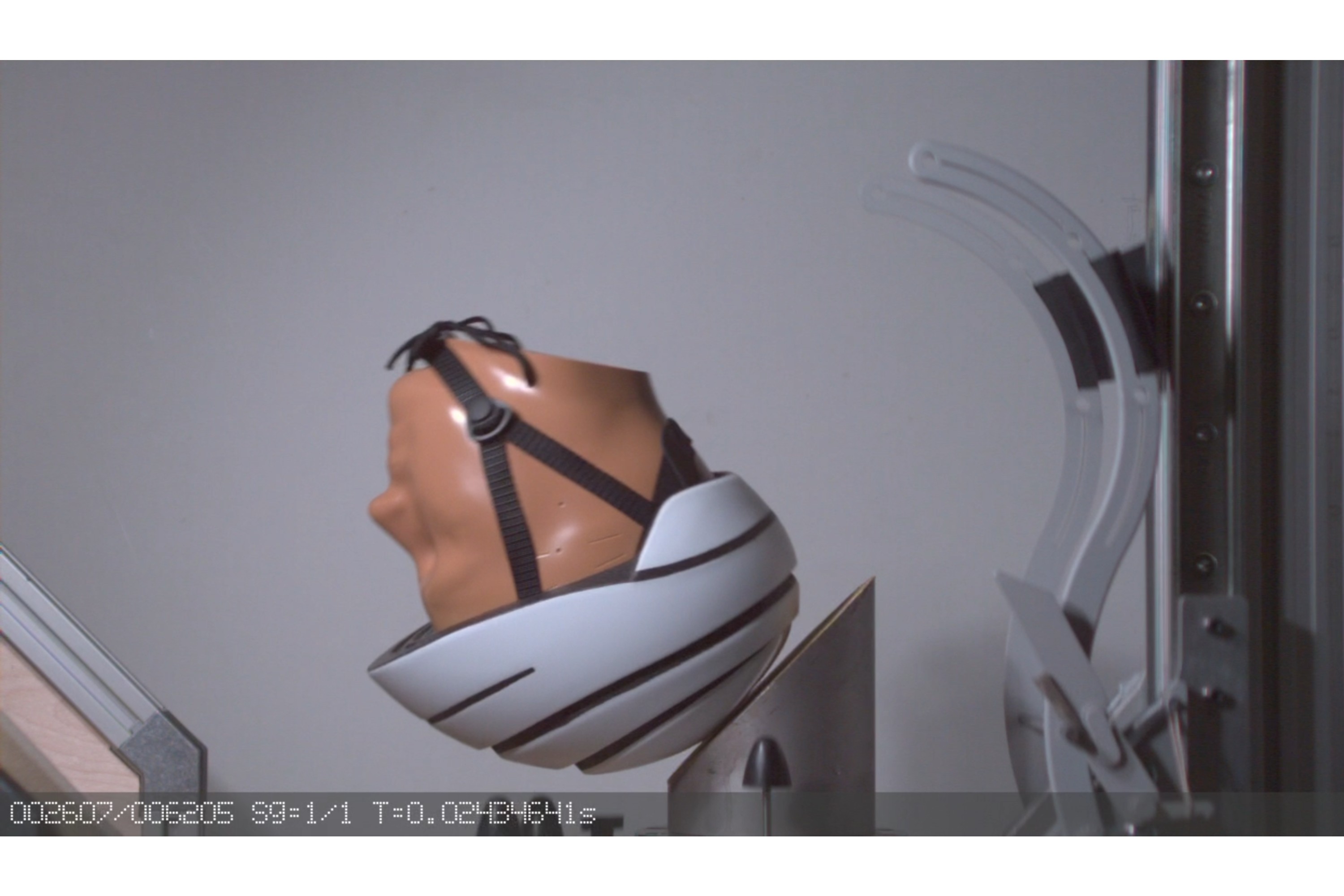
A collapsible bicycle helmet used for the study.
<関連情報>
- https://www.imperial.ac.uk/news/articles/2026/collapsible-bicycle-helmets-provide-less-protection-on-average-than-conventional-helmets-new-study-finds/
- https://www.sciencedirect.com/science/article/pii/S0001457526004239
折りたたみ式自転車ヘルメットは、従来のヘルメットと同様に頭部損傷に対する保護性能が高いのでしょうか? Are collapsible bicycle helmets as protective against head injuries as conventional designs?
William Dawber,Claire Baker,Xiancheng Yu,Mazdak Ghajari
Accident Analysis & Prevention Available online: 11 October 2026
DOI:https://doi.org/10.1016/j.aap.2026.108814
Highlights
- This is the first risk comparison of collapsible vs. conventional bicycle helmets.
- Greater risk in collapsible helmets is explained by mass and rotational protection.
- Helmet mass has a positive relationship with focal injury risk.
- Rotational protection technologies reduced focal and diffuse injury risks.
- A collapsible helmet with MIPS matched the most protective conventional designs.
Abstract
Collapsible bicycle helmets address portability as a barrier to helmet use, particularly for bicycle share scheme users, but whether they provide equivalent protection to conventional helmets is unknown. We determined whether head injury risk differs between designs and whether any difference is explained by mass and rotational protection technology.
Thirty commercially available helmets, 24 conventional and 6 collapsible, were tested at 6.5 m/s onto a 45° anvil at four locations using an EN 17950:2024 headform. AIS4 + linear and AIS2 + rotational injury risks were estimated from peak linear acceleration and Brain Injury Criterion (BrIC). Linear mixed effects models (360 observations; design as fixed effect, helmet ID as random effect) assessed injury risk before and after adjustment for mass and rotational technology.
Collapsible helmets had greater linear injury risk than conventional (0.242 ± 0.086 vs. 0.197 ± 0.051, p < 0.001), but this was non-significant after adjustment for mass and rotational protection. Rotational risk did not differ between designs. Collapsible helmets were heavier (461 ± 58 g vs. 294 ± 53 g), and mass predicted linear risk by + 0.002 per 10 g. Rotational technology reduced linear risk by − 0.026 and rotational risk by − 0.073 on average.
Collapsible helmets exhibited greater linear injury risk than conventional designs, potentially through their greater mass and the absence of rotational protection technology. These findings guide safer collapsible designs that have the potential to facilitate helmet use and reduce head injuries, particularly for bicycle share scheme users.