2025-11-18 アリゾナ大学
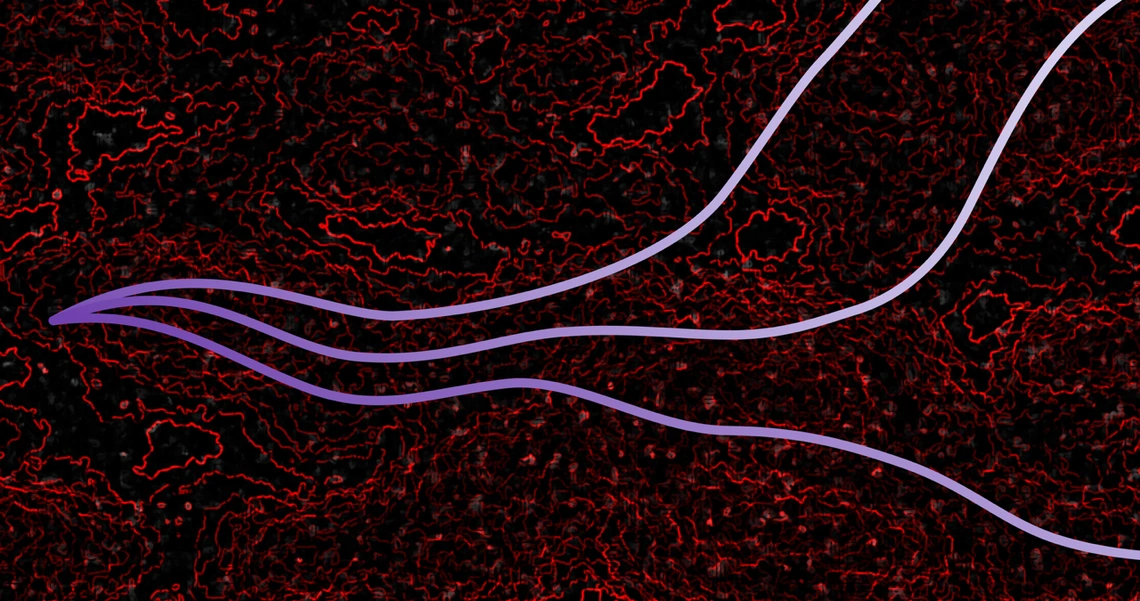
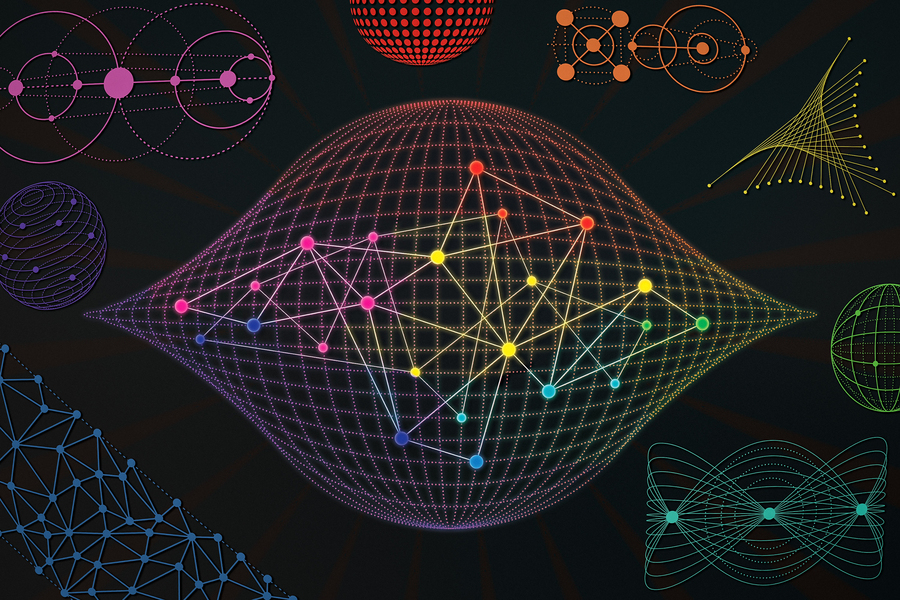
Light rays are propagating smoothly through a noisy, high-dimensional space in this artist’s impression. The new ray tracing algorithm improves on previous methods by better averaging information over trajectories, making it many orders of magnitude faster for quantifying uncertainties in large neural networks.Photo courtesy of Peter Behroozi
<関連情報>
- https://news.arizona.edu/news/university-arizona-astronomer-develops-novel-method-make-ai-more-trustworthy
- https://arxiv.org/abs/2510.25824
レイトレーシングサンプラー:誰でも使えるニューラルネットワークのベイジアンサンプリング The Ray Tracing Sampler: Bayesian Sampling of Neural Networks for Everyone
Peter Behroozi
arXiv Submitted on 29 Oct 2025
DOI:https://doi.org/10.48550/arXiv.2510.25824
Abstract
We derive a Markov Chain Monte Carlo sampler based on following ray paths in a medium where the refractive index (x) is a function of the desired likelihood L (x). The sampling method propagates rays at constant speed through parameter space, leading to orders of magnitude higher resilience to heating for stochastic gradients as compared to Hamiltonian Monte Carlo (HMC), as well as the ability to cross any likelihood barrier, including holes in parameter space. Using the ray tracing method, we sample the posterior distributions of neural network outputs for a variety of different architectures, up to the 1.5 billion-parameter GPT-2 (Generative Pre-trained Transformer 2) architecture, all on a single consumer-level GPU. We also show that prior samplers including traditional HMC, microcanonical HMC, Metropolis, Gibbs, and even Monte Carlo integration are special cases within a generalized ray tracing framework, which can sample according to an arbitrary weighting function. Public code and documentation for C, JAX, and PyTorch are available at https://bitbucket.org/pbehroozi/ray-tracing-sampler/src.