2026-07-17 東京都立大学
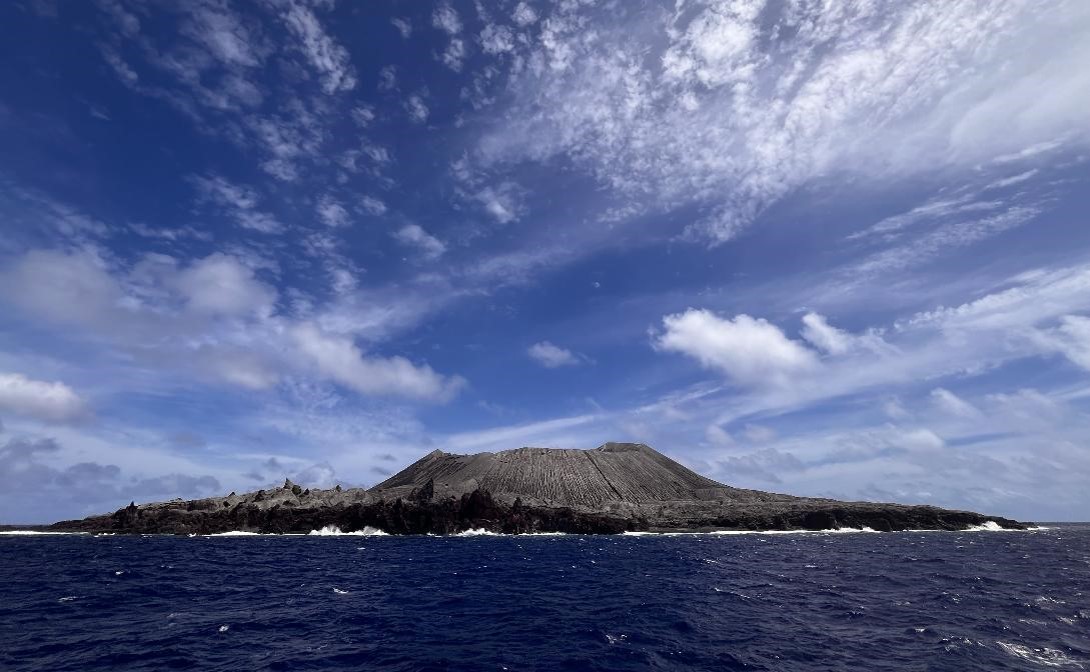
図1. 2025年に撮影された西之島の様子
<関連情報>
- https://www.tmu.ac.jp/news/topics/38718.html
- https://nsojournals.onlinelibrary.wiley.com/doi/10.1002/njb.05253
西之島における一次遷移中の蘚苔類とシダ類による初期定着 Initial colonization by bryophytes and ferns during primary succession on Nishinoshima, Japan
Shoki Murakami, Hideaki Mori, Shuntaro Kito, Kazuto Kawakami, Takashi Kamijo, Tomoyuki Nakano, Koji Takayama
Nordic Journal of Botany Published: 10 July 2026
DOI:https://doi.org/10.1002/njb.05253
Abstract
Volcanic islands that have experienced complete vegetation loss following recent eruptions provide rare opportunities to observe the earliest stages of ecosystem recovery. Nishinoshima, an oceanic island located approximately 1000 km south of mainland Japan, underwent major volcanic activity between 2013 and 2020, eradicating all pre-existing vegetation and covering the island with new lava. In July 2025, a brief landing survey was conducted on Nishinoshima. Small green patches were located, photographed, and sampled for morphological and molecular identification. Bryophytes and ferns were found growing in a few small patches on volcanic scoria near the coastal zone. These plants represent the earliest post-eruption establishment of spore-bearing vegetation on Nishinoshima. The presence of these taxa indicates that long-distance spore dispersal can initiate plant colonization even under extremely harsh abiotic conditions. Although terrestrial vegetation is currently compact, with a few small patches, these findings mark the onset of primary succession and provide a critical baseline for tracking subsequent plant community development and island biogeographic processes under extreme oceanic