2026-03-04 ブラウン大学
<関連情報>
- https://www.brown.edu/news/2026-03-04/kitchen-fluid-dynamics
- https://pubs.aip.org/aip/pof/article-abstract/38/3/033603/3381823/Thin-film-flow-in-the-kitchen
キッチンの薄膜フロー Thin film flow in the kitchen
Thomas T. Dutta;Jay X. Tang
Physics of Fluids Published:March 03 2026
DOI:https://doi.org/10.1063/5.0308586
Fluid dynamics is ubiquitous in the kitchen.
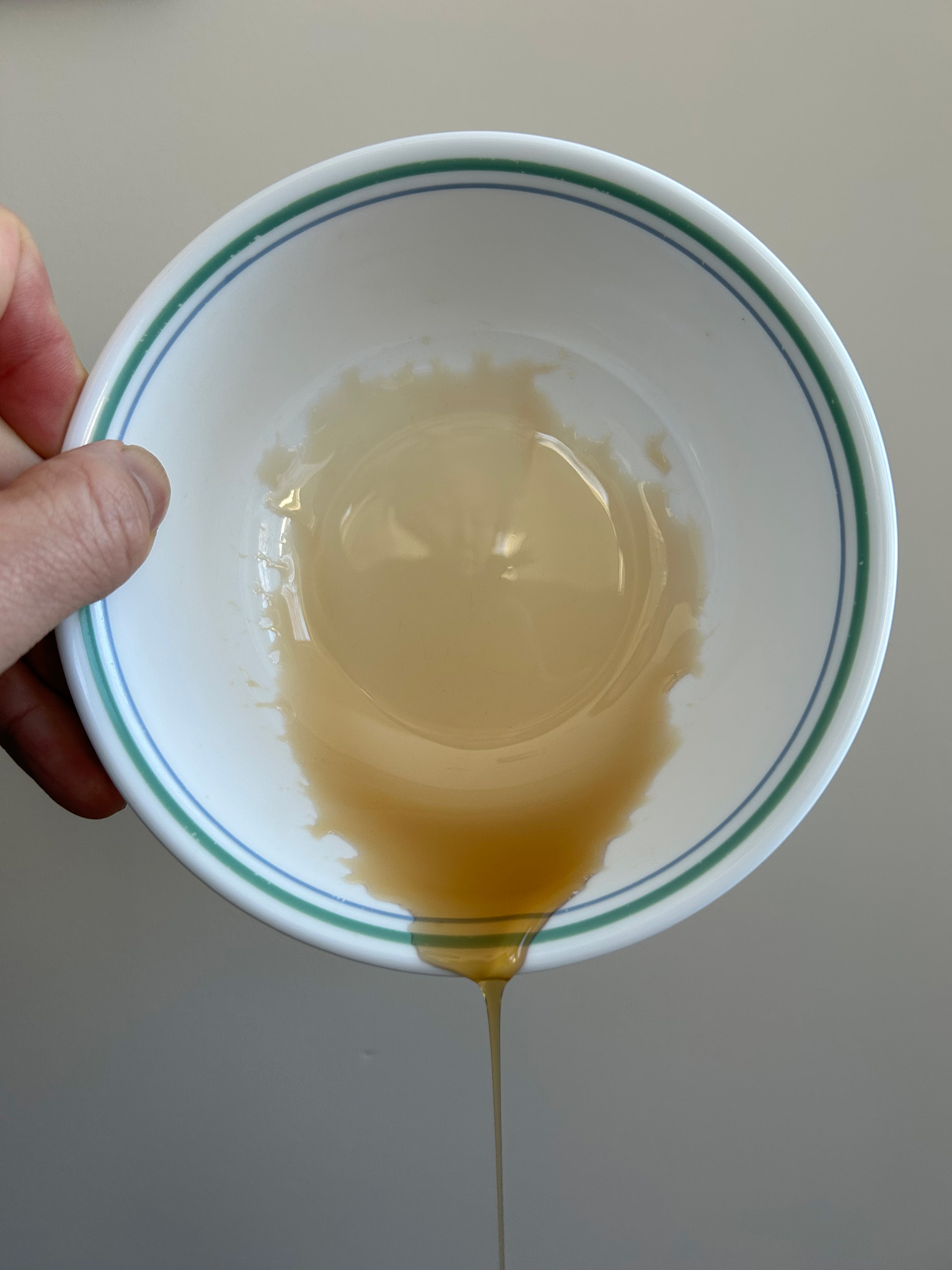
Here, we discuss examples of cultural kitchen practices that involve the hydrodynamics of a thin-film, namely, practices related to decanting residual fluids with varying viscosity from a carton and draining leftover water after washing a cooking pot to minimize rusting. By performing calculations on the thin-film equation and experiments in the kitchen, we show why it is hard to empty a jar or dry a wok by flipping them for just a brief instant of time. The duration of decantation to recover 91% of the residual fluid was estimated for a variety of kitchen fluids through experiments and theoretical calculations. By comparing the time scales of viscous flow and evaporation in the case of an iron wok, we discuss how a two-dump method reduces rusting of its inner surface by one order of magnitude. The results of our calculation based on thin-film fluid flow offer a quantitative justification for these traditional kitchen practices.