2026-02-16 スイス連邦工科大学ローザンヌ校(EPFL)
<関連情報>
- https://actu.epfl.ch/news/if-alien-signals-reached-earth-why-haven-t-we-seen/
- https://iopscience.iop.org/article/10.3847/1538-3881/ae394b
技術的種族との未検出の過去の接触:テクノシグネチャー科学への影響 Undetected Past Contacts with Technological Species: Implications for Technosignature Science
Claudio Grimaldi
The Astronomical Journal Published: 2026 February 16
DOI:10.3847/1538-3881/ae394b
Abstract
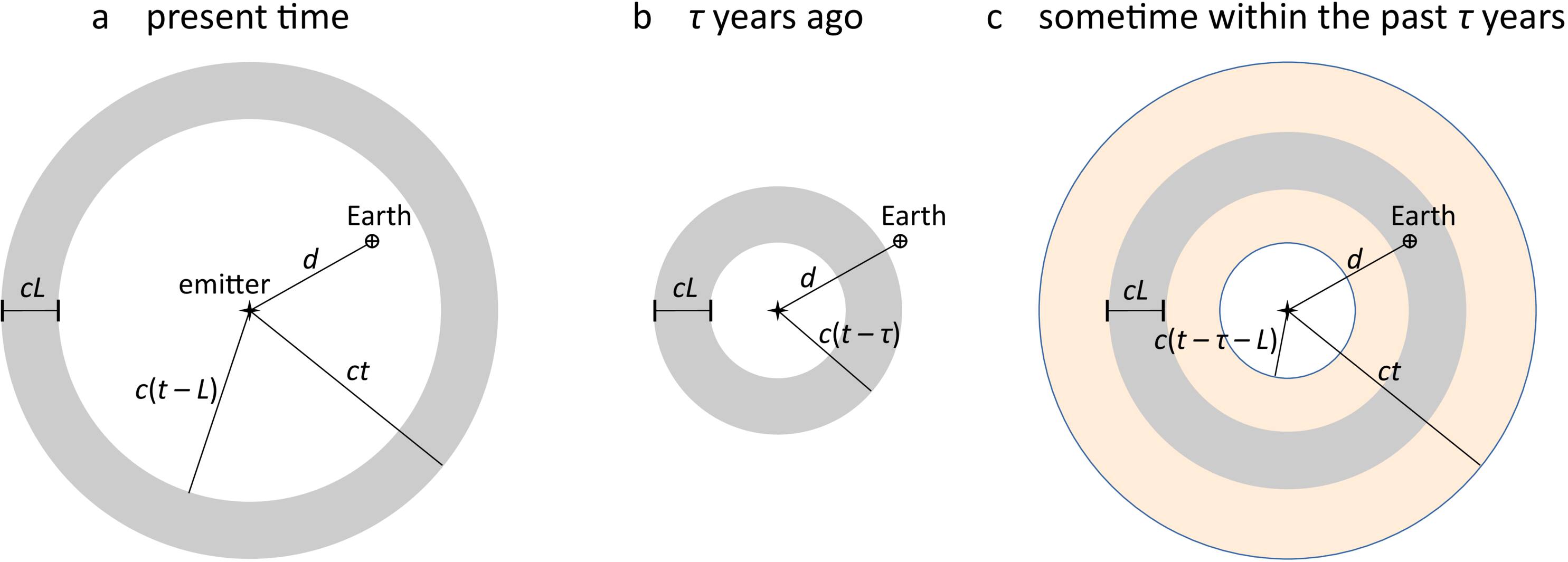
In the search for extraterrestrial intelligence (SETI), the highly incomplete sampling of the technosignature search space is often considered as a plausible explanation for the persistent lack of detections over six decades of searches. If correct, this would imply that technosignatures may already have reached Earth without being detected or correctly identified. Here, we explore this possibility using a Bayesian inference framework to estimate present-day detectability given n ≥ 1 undetected contacts over the past 65 yr—the period since the first SETI experiment. We show that achieving high detectability of technosignatures emitted within a few hundred light-years of Earth would require implausibly large n values, even exceeding the population of habitable planets within that range. More conservative estimates can be obtained only assuming that emitters are tightly clustered near Earth or that their population in the Milky Way has undergone a very recent and sudden boost. This tension is further exacerbated for short-lived technosignatures and persists whether they are omnidirectional, as in Dysonian megastructures, or directional, as in intentional communication attempts. These findings suggest that, if undetected past contacts from the Milky Way have indeed occurred, the best prospects of detection may lie in searches extending over several thousand light years, though only a few detectable technoemissions would be expected.