2025-11-05 バーミンガム大学
<関連情報>
- https://www.birmingham.ac.uk/news/2025/tie-climate-action-to-protecting-a-way-of-life-to-increase-motivation-study-says
- https://www.nature.com/articles/s44271-025-00332-4
心理的距離を縮めたり、システムの正当性に挑戦したりする心理的介入は、気候変動を緩和するための努力の動機を高める Psychological interventions that decrease psychological distance or challenge system justification increase motivation to exert effort to mitigate climate change
Jo Cutler,Luis Sebastian Contreras-Huerta,Boryana Todorova,Jonas Nitschke,Katerina Michalaki,Lina Koppel,Theofilos Gkinopoulos,Todd A. Vogel,Claus Lamm,Daniel Västfjäll,Manos Tsakiris,Matthew A. J. Apps & Patricia L. Lockwood
Communications Phycology Published:05 November 2025
DOI:https://doi.org/10.1038/s44271-025-00332-4
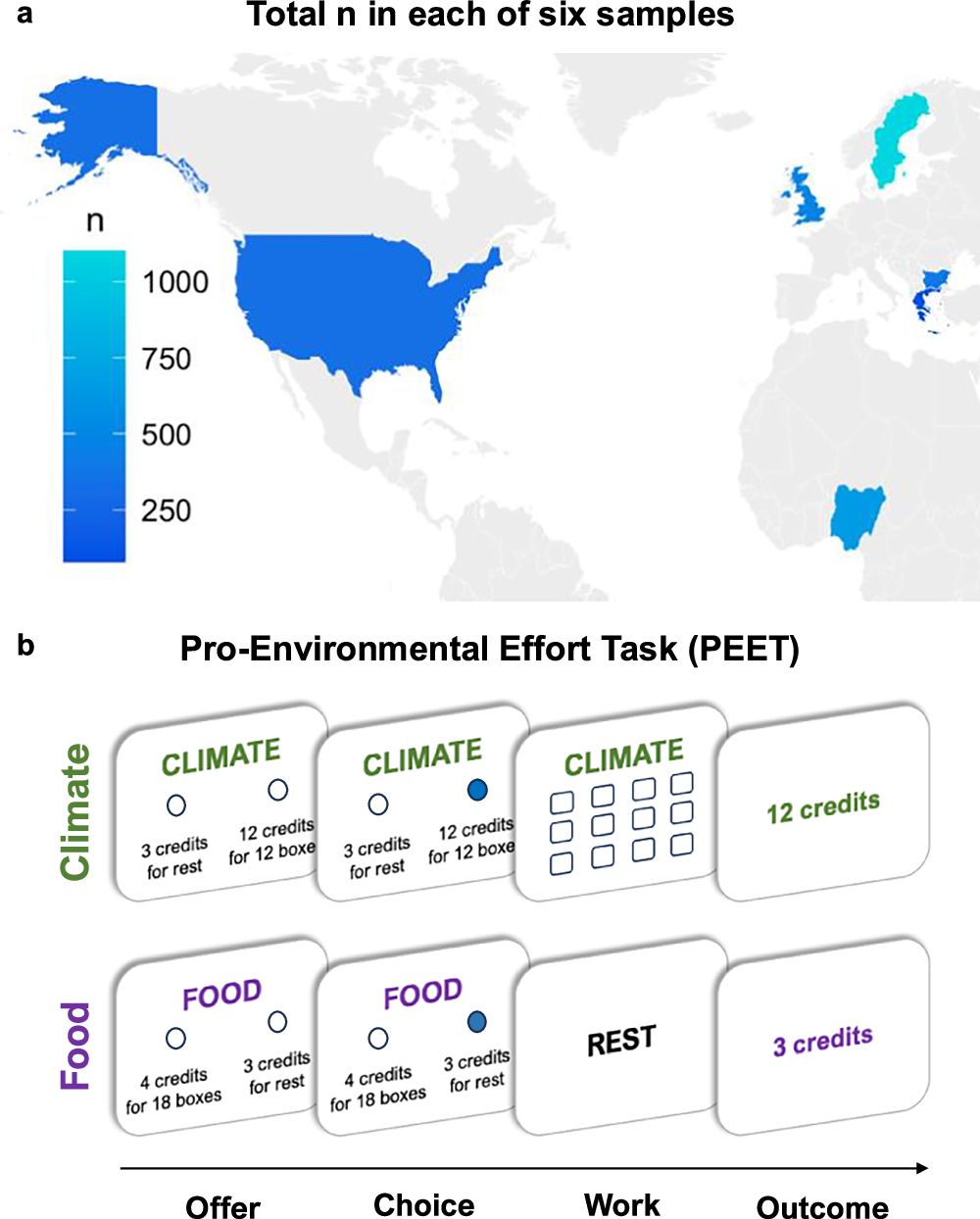
Abstract
Climate change is one of the biggest challenges facing humanity. To limit its damaging impacts, billions of people must take pro-environmental actions. However, these often require effort and people avoid effort. It is vital to identify psychological interventions that increase willingness to exert effort. 3055 people from six diverse countries completed an effort-based decision-making task (Pro-Environmental Effort Task; Bulgaria: n = 404, Greece: n = 85, Nigeria: n = 660, Sweden: n = 1090, UK: n = 482, USA: n = 334). Participants chose whether to exert physical effort (50-95% of their maximum) to reduce carbon emissions, after experiencing one of 11 expert crowd-sourced interventions or no intervention. We applied computational modelling to precisely quantify motivation to help the climate, compared to a closely matched non-environmental cause. We found two interventions, which reduced the psychological distance to climate change impacts or promoted climate action as patriotic and protecting participants’ way of life, had consistent positive effects on increasing effortful pro-environmental behaviours, across measures and control analyses. At the individual level, motivation to benefit the climate was associated with belief in climate change and support for pro-environmental policies. In contrast, trait apathy and effort aversion were linked with reduced motivation to benefit both the climate and food cause. Together, our results have crucial implications for promoting effortful actions that help mitigate climate change.