2025-10-09 北海道大学,国立極地研究所,東海大学
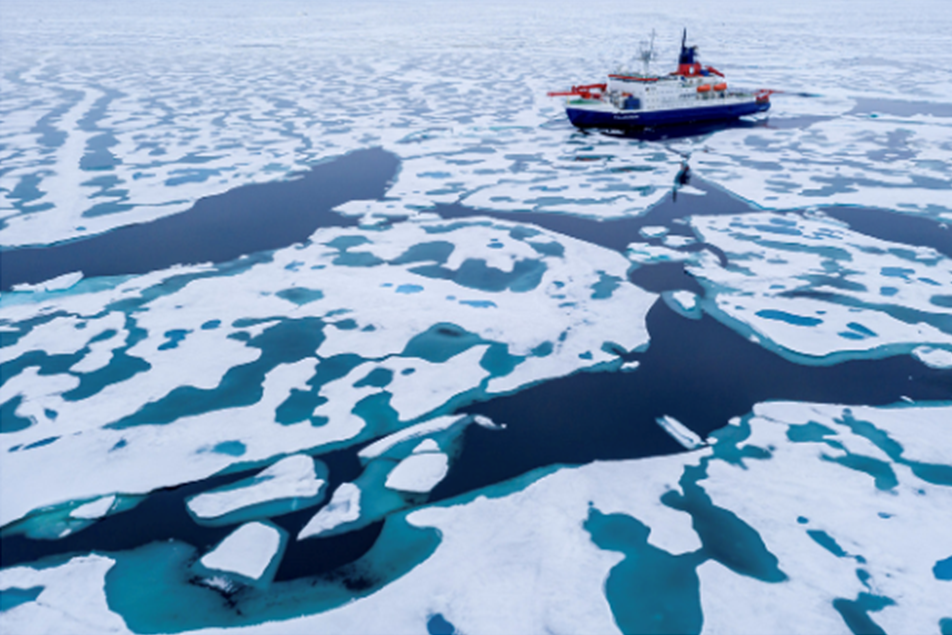
海氷上にできたメルトポンド(Steffen Graupner撮影)。
<関連情報>
- https://www.hokudai.ac.jp/news/2025/10/post-2082.html
- https://www.hokudai.ac.jp/news/pdf/251009_pr.pdf
- https://agupubs.onlinelibrary.wiley.com/doi/10.1029/2024JC022018
中央北極海におけるメルトポンドの栄養塩動態とメルトポンド直下海氷との関係 Melt Pond Nutrient Dynamics and Their Relationship With Melt Pond Bottom Ice in the Central Arctic Ocean
Ryota Akino, Daiki Nomura, Alison Webb, Yuhong Li, Manuel Dall’osto, Katrin Schmidt, Elise S. Droste, Emelia J. Chamberlain, Nikolai Kolabutin …
Journal of Geophysical Research: Oceans Published: 30 August 2025
DOI:https://doi.org/10.1029/2024JC022018
Abstract
Melt pond is a common and important feature of the Arctic in the summer season. Melt ponds provide unique microbial habitats with high light availability, which can promote photosynthesis. Therefore, melt ponds play an important role for nutrient cycling at the ice-ocean interface. However, the changes in nutrient dynamics in and under the sea ice resulting from melt pond formation are poorly understood. To elucidate melt pond nutrient (NO3−, NO2−, NH4+, PO43−, and Si(OH)4) dynamics and their relationship with the melt pond bottom ice, which is sea ice right beneath the floor of a melt pond, in the Central Arctic Ocean during late summer, melt pond water and bottom sea-ice samples were collected during the MOSAiC Expedition (2019–2020). Comparison with the dilution line based on winter surface seawater, which is a source of sea ice, suggest that nutrients in the melt ponds are consumed by algae or other organisms, and then remineralized at the pond bottom. Nutrients then percolated downward through the porous bottom ice. Melt pond water was completely exchanged with surrounding seawater (lead or under-ice seawater) and snow derived water. If the surrounding seawater and snow are rich in nutrients, the exchange promotes photosynthesis within the melt pond water and can enhance nutrient accumulation within the pond bottom ice.
Plain Language Summary
During the Arctic summer, surface sea ice melts, and the melt water forms puddles on top of the sea ice. These are known as melt ponds. In the past 10 years, the area of sea ice covered by melt ponds has been expanding in conjunction with global warming. Melt ponds are an important microbial habitat, where good light availability allows for algal growth, for which they need nutrients. Therefore, it is important to understand the characteristics and dynamics of nutrients in melt ponds. Here, we collected melt pond water and sea ice right beneath the floor of melt pond during the MOSAiC Expedition (2019–2020) and examined the vertical distribution of nutrient concentrations. Nutrients in melt pond water were consumed by algae at first, but the nutrient-depleted water was replaced with nutrient-richer surrounding seawater (underlying seawater or seawater of near lead) within a few weeks. Nutrient maxima occurred above the pond sea ice. This can be explained by organic matter decomposition at the bottom of the melt ponds, which regenerates nutrients. Our study provides new knowledge on nutrient cycling in melt ponds and under pond sea ice in the high Arctic.
Key Points
- Nutrients in melt ponds were consumed by algae to the extent that they were depleted
- Melt pond water was completely exchanged with surrounding seawater within a few weeks
- Organic matter produced in the melt pond settled and was remineralized at the bottom of melt pond