2025-08-25 アリゾナ大学
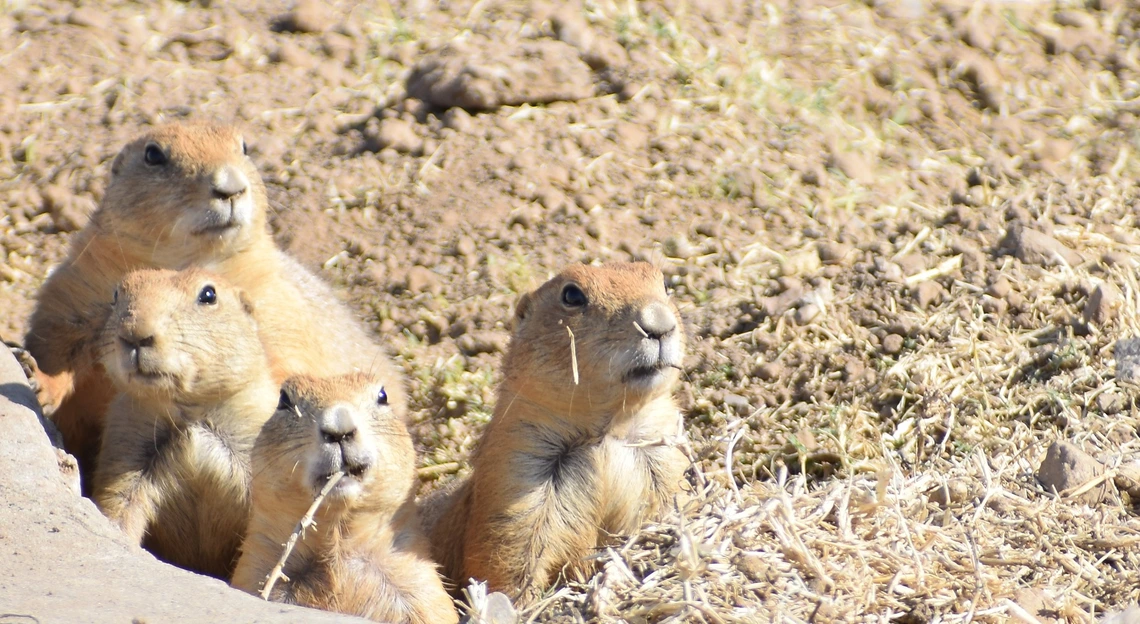
Courtney Duchardt/College of Agriculture, Life and Environmental Sciences
<関連情報>
- https://news.arizona.edu/news/what-can-prairie-dogs-teach-us-about-wildfire-management
- https://academic.oup.com/bioscience/advance-article-abstract/doi/10.1093/biosci/biaf125/8240135
攪乱の三角形:グレートプレーンズにおけるプレーリードッグ、火災、および有蹄類の放牧の相互作用的な役割 A disturbance triangle: The interactive role of prairie dogs with fire and ungulate grazing in the Great Plains
Courtney J Duchardt , Jacob D Hennig , Lauren M Porensky , Samuel D Fuhlendorf , J Derek Scasta , R Andrew Dreelin , Andy J Boyce , Victoria Poulton , David J Augustine
BioScience Published:25 August 2025
DOI:https://doi.org/10.1093/biosci/biaf125
Abstract
Global biodiversity declines have been hastened by suppression of once-widespread disturbance regimes. In recent decades, the restoration of the fire–grazing interaction has helped address declines in the North American Great Plains. Conversely, another historically ubiquitous disturbance agent, the black-tailed prairie dog (Cynomys ludovicianus), has received little attention. Although research exists on the interaction between large ungulates and prairie dogs, scant work recognizes the triangle of interactions among fire, large ungulates, and prairie dogs. On reviewing the literature, 34 sources discussed fire influencing prairie dogs, but only one empirically tested the effect of prairie dogs on fire. Despite this research gap, historical fire patterns, current fire management, and unpublished data indicate that prairie dogs likely reduce wildfire spread or intensity. We advocate for a paradigm shift in Great Plains rangeland management that considers prairie dogs as the third corner of a disturbance triangle and increased research on how prairie dogs influence fire behavior.