2026-07-23 ロッキーズ国立研究所(NLR)
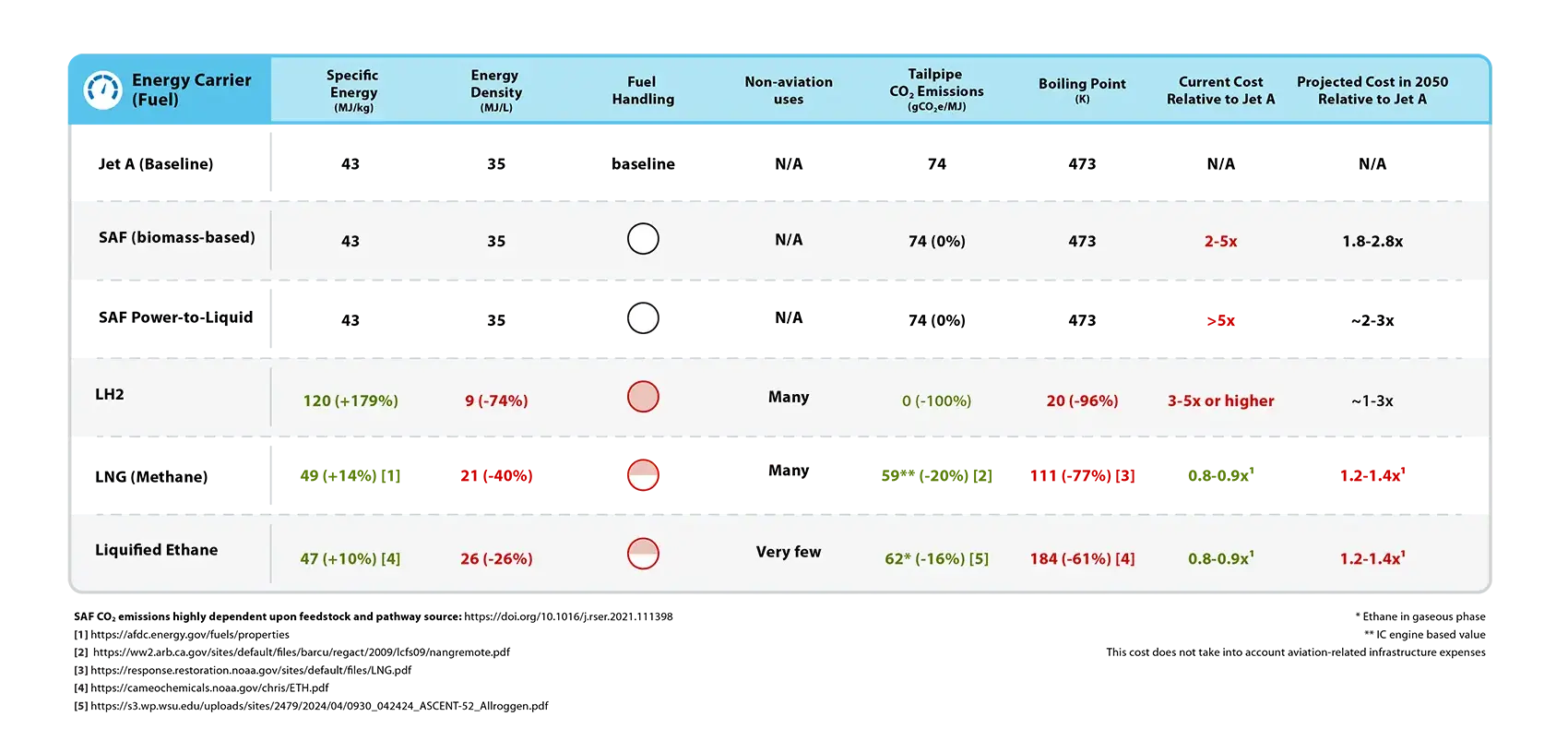
While emerging aviation fuels face headwinds, they share a common benefit: They can be produced from domestic resources rather than imported oil, helping to insulate the aviation industry—and consumers—from rising costs caused by volatile supply chains. Figure by National Laboratory of the Rockies
<関連情報>
- https://www.nlr.gov/news/detail/program/2026/as-jet-fuel-supplies-tighten-can-other-fuels-meet-demand
- https://docs.nlr.gov/docs/fy26osti/100028.pdf
将来の航空エネルギー輸送手段の可能性に関する概要 An Overview of Potential Future Aviation Energy Carriers
Kristi Moriarty, Justin Bracci, Nimal Naser, and Gary Grim National Laboratory of the Rockies
Technical Report NLR/TP-5400-100028 May 2026
Last, First, First Last, and First Last. 2026. An Overview of Potential Future Aviation
Energy Carriers. Golden, CO: National Laboratory of the Rockies. NLR/TP-5400-100028.
https://www.nlr.gov/docs/fy26osti/100028.pdf.
Executive Summary
Global annual jet fuel demand is projected to grow to 165 billion gallons by 2050, and there is
growing interest in the aviation industry to understand the capabilities of alternative energy
carriers (EIA 2023c). This report considers several potential energy carriers, reviewing their
production potential, operational considerations, and economic implications to inform potential
next steps in aeronautics research. The following energy carriers (i.e., fuels) were evaluated in
this study for future use in aviation: sustainable aviation fuel (SAF), both biomass-based and
power-to-liquids (PtL)-based SAF; cryogenic hydrogen (LH2), also known as liquid hydrogen;
liquefied natural gas (LNG); liquefied ethane (LE); and Jet X.