2026-03-24 ノースカロライナ州立大学
<関連情報>
学習可能性とプライバシーの脆弱性は、いくつかの重要な重み付けによって密接に結びついている Learnability and Privacy Vulnerability are Entangled in a Few Critical Weights
Xingli Fang、Jung-Eun Kim
arXiv Submitted on 13 Mar 2026
DOI:https://doi.org/10.48550/arXiv.2603.13186
Abstract
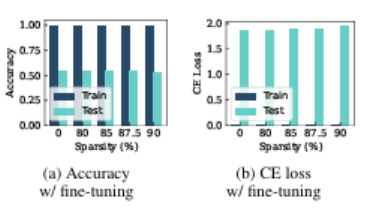
Prior approaches for membership privacy preservation usually update or retrain all weights in neural networks, which is costly and can lead to unnecessary utility loss or even more serious misalignment in predictions between training data and non-training data. In this work, we observed three insights: i) privacy vulnerability exists in a very small fraction of weights; ii) however, most of those weights also critically impact utility performance; iii) the importance of weights stems from their locations rather than their values. According to these insights, to preserve privacy, we score critical weights, and instead of discarding those neurons, we rewind only the weights for fine-tuning. We show that, through extensive experiments, this mechanism exhibits outperforming resilience in most cases against Membership Inference Attacks while maintaining utility.