2025-12-09 ミュンヘン大学(LMU)
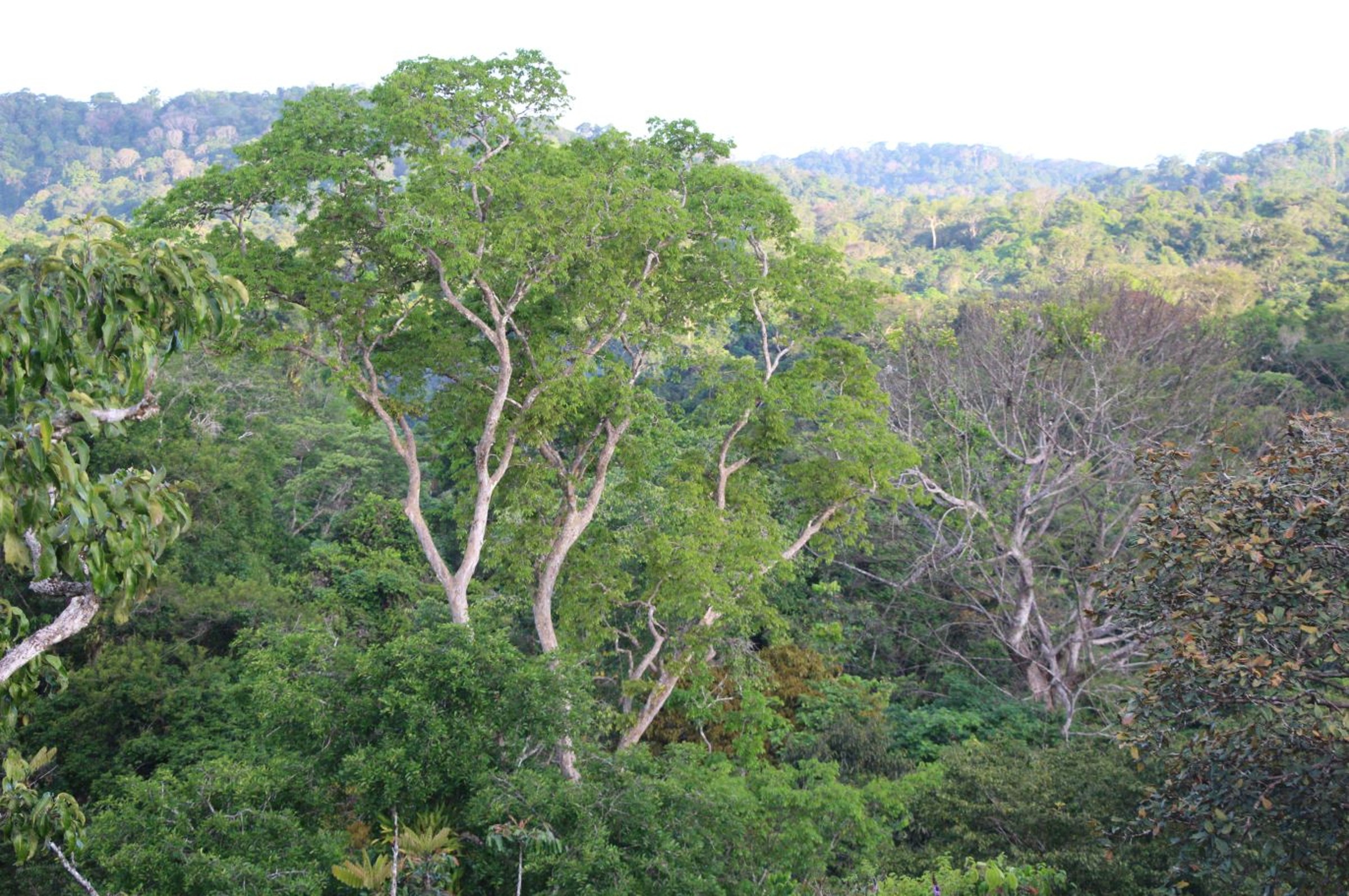
© Philippe Ciais
<関連情報>
- https://www.lmu.de/en/newsroom/news-overview/news/risk-to-amazon-rainforest-from-land-use-and-climate-change-9de5aafe.html
- https://www.pnas.org/doi/abs/10.1073/pnas.2418813122
アマゾンの森林は、人為的な気候変動と土地利用の変化という二重の圧力により、深刻な衰退に直面している Amazon forest faces severe decline under the dual pressures of anthropogenic climate change and land-use change
Selma Bultan, Yiannis Moustakis, Sebastian Bathiany, +3 , and Julia Pongratz
Proceedings of the National Academy of Sciences Published:December 8, 2025
DOI:https://doi.org/10.1073/pnas.2418813122
Significance
The Amazon, the world’s largest rainforest and a potential tipping element in the Earth System, faces increasing pressures from deforestation and global warming. Understanding the individual and combined impacts of these pressures is critical for anticipating the risk of widespread forest collapse. Our study offers crucial perspectives on the effects of land-use change and climate change on forest vulnerability. We identify a global warming threshold of 2.3 °C beyond which forest decline accelerates nonlinearly. This is accompanied by a growing risk of abrupt forest loss, indicating a decline in ecosystem functions and resilience. Our findings highlight the need for immediate policy action to prevent cascading ecological and climatic impacts that extend far beyond the Amazon itself.
Abstract
The Amazon is a key climate system component, hotspot of biodiversity and many other ecosystem functions. However, progressive rainforest degradation, driven by anthropogenic climate change and land-use change, is increasing the risk of a large-scale critical ecosystem transition. Previous studies highlight forest vulnerability to isolated or combined climate change and land-use pressures, but have not disentangled individual driver contributions. This crucial knowledge gap needs to be addressed for a holistic understanding of the risks that the rainforest is facing. Combining Earth System Model data with a robust detection and attribution framework, we assess forest decline under individual and combined pressures of climate change and land-use change. We assess abrupt shifts and nonlinearities in local and basin-wide forest decline to reveal signs of resilience loss and potentially imminent forest transitions. We identify land-use change as the dominant driver of past degradation, accounting for 80% of the historical (1950 to 2014) forest decline. Future projections reveal that up to 38% of the mid-20th century forest area could be lost by 2100, with 25% caused by continued deforestation and 13% caused by unmitigated global warming. Importantly, the risk of abrupt rather than gradual forest decline increases as global warming progresses, with a strong nonlinear trend beyond a threshold of 2.3°. These findings highlight a substantial risk of a large-scale transition, with potentially devastating consequences for the global climate system, regional water and carbon cycles, human livelihoods, and biodiversity. Limiting this risk requires rigorous forest protection and climate mitigation in line with the Paris Agreement.