

2025-10-06 ロイヤルメルボルン工科大学(RMIT)
<関連情報>
- https://www.rmit.edu.au/news/all-news/2025/oct/space-bacteria
- https://www.nature.com/articles/s41526-025-00526-4
弾道宇宙飛行中の枯草菌に対する極度の加速、微小重力、減速の影響 Effects of extreme acceleration, microgravity, and deceleration on Bacillus subtilis onboard a suborbital space flight
Eric Yang,Jibin Jeffrey Dhanaraj,Palalle G. Tharushi Perera,Zoltan Vilagosh,Gail N. Iles,Stefan Krämer,Gunnar Florin,Denver P. Linklater,The Hong Phong Nguyen,Chaitali Dekiwadia,Saulius Juodkazis,Rodney J. Croft & Elena P. Ivanova
npj Microgravity Published:06 October 2025
DOI:https://doi.org/10.1038/s41526-025-00526-4
Abstract
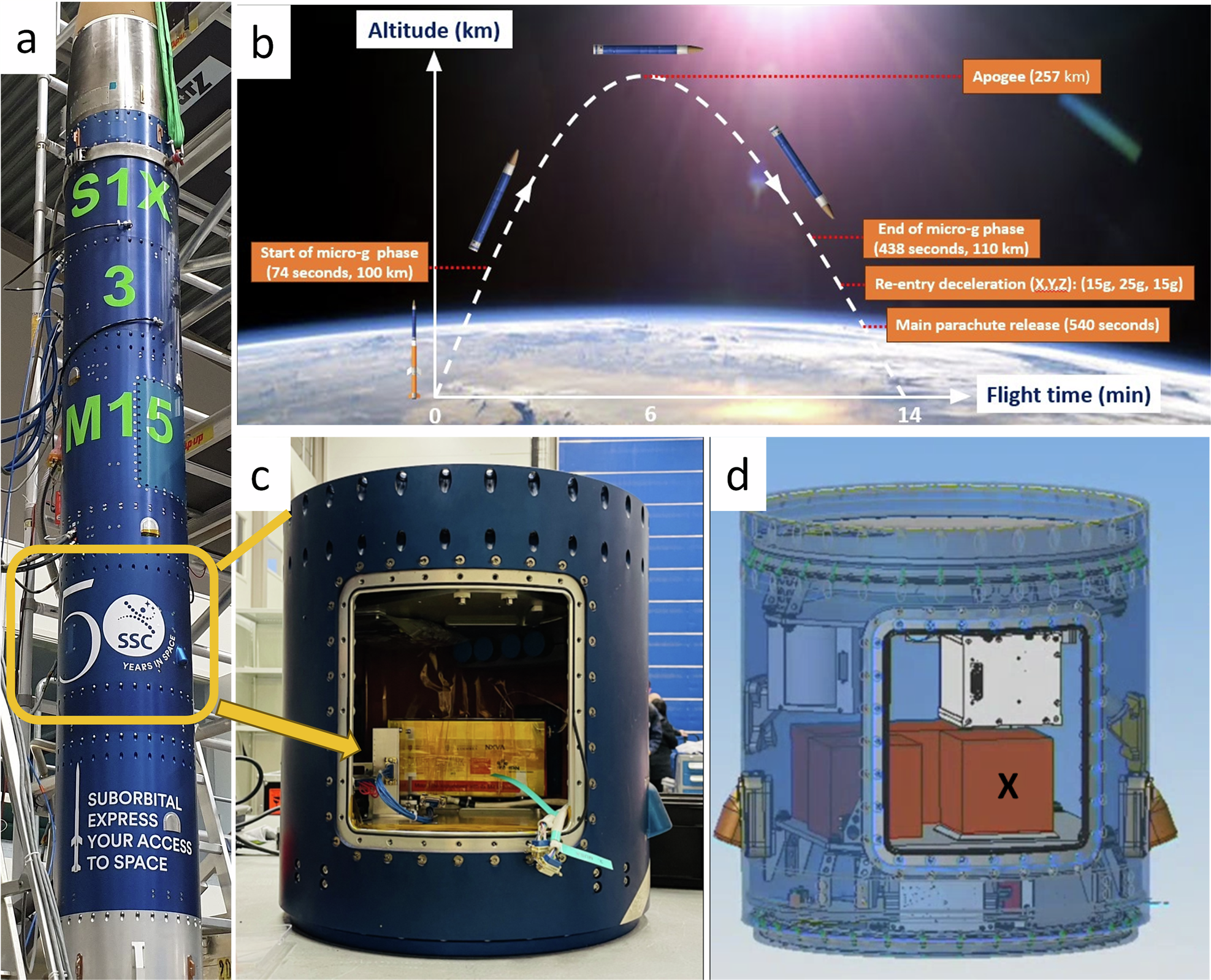
The effects of extreme acceleration, microgravity, and deceleration of a suborbital spaceflight on Bacillus subtilis ATCC 6051 spores were investigated. B. subtilis spores were exposed to a maximum acceleration of ~13 g, a microgravity phase of 6 min, deceleration of 30 g (~300 m/s2), and a maximum rotating velocity of 220 os−1 upon re-entry into Earth’s atmosphere. Post-flight analysis showed the spores exhibited no change in morphology or viability, confirming that B. subtilis spores are resilient to space flight conditions.

