2025-12-15 サンディア国立研究所(SNL)
<関連情報>
プラズマトーチグラファイトアブレーション中の温度とCO/N2濃度のコヒーレントラマン測定 Coherent Raman Measurements of Temperature and CO/N2 Concentration During Plasma Torch Graphite Ablation
Dan Fries, Spenser T. Stark, John S. Murray, Noel T. Clemens, Philip L. Varghese, Rajkumar Bhakta and Sean P. Kearney
American Institute of Aeronautics and Astronautics Published: 10 Mar 2025
DOI:https://doi.org/10.2514/1.T7080
Abstract
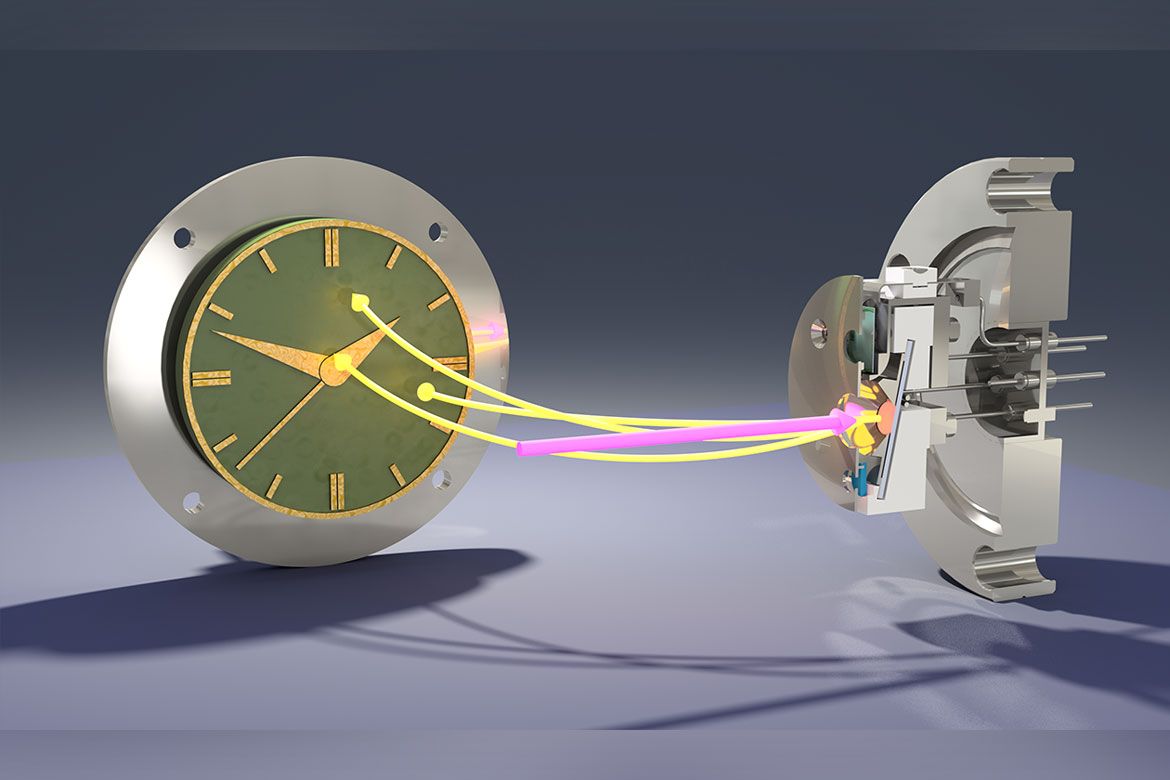
Measurements in high-enthalpy flows are important to understand hypersonic flight and reentry environments. In this study, we use nanosecond coherent anti-Stokes Raman scattering (CARS) to simultaneously probe CO and N2 molecules within the reaction layer of a graphite sample exposed to an atmospheric pressure plasma plume. The plasma plume is generated by an inductively coupled plasma torch, with temperatures in the plasma freestream ranging from 5000 to 7000 K. The CARS measurement volume, with a diameter of approximately 100 m, can be positioned as close as 0.2 mm from the graphite surface. The acquired CARS spectra are fitted to theoretical results to determine rotational-vibrational equilibrium temperatures and relative CO to N2 mole fractions. We present highly spatially resolved profiles of these quantities in the boundary layer of the graphite ablator, report uncertainties, and discuss the presence of chemical nonequilibrium in the boundary layer.