2025-11-18 韓国基礎科学研究院(IBS)
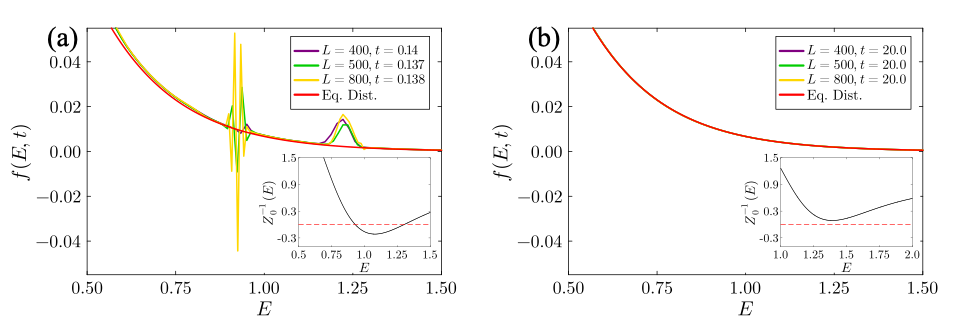
Figure 1. As the electron-lattice interaction gets very strong, there’s a tipping point where tiny ripples don’t fade – they snowball. The earliest warning is a change in the electrons’ “weight” signature (i.e., Z0-1(E) becoming negative), showing the system can no longer restore calm. Push further, and even the electronic heat capacity flips sign (see Fig. 2) – but the runaway starts earlier, setting a real, physical ceiling on how high superconducting Tc.
<関連情報>
- https://www.ibs.re.kr/cop/bbs/BBSMSTR_000000000738/selectBoardArticle.do?nttId=26300&pageIndex=1&searchCnd=&searchWrd=
- https://journals.aps.org/prl/abstract/10.1103/sf5p-2g5l
強い電子-フォノン相互作用に関する金属の不安定性 Instability of Metals with Respect to Strong Electron-Phonon Interaction
Emil A. Yuzbashyan, Boris L. Altshuler, and Aniket Patra
Physical Review Letters Published: 8 July, 2025
DOI: https://doi.org/10.1103/sf5p-2g5l
Abstract
We show that thermal equilibrium between conduction electrons and phonons becomes kinetically unstable when the renormalized electron-phonon coupling exceeds a certain threshold. We prove that negative electronic specific heat, el<0, is sufficient to trigger the instability. Specifically, the instability sets in as soon as the quasiparticle weight becomes negative over a range of energies, even before el turns negative. This is an inherently nonequilibrium phenomenon, occurring prior to the formation of any equilibrium phase. Depending on the system, it can proceed along different pathways, ultimately resulting in a structural transition to an insulating or metallic state.