
2025-09-23 ペンシルベニア州立大学(PennState)
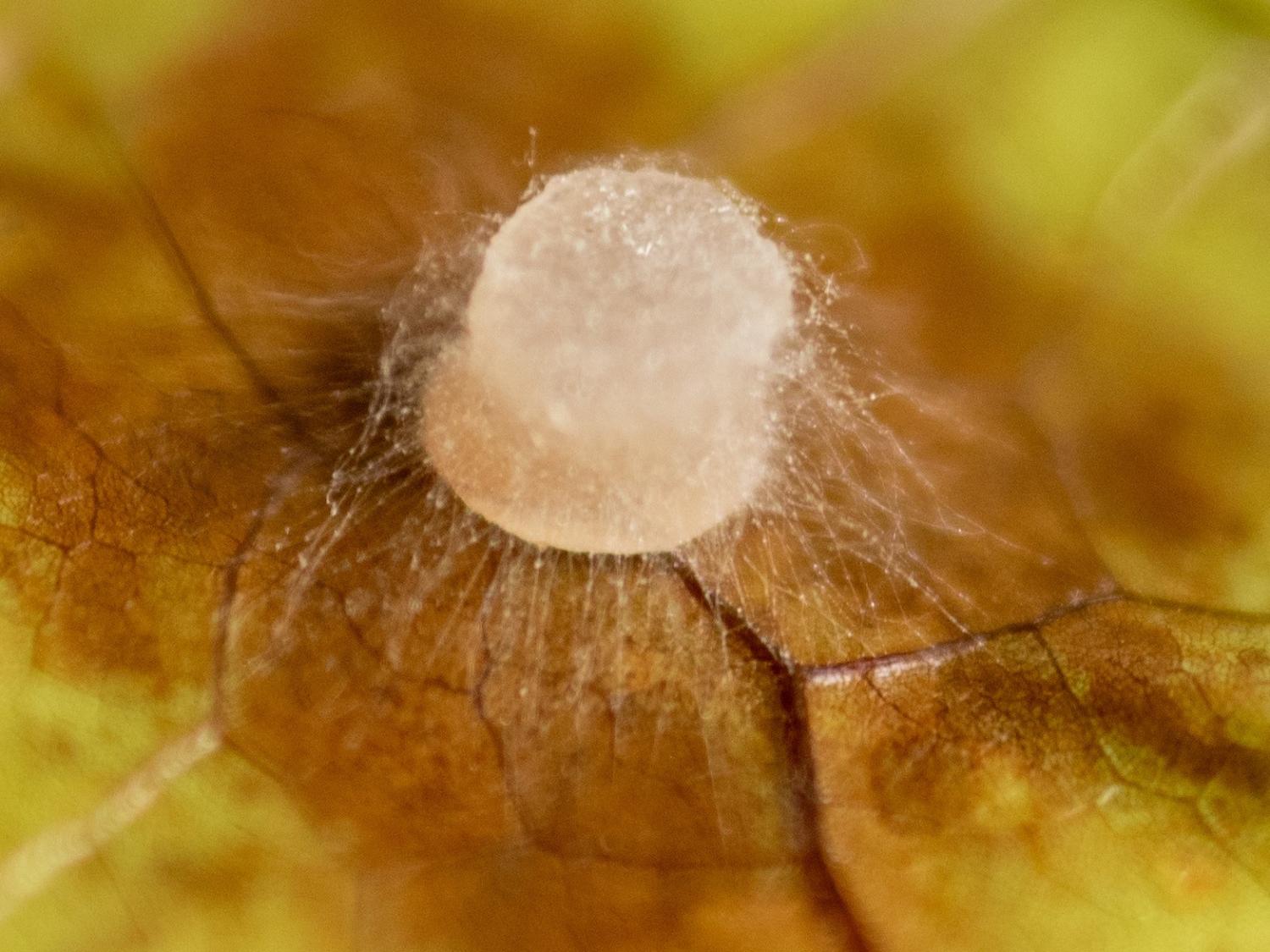 Mycelium of phytophthora palmivora, which can give rise to cacao black pod disease, grows from an agar plug, infecting a cacao leaf 48 hours after inoculation. Credit: Mark Guiltinan/Penn State. All Rights Reserved.
<関連情報>
- https://www.psu.edu/news/research/story/gene-editing-traditional-crossbreeding-produce-disease-resistant-cacao-plants
- https://onlinelibrary.wiley.com/doi/10.1111/pbi.70365
CRISPR–Cas9媒介TcNPR3突然変異導入による非遺伝子組み換えカカオ子孫のフィトフトラ病感受性低減 Reduced Susceptibility to Phytophthora in Non-Transgenic Cacao Progeny Through CRISPR–Cas9 Mediated TcNPR3 Mutagenesis
Mark J. Guiltinan, Lena Landherr, Siela N. Maximova, Dante DelVecchio, Aswathy Sebastian, Istvan Albert
Plant Biotechnology Journal Ppublished: 09 September 2025
DOI:https://doi.org/10.1111/pbi.70365
ABSTRACT
Black pod disease, caused by a complex of Phytophthora species, poses a severe threat to global cacao production. This study explores the use of CRISPR–Cas9 genome editing to reduce disease susceptibility in Theobroma cacao L. by targeting the TcNPR3 gene, a known negative regulator of plant defence. Transgenic T0 lines carrying mutations predicted to disrupt TcNPR3 function exhibited reduced susceptibility to Phytophthora infection in in vitro foliar assays. These T0 plants were advanced to maturity and outcrossed with non-transgenic cacao to eliminate T-DNA sequences associated with the CRISPR–Cas9 transgene. Whole-genome sequencing of the T0 parents and 22 progeny revealed single T-DNA insertion sites in each T0 line; seven progeny retained the edited npr3 alleles but lacked T-DNA insertions. Transcriptome analysis of the mutant lines showed upregulation of genes associated with reactive oxygen species (ROS) generation, defence-related transcription factors and pathogenesis-related proteins. Several genes were also downregulated, suggesting that TcNPR3 may function as both a repressor and an activator in regulating basal transcriptional states. Genome-edited plants were phenotypically comparable to wild-type controls and displayed a 42% reduction in lesion size upon Phytophthora challenge. These findings demonstrate the feasibility of generating non-transgenic cacao with reduced susceptibility to Phytophthora through CRISPR–Cas9-mediated genome editing, offering a promising strategy for sustainable cacao cultivation and improved farmer livelihoods. Field trials are underway to evaluate long-term agronomic performance under natural conditions.


