2025-09-16 ノースカロライナ州立大学(NCState)
<関連情報>
- https://news.ncsu.edu/2025/09/warming-temps-alone-fail-to-trigger-increased-co2-levels-from-soil/
- https://link.springer.com/article/10.1007/s10533-025-01265-0
基質制限を受けた森林生態系における気候変動応答時の土壌炭素循環の隠れたメカニズム解読 Decoding the hidden mechanisms of soil carbon cycling in response to climate change in a substrate-limited forested ecosystem
Yaxi Du,Jacqueline Mohan,Paul Frankson,Greta Franke,Zhilin Chen & Debjani Sihi
Biogeochemistry Published:12 September 2025
DOI:https://doi.org/10.1007/s10533-025-01265-0
Abstract
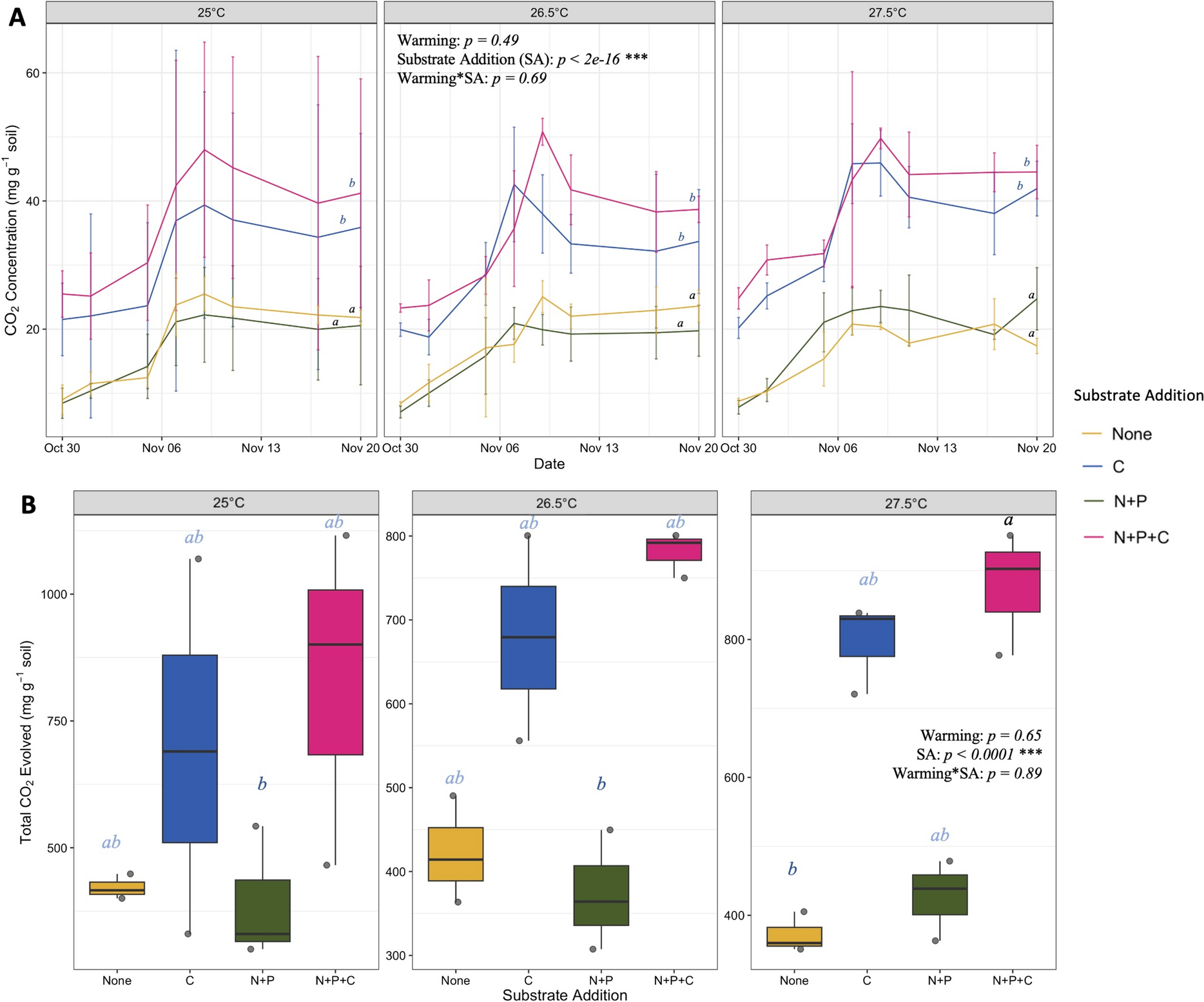
Climate change is rapidly redefining the biogeochemical dynamics of our planet, particularly in relation to soil organic carbon (SOC) storage and loss. Also, most existing soil warming studies have focused on nutrient-rich soils in temperate and arctic/boreal regions, limiting predictions for the many nutrient-poor tropical/subtropical soils that store a substantial fraction of global soil C. To address this gap, we evaluated the influence of temperature and substrate (C and nutrient) availability on soil C cycling in a nutrient-poor (substrate-limited) subtropical forest, where previous field research suggested mixed warming responses. We aimed to isolate confounding elements and elucidate the principal mechanisms underpinning SOC dynamics under diverse environmental scenarios: warming (ambient at 25° C, + 1.5 °C at 26.5 °C, and + 2.5 °C at 27.5° C), nutrient addition (nitrogen and phosphorus) and carbon addition treatments. Samples were collected from a low-latitude soil warming experiment with subtropical Typic Kanhapludults soil (Whitehall Forest, Athens, Georgia). Under laboratory conditions, we incubated soil samples for 22 days at the temperatures recorded during sample collection in the field. We looked at key elements of the soil C cycle, including particulate and mineral-associated organic C, microbial biomass C, and microbial necromass C. We also examined important processes like soil microbial respiration and enzyme kinetics. Our systematic evaluations helped us distinguish between the direct and indirect effects of warming (i.e., inherent and apparent temperature sensitivity) on SOC formation and loss. Our laboratory incubations showed that warming alone did not produce a sustained increase in microbial respiration or microbial biomass, underscoring the dominant role of C limitation in regulating microbial metabolism. In contrast, adding labile C alone or in combination with nutrients (N + P + C) significantly boosted microbial metabolism, supporting a co-limitation framework in which nutrient amendments became impactful only after alleviating C scarcity. Enzymatic assays further indicated that substrate depletion, rather than enzyme denaturation, constrained any prolonged warming effect. These findings underscore the need for continued research into SOC dynamics and microbial adaptation in nutrient-poor ecosystems, which remain underrepresented in Earth system models.