2025-07-18 ジョージア工科大学(Georgia Tech)
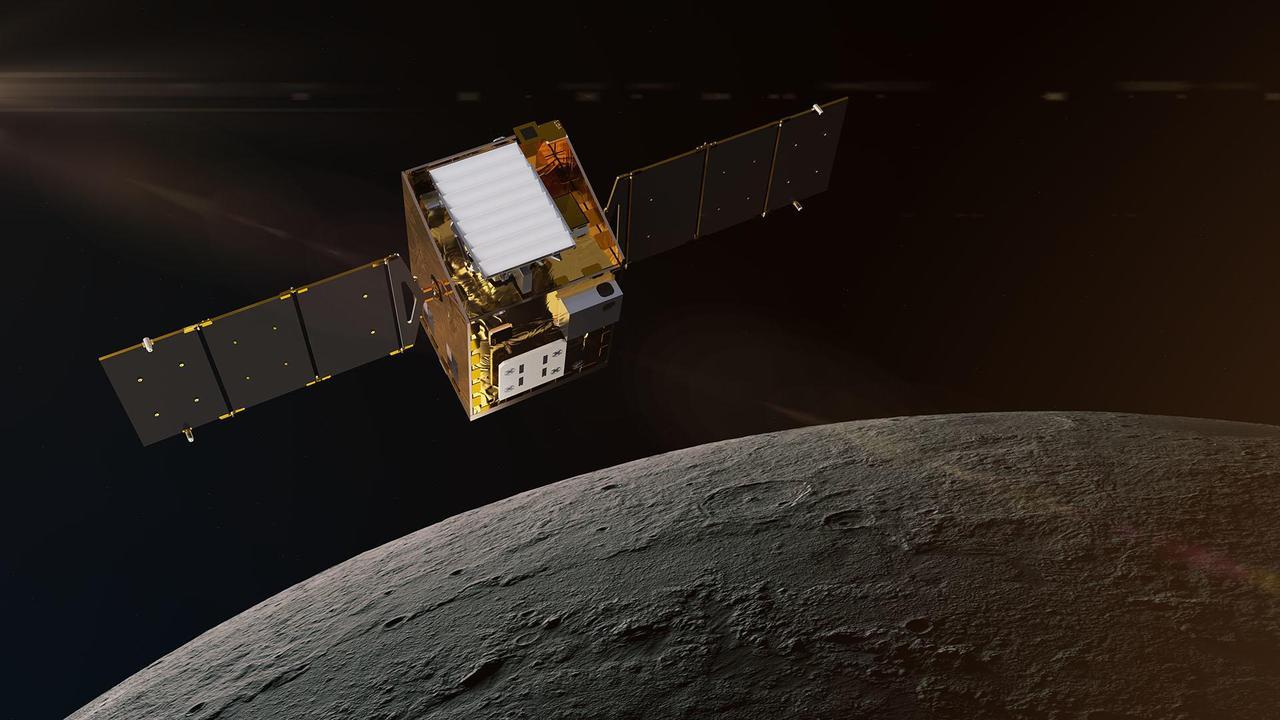
NASA’s Lunar Trailblazer in Orbit Around the Moon (Artist’s Concept). Image furnished by NASA.
<関連情報>
- https://research.gatech.edu/georgia-tech-study-hopes-prevent-cislunar-collisions-moon-missions-increase
- https://arc.aiaa.org/doi/10.2514/1.A36114
シスルナー軌道の衝突確率解析 Cislunar Orbit Collision Probability Analysis
Stef P. Crum, Brian C. Gunter and Mariel Borowitz
Journal of Spacecraft and Rockets Published:10 Mar 2025
DOI:https://doi.org/10.2514/1.A36114
Abstract
This study focused on characterizing the cislunar environment’s short- and long-term collision risks. A series of simulations were performed, using high-fidelity dynamics, in which the current 6 lunar satellites and approximately 50 future space objects were examined. Probabilities of collisions were computed and logged for those events that would likely result in a collision avoidance maneuver, along with other metadata regarding the location and parameters related to the conjunction. This aggregated information assessed the future collision risk posed by the global resurgence of lunar exploration missions. Considering the lower risk tolerance typically associated with missions operating in the lunar regime, operators typically considered 10−7 or 10−6 collision probabilities as exceeding their risk threshold. Our analysis suggests that satellite operators must perform up to four maneuvers annually for each satellite for a fleet of 50 satellites in low lunar orbit (LLO). With just 10 satellites in LLO, a satellite might still need a yearly maneuver. Most close encounters are expected to happen near the equator. The number of perceived collision risks is dependent on the specific covariance size. This analysis characterizes the substantial impact of the covariance matrix’s size on the number of approaches that surpass prescribed collision probability thresholds. A larger covariance matrix leads to more conjunctions necessitating avoidance maneuvers. This underscores the need for improved space domain awareness in the lunar environment, essential for detecting potential collisions and enhancing satellite positional awareness to reduce the frequency of collision-avoidance maneuvers.