2026-05-28 エディンバラ大学
<関連情報>
- https://www.ed.ac.uk/news/arctic-food-chain-hit-as-tipping-point-passed
- https://www.nature.com/articles/s43247-026-03569-x
海氷の減少が北極海の窒素生物地球化学における体制転換を引き起こす Sea ice loss drives a regime shift in Arctic Ocean nitrogen biogeochemistry
Marta Santos-García,Raja S. Ganeshram,Laurent Oziel,Paul A. Dodd,Laura de Steur,Robyn E. Tuerena & Colin A. Stedmon
Nature Earth & Environment Published:28 May 2026
DOI:https://doi.org/10.1038/s43247-026-03569-x
Abstract
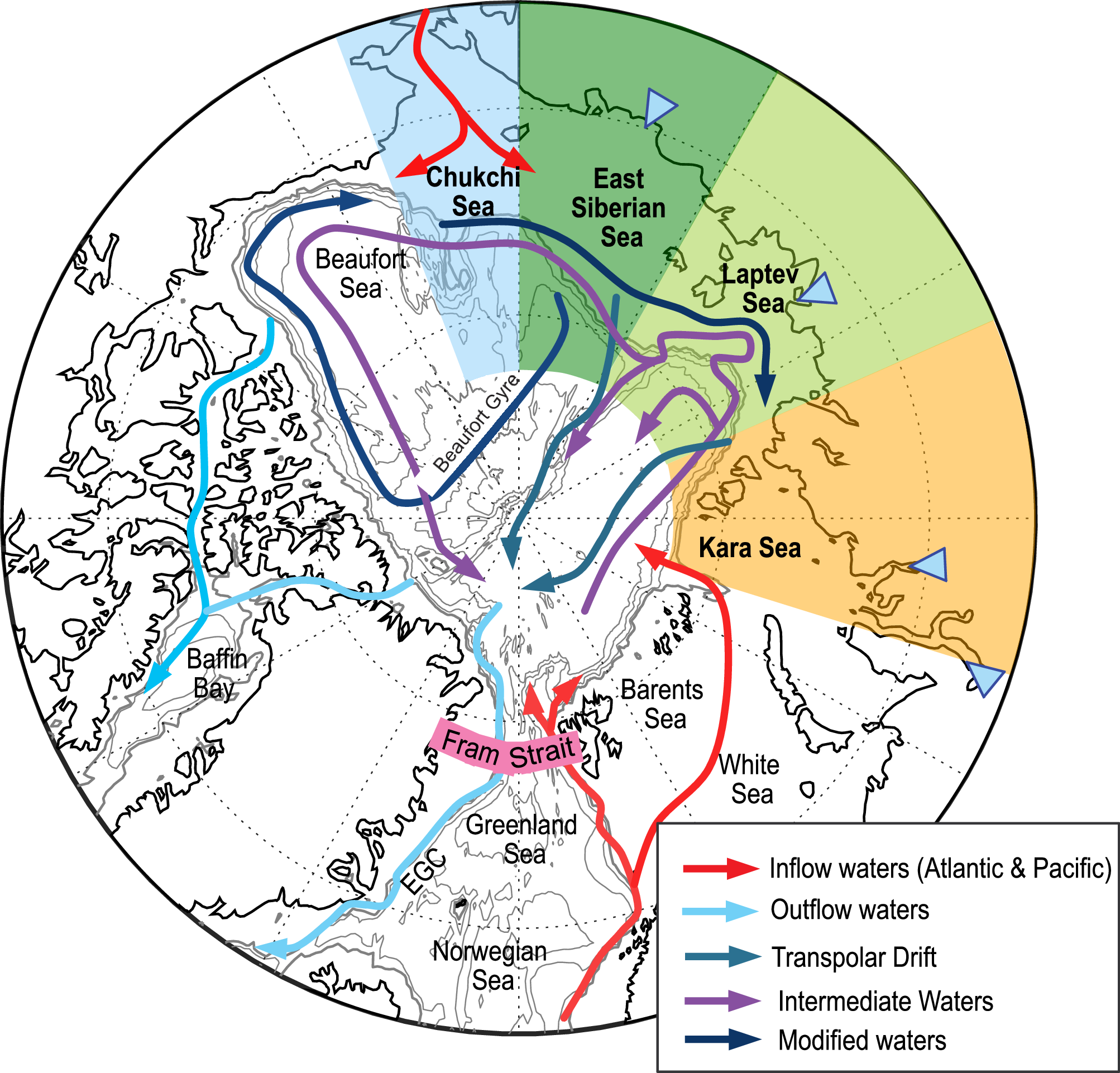
The Arctic Ocean is experiencing sea-ice losses. The increase in light availability has increased net primary production. However, recent studies postulate that nutrients (and not light) are now the dominant control. We present observations from the Fram Strait (1998–2023) showing a transition around 2009, consisting of a sharp decline in fixed-nitrogen concentrations in Polar Surface Waters and an accompanying increase in silicon-to-nitrogen ratios. We suggest this represents a regime shift where nitrate has emerged as the main limiting factor for primary production in the Arctic Ocean. This reduction in nitrate may have resulted from increased benthic denitrification on the shelves. By combining modelled benthic denitrification rates and Lagrangian trajectories, we identify a marked increase in nitrogen loss after 2009, with increasing denitrification in the Chukchi and East Siberian shelves. We attribute this response to reduced sea ice and circulation changes resulting in a regime shift toward stronger nitrogen limitation.