2026-03-26 カリフォルニア大学ロサンゼルス校(UCLA)
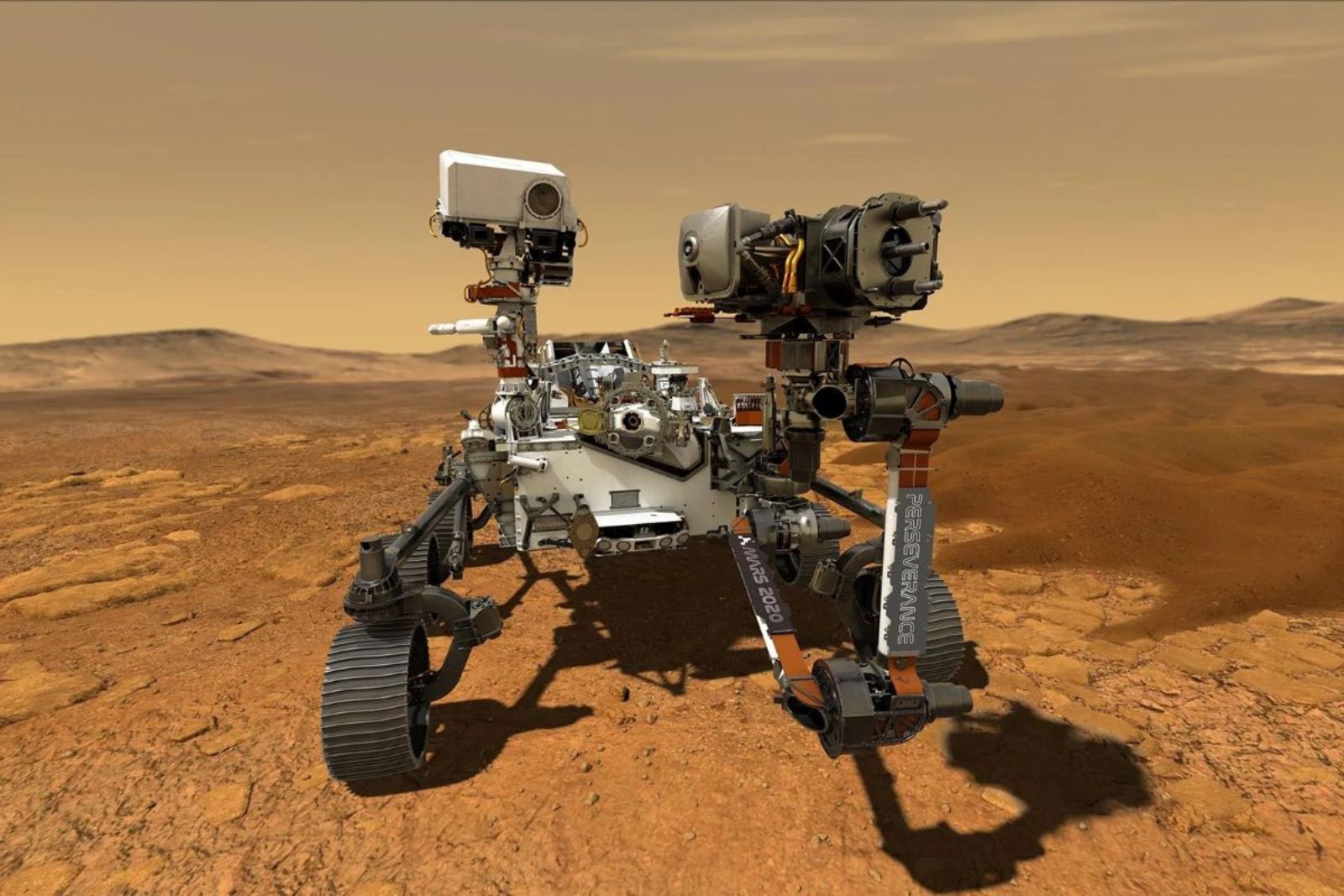
NASA / Jet Propulsion Laboratory
Jezero crater is a unique location to study evidence of past life on Mars.
<関連情報>
- https://newsroom.ucla.edu/releases/ucla-researchers-uncover-buried-ancient-delta-on-mars
- https://www.science.org/doi/10.1126/sciadv.adz6095
火星ジェゼロ・クレーターにおける古代の大規模三角州構造の地中レーダー観測 Ground penetrating radar observations of ancient large-scale deltaic structures in Jezero crater, Mars
Emily L. Cardarelli, Uni Árting, David A. Paige, Svein-Erik Hamran, […] , and Sverre Brovoll
Science Advances Published:18 Mar 2026
DOI:https://doi.org/10.1126/sciadv.adz6095
Abstract
The surface of Mars once hosted flowing liquid water and a warmer climate than today, with past water-rock interactions recorded by the carbonate deposits found on its surface. Here, we analyze the depositional setting of the Margin unit, a major magnesium-carbonate deposit near the fluvial inlet to Jezero crater using ground penetrating radar data collected by the Mars 2020 Perseverance rover Radar Imager for Mars Subsurface Experiment (RIMFAX) instrument. We report soundings from more than 35 m belowground, ~1.75 times deeper than other Jezero geologic units explored to date. We identify numerous subsurface features and submeter to hundred-meter scale layering across an ~6.1-km rover traverse. We infer that subsurface reflectors are consistent with buried fluvial features and deltaic foresets, which have experienced multiple erosional-depositional episodes. This work illuminates a well-preserved paleolandscape wherein a deltaic environment developed prior to the formation of the Jezero Western Delta, as early as the Noachian (~4.2 to 3.7 billion years ago).