2026-02-09 中国科学院(CAS)
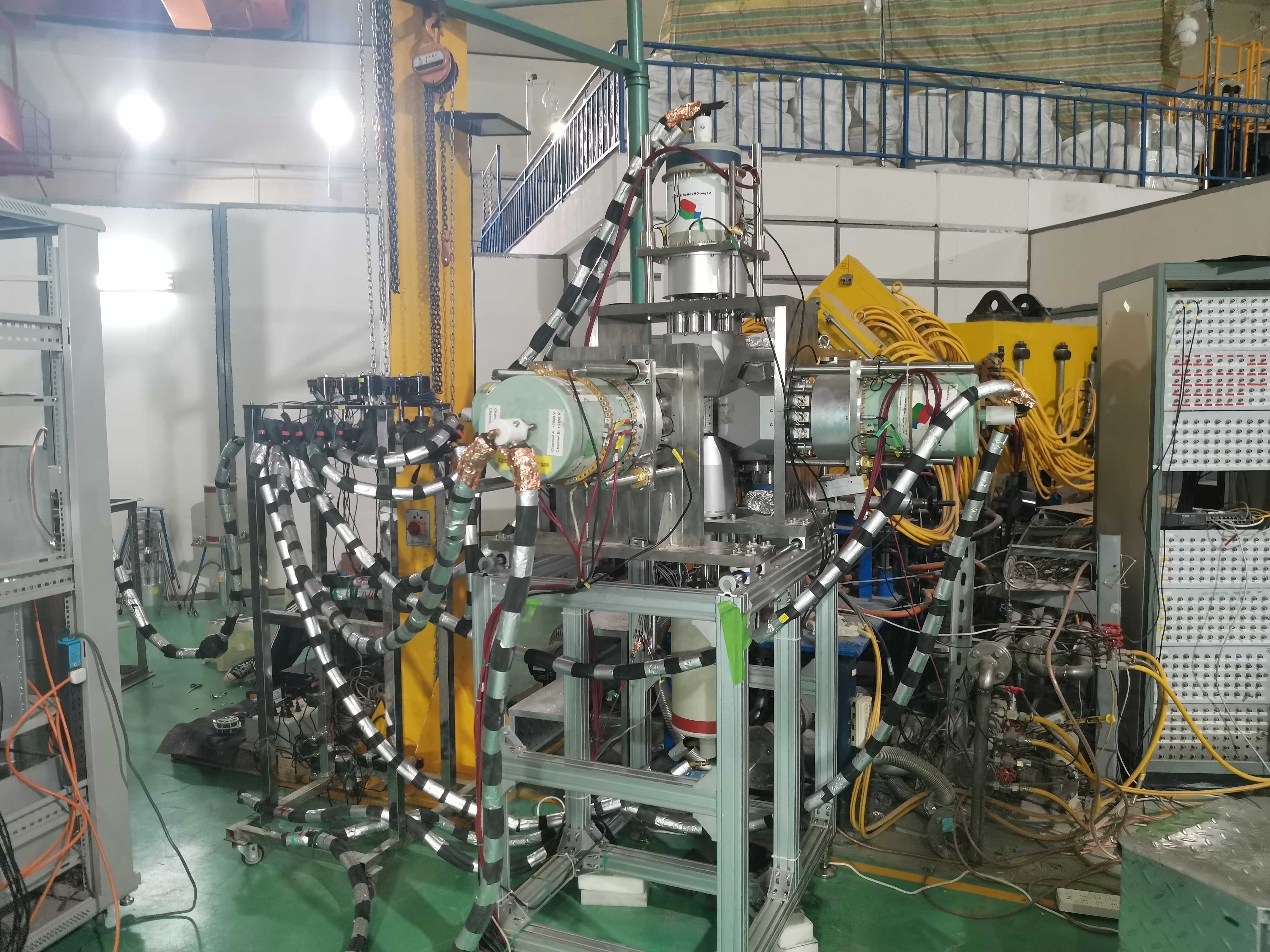
The high-purity germanium detector array. (Image from IMP)
<関連情報>
- https://english.cas.cn/newsroom/research-news/202602/t20260210_1150416.shtml
- https://journals.aps.org/prl/abstract/10.1103/kbf5-6fcl
異性体枯渇93Mo電子捕獲による核励起ではなく非弾性核散乱によって引き起こされる Isomer Depletion of 93Mo Triggered by Inelastic Nuclear Scattering Rather than Nuclear Excitation by Electron Capture
B. Ding (丁兵), C. X. Jia (贾晨旭), S. Guo (郭松), X. H. Zhou (周小红), Y. B. Wu (吴远彬), F. F. Zeng (曾凡斐), J. G. Wang (王建国), Y. H. Qiang (强赟华), S. W. Xu (许世伟) et al.
Physical Review Letters Published: 6 February, 2026
DOI: https://doi.org/10.1103/kbf5-6fcl
Abstract
Isomer depletion serves as a prerequisite for a variety of important applications. Several mechanisms are proposed to trigger the isomer depletion. In the previous work [Chiara et al., Nature (London) 554, 216 (2018).], isomer depletion with an exceptionally high probability in 93Mo was reported and attributed to nuclear excitation by electron capture (NEEC). However, contradictory probability values were subsequently reported from both experimental and theoretical aspects. This Letter reports a new and more precise measurement of the isomer depletion of high-energy 93Mo ions during the slowing-down processes in lead and carbon foils via a low-background beam-based experimental approach. By employing a purified isomer beam, the depletion probabilities are determined to be 2.0(2) ×10−5 in lead and 4.7(13) ×10−6 in carbon, agreeing well with the inelastic nuclear scattering calculations. We conclude that the observed isomer depletion in 93Mo arises from inelastic nuclear scattering rather than the previously proposed NEEC mechanism.