2026-01-28 アルゴンヌ国立研究所(ANL)

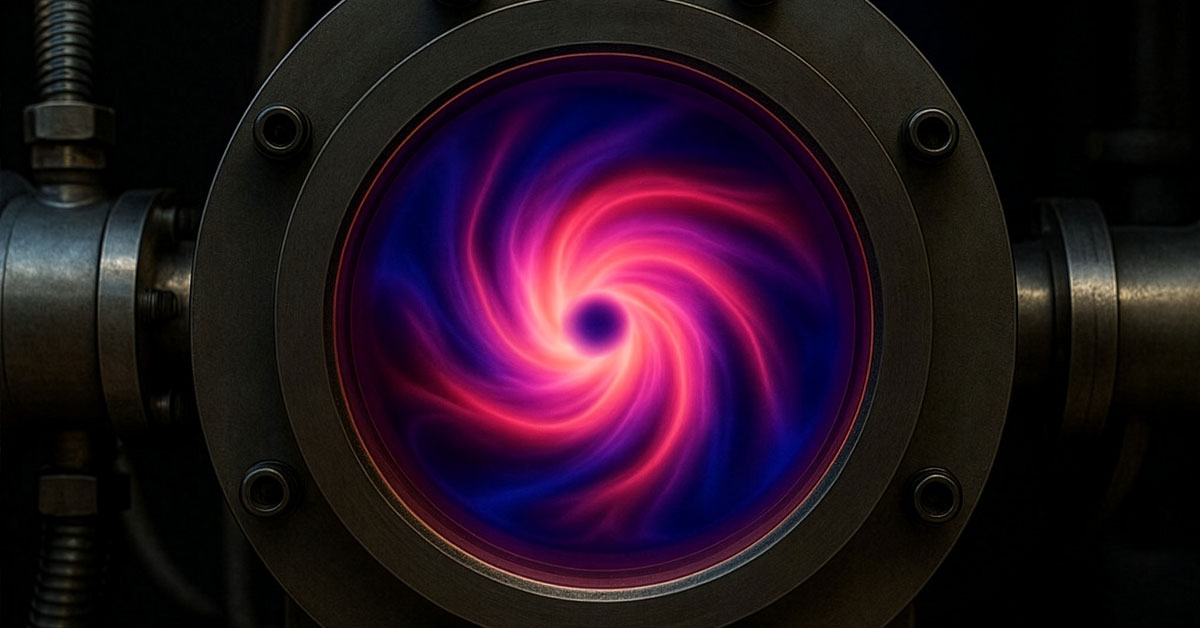
Scientific visualization of a numerical relativity simulation of a compact binary system consistent with the astrophysical parameters of the binary neutron star merger GW170817. The simulation was produced with the open-source, numerical relativity software — the Einstein Toolkit. (Image by Eliu Huerta, Roland Haas and Shawn Rosofsky/Argonne National Laboratory.)
<関連情報>
- https://www.anl.gov/article/radar-a-new-era-of-collaborative-cosmic-exploration
- https://iopscience.iop.org/article/10.3847/1538-4365/adfbea
電波残光検出とAI駆動型対応(RADAR):重力波イベント追跡のための連合フレームワーク Radio Afterglow Detection and AI-driven Response (RADAR): A Federated Framework for Gravitational-wave Event Follow-up
Parth Patel, Alessandra Corsi, E. A. Huerta, Kara Merfeld, Victoria Tiki, Zilinghan Li, Tekin Bicer, Kyle Chard, Ryan Chard, Ian T. Foster,…
The Astrophysical Journal Supplement Series
DOI:10.3847/1538-4365/adfbea
Abstract
The landmark detection of both gravitational waves (GWs) and electromagnetic (EM) radiation from the binary neutron star merger GW170817 has spurred efforts to streamline the follow-up of GW alerts in current and future observing runs of ground-based GW detectors. Within this context, the radio band of the EM spectrum presents unique challenges. Sensitive radio facilities capable of detecting the faint radio afterglow seen in GW170817, and with sufficient angular resolution, have small fields of view compared to typical GW localization areas. Additionally, theoretical models predict that the radio emission from binary neutron star mergers can evolve over weeks to years, necessitating long-term monitoring to probe the physics of the various postmerger ejecta components. These constraints, combined with limited radio observing resources, make the development of more coordinated follow-up strategies essential—especially as the next generation of GW detectors promises a dramatic increase in detection rates. Here, we present RADAR, a framework designed to address these challenges by promoting community-driven information sharing, federated data analysis, and system resilience, while integrating AI methods for both GW signal identification and radio data aggregation. We show that it is possible to preserve data rights while sharing models that can help design and/or update follow-up strategies. We demonstrate our approach through a case study of GW170817, and discuss future directions for refinement and broader application.