2026-01-12 シカゴ大学(UChicago)

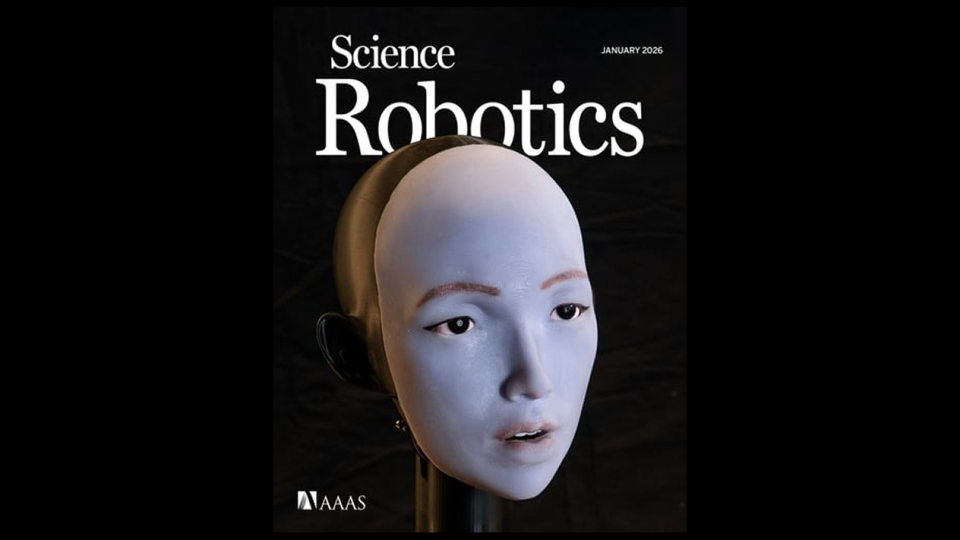
A colorized scanning electron microscopy (SEM) image of a two-dimensional material called a MXene. This particular MXene, a combination of niobium, carbon and chlorine, was synthesized using a new “bottom-up” method pioneered by researchers from the University of Chicago, University of Illinois Chicago and Vanderbilt University through the NSF Center for Chemical Innovation on MXenes Synthesis, Tunability and Reactivity (M-STAR).Photo courtesy UChicago Talapin Lab
<関連情報>
- https://news.uchicago.edu/story/research-unveils-new-way-make-futuristic-2d-materials
- https://www.nature.com/articles/s44160-025-00946-w
- https://pubs.acs.org/doi/abs/10.1021/ic00223a011
二次元遷移金属炭化物MXeneの直接合成のための一般的な前駆体としての分子有機ハロゲン化物 Molecular organohalides as general precursors for direct synthesis of two-dimensional transition metal carbide MXenes
Di Wang,Noah L. Mason,Fatemeh Karimi,Yinan Yang,Alexander S. Filatov,Young-Hwan Kim,Chenkun Zhou,De-en Jiang,Robert F. Klie & Dmitri V. Talapin
Nature Synthesis Published:03 December 2025
DOI:https://doi.org/10.1038/s44160-025-00946-w
Abstract
Two-dimensional transition metal carbides and nitrides (MXenes) are a class of materials that have drawn substantial attention for their diverse application, particularly in the field of energy storage. These materials are commonly derived from layered ternary solids, MAX phases, through etching processes. Efforts have been made to expand the scope of MXene synthesis beyond these top-down approaches to include bottom-up synthesis. Here we demonstrate a general direct synthetic route for scalable and atom-economic synthesis of various MXenes using different organohalide compounds as precursors for both carbon and surface termination groups. By reacting organochlorides (such as C2Cl4, C2Cl6 and CH2Cl2) or organobromides (CBr4 and CH2Br2) with transition metals, we synthesized a variety of MXenes (Ti2CCl2, Ti2CBr2, Zr2CCl2, Zr2CBr2 and Nb2CCl2), including a Nb2CBr2 MXene phase not accessed by other routes. The use of molecular precursors enables precise control of their reactivity, which allows the direct synthesis of MXene nanostructures. We demonstrate that nanometre-scale MXenes show higher surface reactivity compared with MXenes with micrometre-size flakes.
二層金属スカンジウム、イットリウム、ジルコニウム塩化物炭化物および窒化物M2Cl2CおよびM2Cl2Nの合成と構造 Synthesis and structure of double-metal-layered scandium, yttrium, and zirconium chloride carbides and nitrides, M2Cl2C and M2Cl2N
Shiou Jyh Hwu,Robin P. Ziebarth,Samuel Von Winbush,Jeff E. Ford,John D. Corbett
Inorganic Chemistry Published: January 1, 1986
DOI:https://doi.org/10.1021/ic00223a011
Syntheses are described for the isostructural 1T-M/sub 2/Cl/sub 2/C, M = Sc, Y, Zr, 1T-ml/sub 2/Cl/sub 2/N, M = Sc, Zr, and 1T-Zr/sub 2/Br/sub 2/C from normal-valent halide, metal, and either graphite, N/sub 2/, NaN/sub 3/, or ..beta..-ZrNCl at 750-1000 /sup 0/C in sealed Nb or Ta containers. All are formed in virtually quantitative yield save for Zr/sub 2/Cl/sub 2/N. The 1T-type structure, consisting of slabs of hcp layers sequenced X-M-M-X with C or N in trigonal-antiprismatic interstices between the double-metal layers, is related to that of ZrCl and ZrBr and is isostructural with Ta/sub 2/S/sub 2/C. The details of the structure were established from single-crystal studies of 1T-Sc/sub 2/Cl/sub 2/C and 1T-Sc/sub 2/Cl/sub 2/N (nitride:P3 m1, Z = 1, a = 3.3495 (4) A, C = 8.808 (1) A, R = 0.050 and R/sub w/ = 0.050 and R/sub w/ = 0.060 for 76 independent reflections, 2 theta < 50/sup 0/). Sc/sub 2/Cl/sub 2/C also occurs in a 3R-type arrangement of the same slabs. Alkali-metal intercalation of the scandium or zirconium chloride carbides was not successful. Reasons for the reordering of the ZrX host on bonding of interstitial C or N and XPS evidence for both the carbidic nature of carbon and a large M-C covalency in Sc/sub 2/Cl/sub 2/C and Zr/sub 2/X/sub 2/C are presented.