
2026-01-03 立正大学
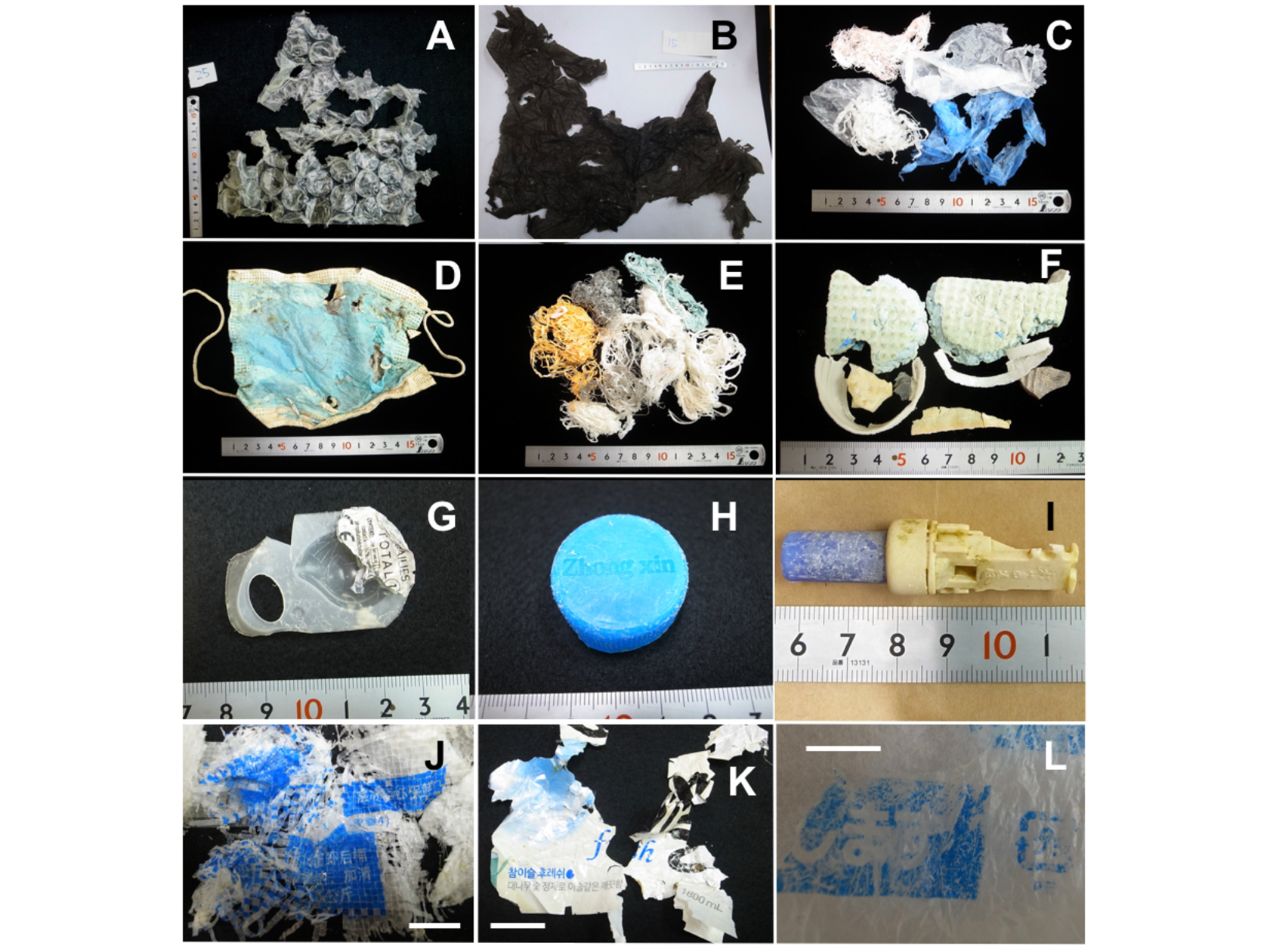
図2.アオウミガメに摂食されたプラスチック。A: エアークッション, ポリヒドロカーボン, B: シート状プラスチック, ポリヒドロカーボン, C: 糸状及びシート状プラスチック, D: マスク, E: 糸状プラスチックの塊, F: プラスチックの破片, G: コンタクトレンズのブリスターパック, ポリプロピレン, H: ペットボトルの蓋, ポリエチレン, I: 笛, ポリエチレン, J: シート状プラスチック, スケールバー2cm. K: ペットボトルのラベル, スケールバー2cm. L: シート状プラスチック, スケールバー1cm. PeerJ Life and Environment誌より引用
<関連情報>
小笠原諸島におけるアオウミガメ(Chelonia mydas)のメソプラスチックおよびマクロプラスチックと食物生息地への多様なアプローチ Multiple approaches to meso- and macroplastics and the food habitat of the green turtle, Chelonia mydas, in the Ogasawara Islands, Japan
Tenzo Fujitani, Shunji Ena, Touma Hosoya, Seongwon Lee, Miyuki Nishijima, Akira Iguchi, Haruka Nakano, Nozomu Iwasaki
PeerJ Published:January 2, 2026
DOI:https://doi.org/10.7717/peerj.20425
Abstract
This study integrated genetic, isotopic, and plastic analyses to investigate the diet and plastic ingestion of adult green turtles living in the waters around the Ogasawara Islands. Micro-, meso-, and macroplastics were found in the gut contents of 7 of the 10 individuals examined. A total of 92 meso- and macroplastics were found in six individuals, with an average of 9.2 ± 11.48 items/individual (range: 0–31, n = 10). The average total weight of these items was 15.28 ± 24.76 g (range: 0–70.55, n = 10), and their average percentage of the turtles’ body weight was 0.014 ± 0.021% (range: 0–0.064, n = 8). At the time of capture, the turtles’ main food was macroalgae, and the feeding grounds were estimated from the DNA analysis to be three locations where the seaweeds Ectocarpus crouaniorum, Sargassum muticum, and Lobophora sp. predominate. Stable isotope ratios of carbon and nitrogen in muscle tissue and DNA analysis suggested that the captured individuals may have fed on drifting seaweed and gelatinous plankton on their way south from the Pacific coasts of Japan to the Ogasawara Islands, during which time it can be concluded from the green turtle’s feeding habits that they may have ingested meso- and macroplastics found among large and drifting seaweeds, mistaking them for gelatinous plankton such as jellyfish and salpas. The ingested plastics were estimated to have originated from a larger area than the turtles’ migratory range, indicating that this problem may stem from transboundary pollution.

