2025-09-09 ペンシルベニア州立大学(Penn State)
<関連情報>
- https://www.psu.edu/news/eberly-college-science/story/can-nanobots-play-follow-leader
- https://www.cell.com/cell-reports-physical-science/fulltext/S2666-3864(25)00265-6
無流動条件下における酵素カスケードの非互換性走化性運動 Non-reciprocal chemotactic movement in enzyme cascade under flow-free conditions
Aditya Sapre ∙ Xiaotian Lu ∙ Yu-Ching Tseng ∙ Mariam Mansour ∙ Niladri Sekhar Mandal ∙ Ayusman Sen
Cell Reports Physical Science Published:June 27, 2025
DOI:https://doi.org/10.1016/j.xcrp.2025.102666

Highlights
- Enzyme-coated particles show substrate-specific chemotaxis under flow-free conditions
- Non-reciprocal interaction seen in enzyme cascade in presence of substrate
- Work enables the design of different particle populations that coordinate their behavior
Summary
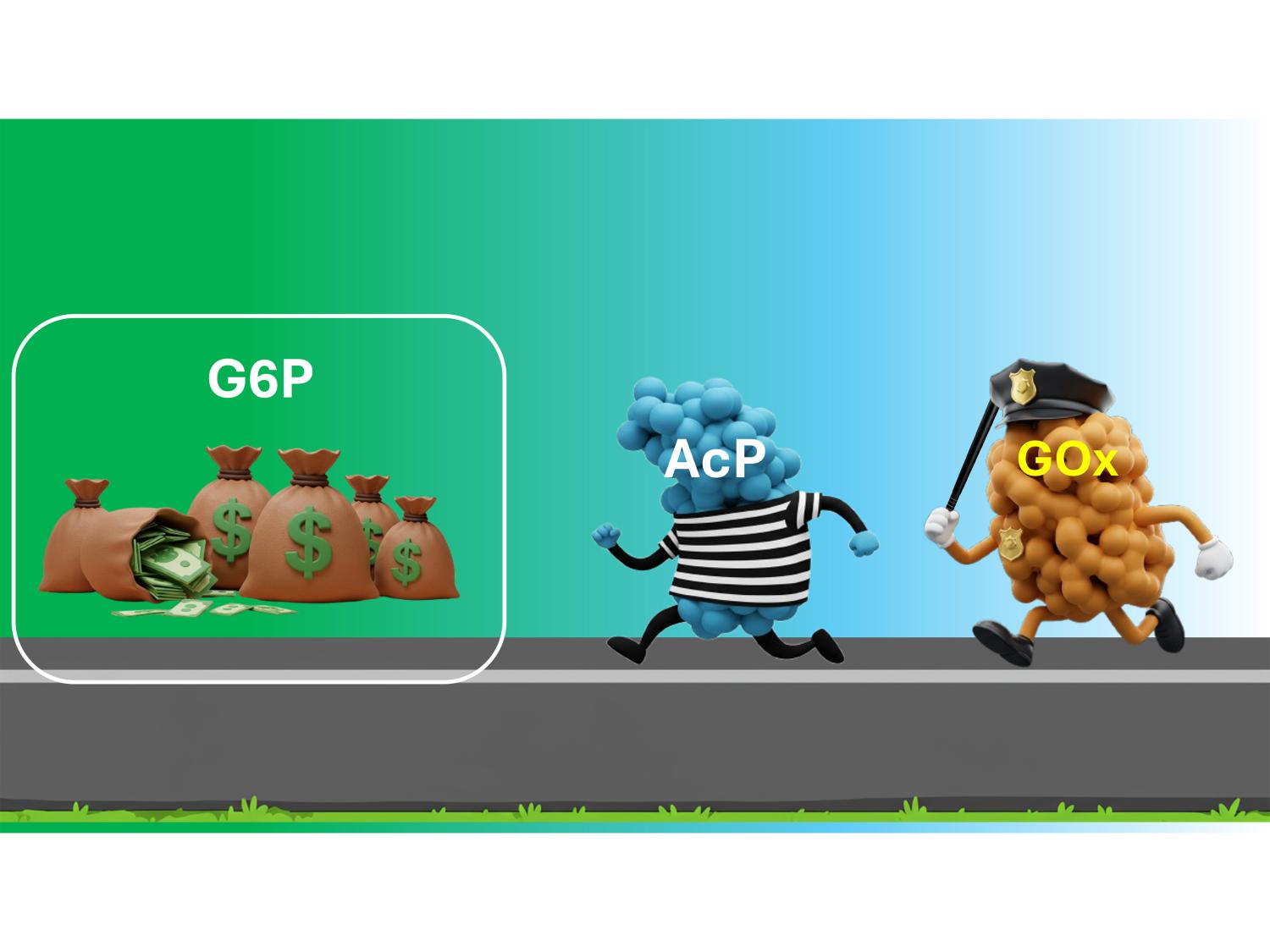
Chemotactic guiding by chemical gradients is important because of possible applications in targeted delivery. In addition, the experimental demonstration of microscale non-reciprocal interactions in active systems is fundamentally important. We developed a microchannel architecture that allows reactive particles to be exposed to imposed chemical gradients for a long time under flow-free conditions. Using this setup, we show that particles functionalized with different enzymes show positive chemotactic mobility in response to their respective substrate gradients. Most significantly, when combined, both acid phosphatase- and glucose oxidase-functionalized particles exhibit chemotaxis in response to a gradient of glucose-6-phosphate, which acid phosphatase converts to glucose, the substrate for glucose oxidase. These findings underscore the significance of chemical gradients in directing particle movement, offering insights crucial for understanding swarming and signaling in living systems. The work also constitutes the first step in designing populations of particles with distinct functions that coordinate their behavior.