2026-03-04 清華大学
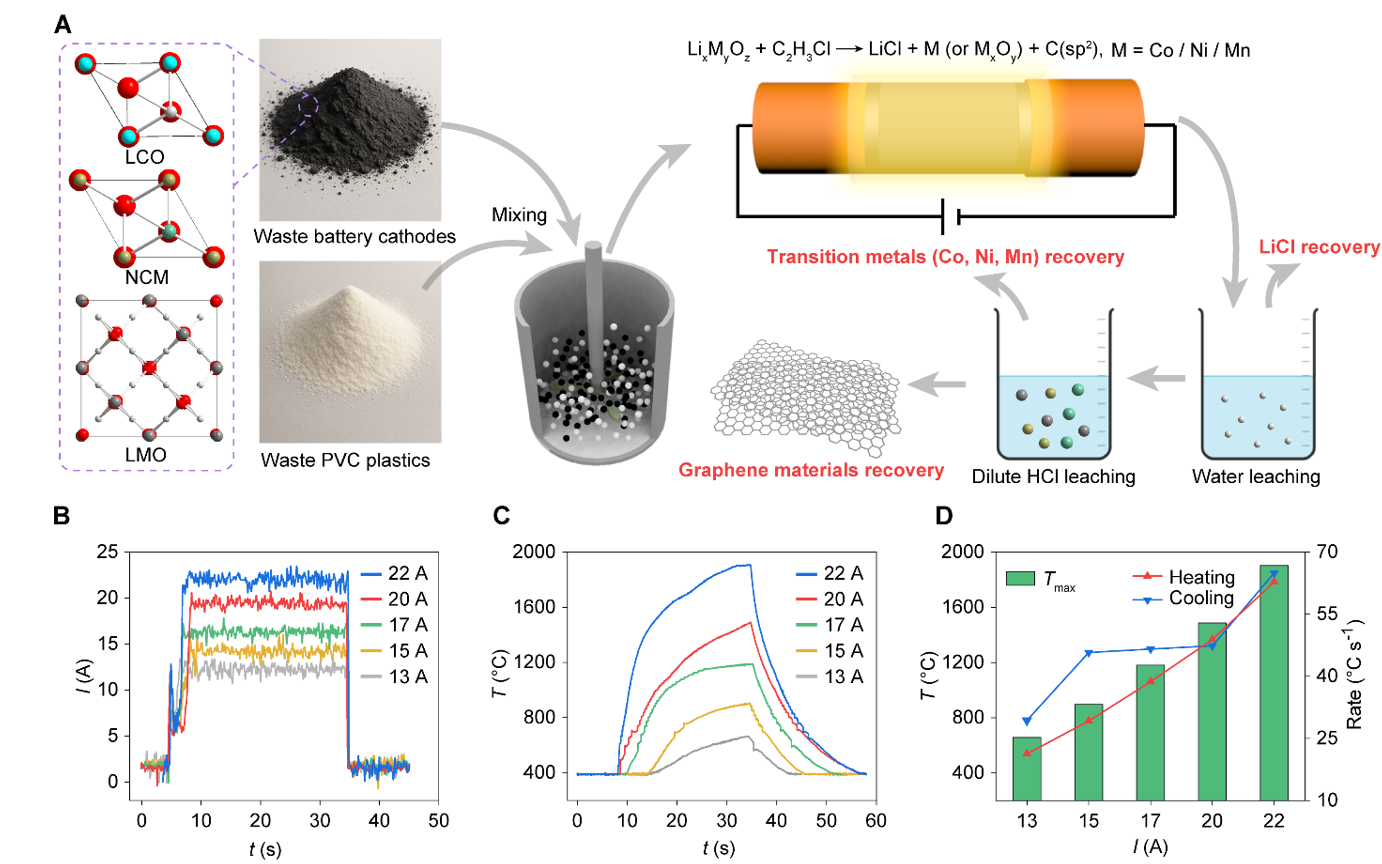
Figure 1. Synergistic recovery of spent lithium-ion batteries and PVC plastic based on electrothermal chlorination.
<関連情報>
- https://www.tsinghua.edu.cn/en/info/1245/14725.htm
- https://www.cell.com/cell-reports-physical-science/fulltext/S2666-3864(25)00647-2
廃棄リチウムイオン電池とポリ塩化ビニルプラスチックの共リサイクル Co-recycling of waste lithium-ion batteries and polyvinyl chloride plastics
Teng Wang ∙ Erkang Feng, ∙ Zhenyu Ren ∙ … ∙ Chun Huang ∙ Yunn Shuan Chan ∙ Bing Deng
Cell Reports Physical Science Published:December 31, 2025
DOI:https://doi.org/10.1016/j.xcrp.2025.103048
Highlights
- Ultrafast electrothermal chlorination recovers LIB metals within seconds
- Lithium selectively converted to water-leachable LiCl for efficient separation
- Transition metals recovered at 94%–99% yields with high Li-transition metal selectivity
- PVC carbon simultaneously upcycled into flash graphene during co-recycling
Summary
Recycling spent lithium-ion batteries is crucial for a sustainable energy future. However, existing methods face challenges, such as high energy consumption, prolonged processes, and limited selectivity. Here, we report a rapid co-recycling strategy for lithium-ion batteries and polyvinyl chloride plastics by electrothermal chlorination, achieving materials conversion within seconds. By precisely controlling chlorination thermodynamics, lithium in cathodes is selectively transformed into water-leachable LiCl, while transition metals are reduced to metallic or oxide forms that can be subsequently recovered using mild acid leaching (e.g., 0.1 M HCl). This strategy is broadly applicable across various battery chemistries, including LiCoO2, LiMn2O4, and LiNixCoyMn1−x−yO2. Recovery yields reach 94%–99% for all metals with a lithium-transition metal separation factor up to ∼2,600. Moreover, carbon from plastics is simultaneously upcycled into flash graphene materials. Compared with conventional approaches, this co-recycling strategy reduces carbon emissions by 84%–94% and operating costs by 85%–95%, highlighting its environmental benefit and economic viability.