2026-02-17 ノースウェスタン大学
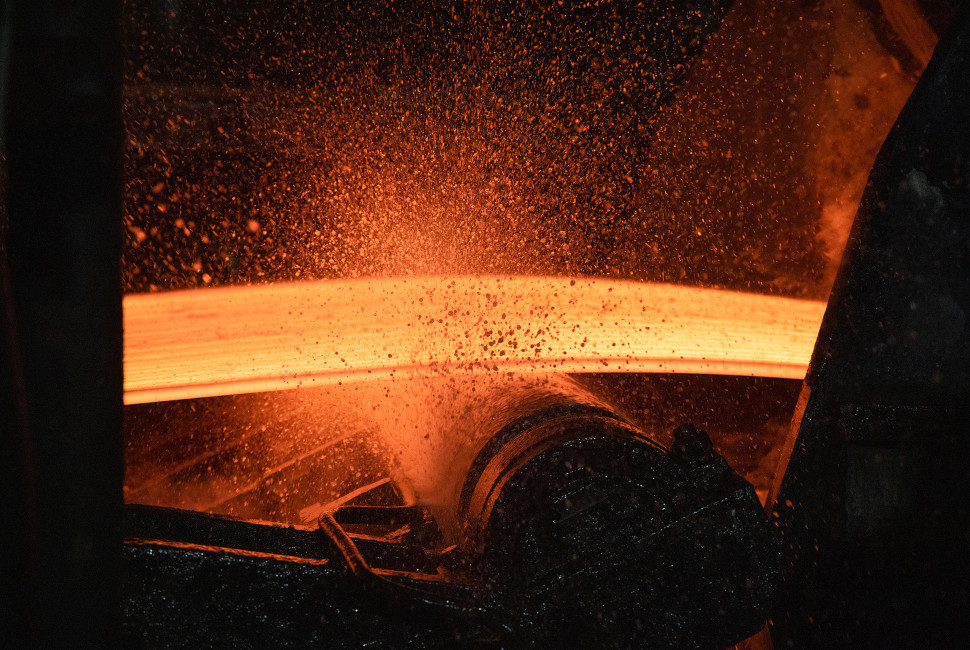
Not only does this new finding challenge long-held assumptions of how metals behave, it also could provide new insights for designing metals for futuristic applications in extreme conditions, such as hypersonic flight, extraterrestrial construction and advanced manufacturing. Getty Images
<関連情報>
- https://news.northwestern.edu/stories/2026/02/extreme-heat-increases-strength-of-pure-metals
- https://journals.aps.org/prl/abstract/10.1103/2mm1-rx7q
極端なひずみ速度では、純金属は熱硬化し、合金は熱軟化します At Extreme Strain Rates, Pure Metals Thermally Harden while Alloys Thermally Soften
Ian Dowding and Christopher A. Schuh
Physical Review Letters Published: 17 February, 2026
DOI: https://doi.org/10.1103/2mm1-rx7q
Abstract
When materials are deformed at extreme strain rates, >106 s−1, a counterintuitive mechanical response is seen where the strength and hardness of pure metals increases with increasing temperature. This antithermal hardening is due to dislocations meeting resistance to their motion from phonons in the crystal lattice. However, here, using optically driven microballistic impact testing to measure dynamic strength and hardness, we show that when the composition is systematically varied away from high purity, the mechanical response of metals transitions from phonon drag of dislocations back to thermally activated pinning of dislocations, even at the highest strain rates. This boundary from “hotter-is-stronger” to “hotter-is-softer” is observed and mapped for nickel, titanium, and gold. The ability to tune between deformation mechanisms with very different temperature dependencies speaks to new directions for alloy design in extreme conditions.