2026-02-18 海洋研究開発機構,水産研究・教育機構,九州大学,科学技術振興機構
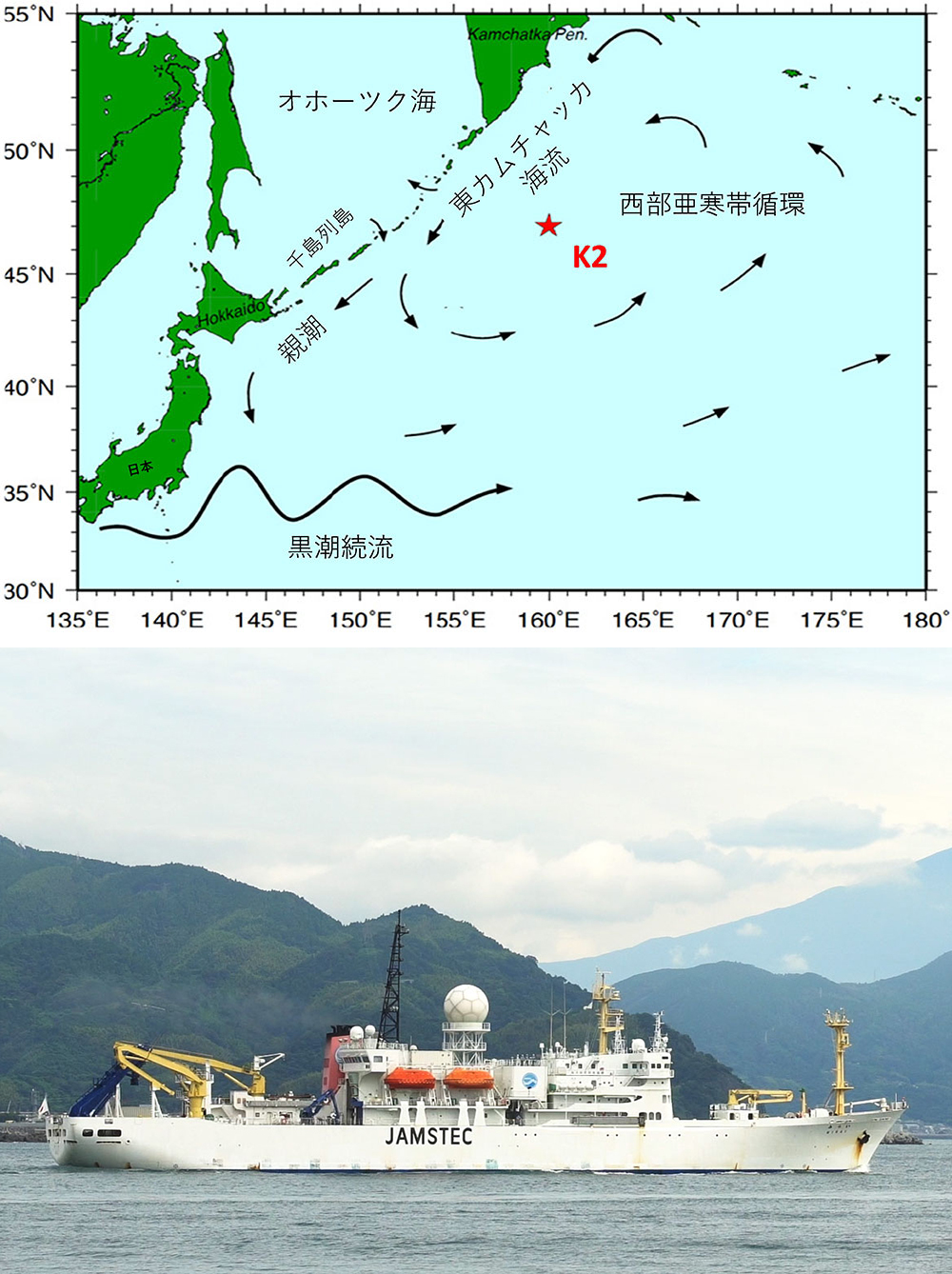
図1.北太平洋西部亜寒帯における定点K2および海洋地球研究船「みらい」
<関連情報>
- https://www.jamstec.go.jp/j/about/press_release/20260218/
- https://link.springer.com/article/10.1186/s40645-026-00799-7
999年から2023年までの25年間における北太平洋西部亜寒帯地域における海洋酸性化と生物生産の変化 Ocean acidification and changes in biological production in the western subarctic region of the North Pacific over the quarter century, 1999–2023
Masahide Wakita,Akira Nagano,Hiroshi Uchida,Yoshiyuki Nakano,Katsunori Kimoto,Masahito Shigemitsu,Kana Nagashima,Fumikazu Taketani,Tetsuichi Fujiki,Maki Noguchi-Aita,Kosei Sasaoka,Tsuneo Ono & Toshihiko Takemura
Progress in Earth and Planetary Science Published:14 February 2026
DOI:https://doi.org/10.1186/s40645-026-00799-7
Abstract
Changes in the physical and biogeochemical conditions of the ocean over time can affect marine ecosystems. In this study, we use biogeochemical observational data for the past 25 years (1999–2023) to investigate ocean acidification and changes in biological production at site K2 (47˚ N, 160˚ E) in the western subarctic region of the North Pacific Ocean. During this period, satellite-derived sea surface temperatures increased at a rate of 0.056 °C yr–1, while the surface mixed-layer salinity decreased by 0.004 yr−1. As a result of the oceanic uptake of anthropogenic CO2 from the atmosphere, the deseasonalized annual mean surface mixed-layer pH and saturation states of calcium carbonate minerals of calcite and aragonite decreased at rates of 0.0013 ± 0.0004, 0.007 ± 0.003, and 0.004 ± 0.002 yr−1, respectively. These rates are consistent with those calculated for winter. Under these acidification conditions, no significant trends were observed in either the annual mean or winter concentrations of nutrients (phosphate, nitrate, and silicate), or in total alkalinity in the surface mixed layer. However, the decadal trends in nutrient concentrations show a significant increase in May and decrease in July. Net community production (NCP), which is an index of biological production, was estimated from differences in nutrient concentrations between winter and May or July. This analysis revealed significant decreasing trends in NCP from winter to May, followed by increasing trends from winter to July. The stoichiometric molar ratio of Si associated with the July NCP increase (P:N:Si = 1:15:55) is higher than the previously reported ratio (1:16:40). A significant decreasing trend in satellite-derived photosynthetically active radiation (PAR) was observed in May (0.20 ± 0.08 yr−1), which may be linked to reduced biological production during that month. This decrease may be offset by increased production in summer that is likely due to a shift in the timing of the diatom bloom. These findings highlight the effects of long-term changes of potential drivers of both atmospheric and deep oceanic origin on oceanic biological production.