2026-01-28 北海道大学,北海道立総合研究機構
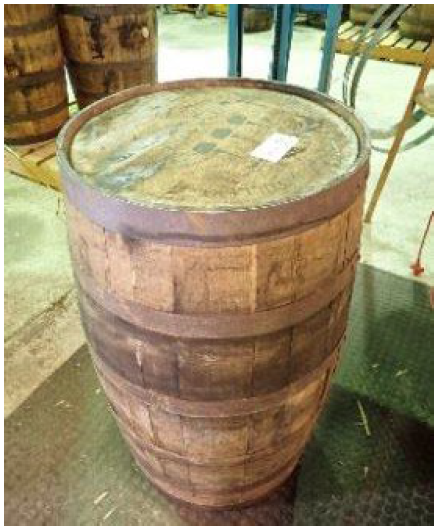
ミズナラは他の外国産ナラ類にはない魅力を持ったウイスキー用の樽材になるが、それらと比較して道管を埋めるチロースの形成が少ないため、少しでも材にねじれがあると、液漏れが発生してしまう。
<関連情報>
- https://www.hokudai.ac.jp/news/2026/01/post-2175.html
- https://www.hokudai.ac.jp/news/pdf/260128_pr.pdf
- https://www.sciencedirect.com/science/article/abs/pii/S0378112725006917
二次林における樽材適性のあるミズナラ(Quercus crispula)立木個体の生育特性 Growth characteristics of standing individual Japanese oak (Quercus crispula) qualifying for barrel timber in a secondary forest
Akira Nakaya, Satoru Murakami, Hisashi Ohsaki, Yasuyuki Ohno, Toshiya Yoshida
Forest Ecology and Management Available online: 23 September 2025
DOI:https://doi.org/10.1016/j.foreco.2025.123183
Highlights
- Small grain angles and abundant tyloses are essential for barrel timber quality in Quercus crispula.
- Uneven and fast radial growth increases the grain angle, reducing barrel wood suitability.
- Tylose formation is higher in slow-growing trees, suggesting resource allocation to maintain and protect existing structures.
- Grain angle and tylose filling ratio show high variability but low spatial autocorrelation.
- Long-rotation forestry under moderate competition is recommended to enhance barrel wood quality.
Abstract
The demand for Japanese oak (Mizunara; Quercus crispula) as barrel timber has been increasing. To prevent liquid leakage, small grain angles and abundant tyloses are essential. This study examined the grain angles and tylose filling ratios in Q. crispula and their relationships with individual tree growth characteristics. A total of 237 disks were collected at 3 m tree height at a 7.1 ha secondary forest dominated by Q. crispula. The grain angles were measured via the splitting method to calculate the absolute average (AGAab). The proportion of earlywood vessels filled with tyloses in the sapwood−heartwood transition zone (2 cm²) was also assessed (TFRtr). Relationships between AGAab, TFRtr, and various factors were analyzed via structural equation modeling. The most influential factor for AGAab was wood ec centricity (the estimated standardized path coefficient = 0.33, p < 0.01), followed by annual ring width (coefficient = 0.29, p < 0.05). This suggests that uneven and fast radial growth increases the grain angle. The strongest factor for TFRtr was annual ring width (coefficient = −0.21, p < 0.05), indicating that slow-growing trees allocate more resources to maintaining existing structures than to form new cells. These findings suggest that promoting rapid growth does not necessarily enhance wood quality. For barrel wood production, long-rotation forestry is recommended to ensure moderate competition.