2026-01-06 コペンハーゲン大学(UCPH)
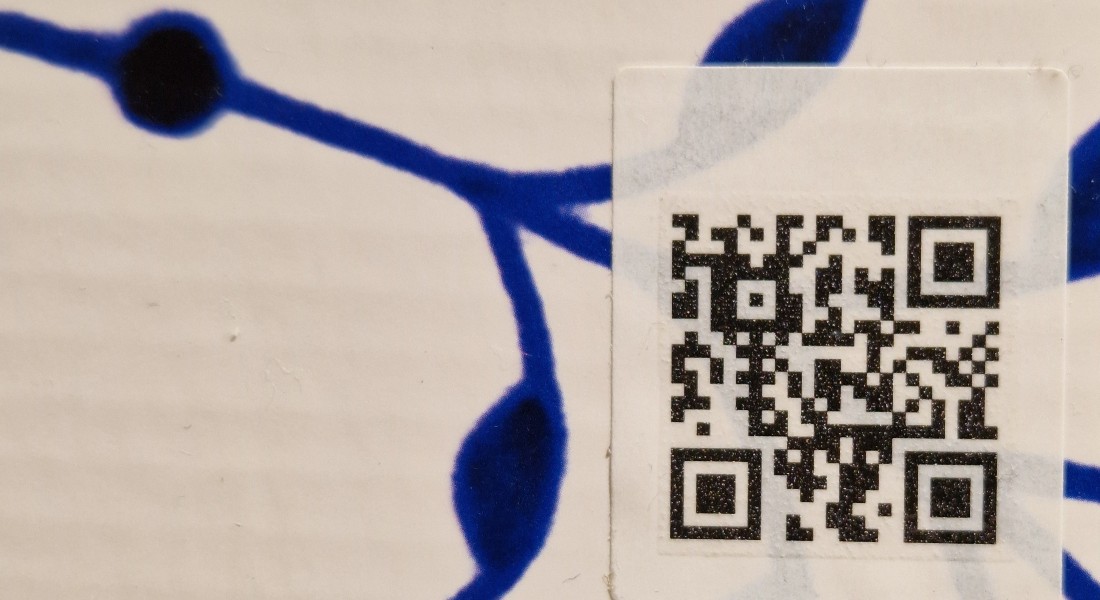
The mark can be embedded in a tiny area in a QR code, which can then be scanned with a standard smartphone and serves as legally recognised proof of authenticity. Photo: KU
<関連情報>
- https://news.ku.dk/all_news/2026/01/danish-chemists-invention-could-make-counterfeiting-a-thing-of-the-past/
- https://www.science.org/doi/10.1126/sciadv.1701384
励起選択ランタニド発光の画像化に基づく光認証システム An optical authentication system based on imaging of excitation-selected lanthanide luminescence
Miguel R. Carro-Temboury, Riikka Arppe, Tom Vosch, and Thomas Just Sørensen
Science Advances Published:26 Jan 2018
DOI:https://doi.org/10.1126/sciadv.1701384
Abstract
Secure data encryption relies heavily on one-way functions, and copy protection relies on features that are difficult to reproduce. We present an optical authentication system based on lanthanide luminescence from physical one-way functions or physical unclonable functions (PUFs). They cannot be reproduced and thus enable unbreakable encryption. Further, PUFs will prevent counterfeiting if tags with unique PUFs are grafted onto products. We have developed an authentication system that comprises a hardware reader, image analysis, and authentication software and physical keys that we demonstrate as an anticounterfeiting system. The physical keys are PUFs made from random patterns of taggants in polymer films on glass that can be imaged following selected excitation of particular lanthanide(III) ions doped into the individual taggants. This form of excitation-selected imaging ensures that by using at least two lanthanide(III) ion dopants, the random patterns cannot be copied, because the excitation selection will fail when using any other emitter. With the developed reader and software, the random patterns are read and digitized, which allows a digital pattern to be stored. This digital pattern or digital key can be used to authenticate the physical key in anticounterfeiting or to encrypt any message. The PUF key was produced with a staggering nominal encoding capacity of 73600. Although the encoding capacity of the realized authentication system reduces to 6 × 10104, it is more than sufficient to completely preclude counterfeiting of products.