2025-12-04 中国科学院(CAS)
<関連情報>
- https://english.cas.cn/newsroom/research_news/phys/202512/t20251204_1134635.shtml
- https://academic.oup.com/mnras/article/544/2/2024/8315991
AGNディスクに埋め込まれた恒星質量コンパクト天体の降着率 Accretion rates of stellar-mass compact objects embedded in AGN discs
Cheng-Liang Jiao ,Liying Zhu ,Er-gang Zhao ,Jia Zhang
Monthly Notices of the Royal Astronomical Society Published:06 November 2025
DOI:https://doi.org/10.1093/mnras/staf1899
ABSTRACT
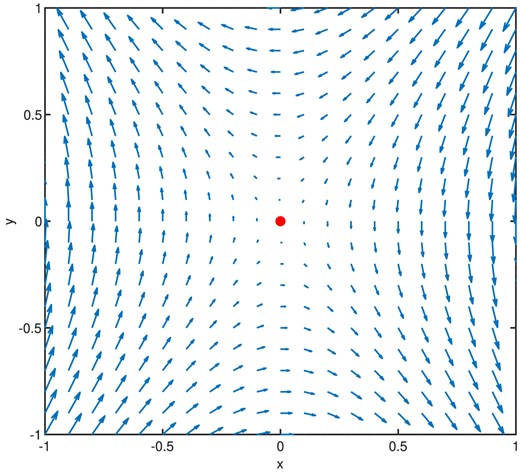
Stellar-mass compact objects (COs) embedded in active galactic nucleus (AGN) discs are commonly assumed to accrete via Bondi or Bondi–Hoyle–Lyttleton (BHL) prescriptions, neglecting gas angular momentum. We show that differential rotation in AGN discs can impart non-negligible angular momentum, in which case accretion proceeds through a viscous disc rather than Bondi/BHL flow. Our model provides a new framework estimating the CO accretion rate as M˙ CO = min{M˙ vis, M˙ BHL}, where the viscous rate M˙ vis accounts for gas–CO relative motion decomposed into a local gradient term (due to differential rotation) and bulk motion (from differing orbital parameters). This rate can be expressed as M˙ vis = αξ (rH/rBHL) 3M˙ BHL, where ξ is a coefficient of the order of unity. It can also be approximately scaled to the global AGN accretion rate as M˙ vis ∝ M˙ 1, with the scaling coefficients in both forms determined by the specific dynamical configuration. The accretion is viscosity-limited when q > [αξ (1 + M2) 3/3]1/2h3, where q is the mass ratio between the CO and the supermassive black hole, α the viscosity parameter, M the Mach number of the bulk relative motion, and h the aspect ratio of the AGN disc. In thin AGN discs this condition is satisfied for most stellar-mass or more massive COs. Our framework also naturally allows for the inclusion of established outflow corrections, thereby enabling a more realistic treatment of super-Eddington flows. Our formulation thus improves upon Bondi/BHL prescriptions and offers a more physically motivated basis for studying CO evolution in AGN environments.