
2025-10-31 テキサスA&M大学
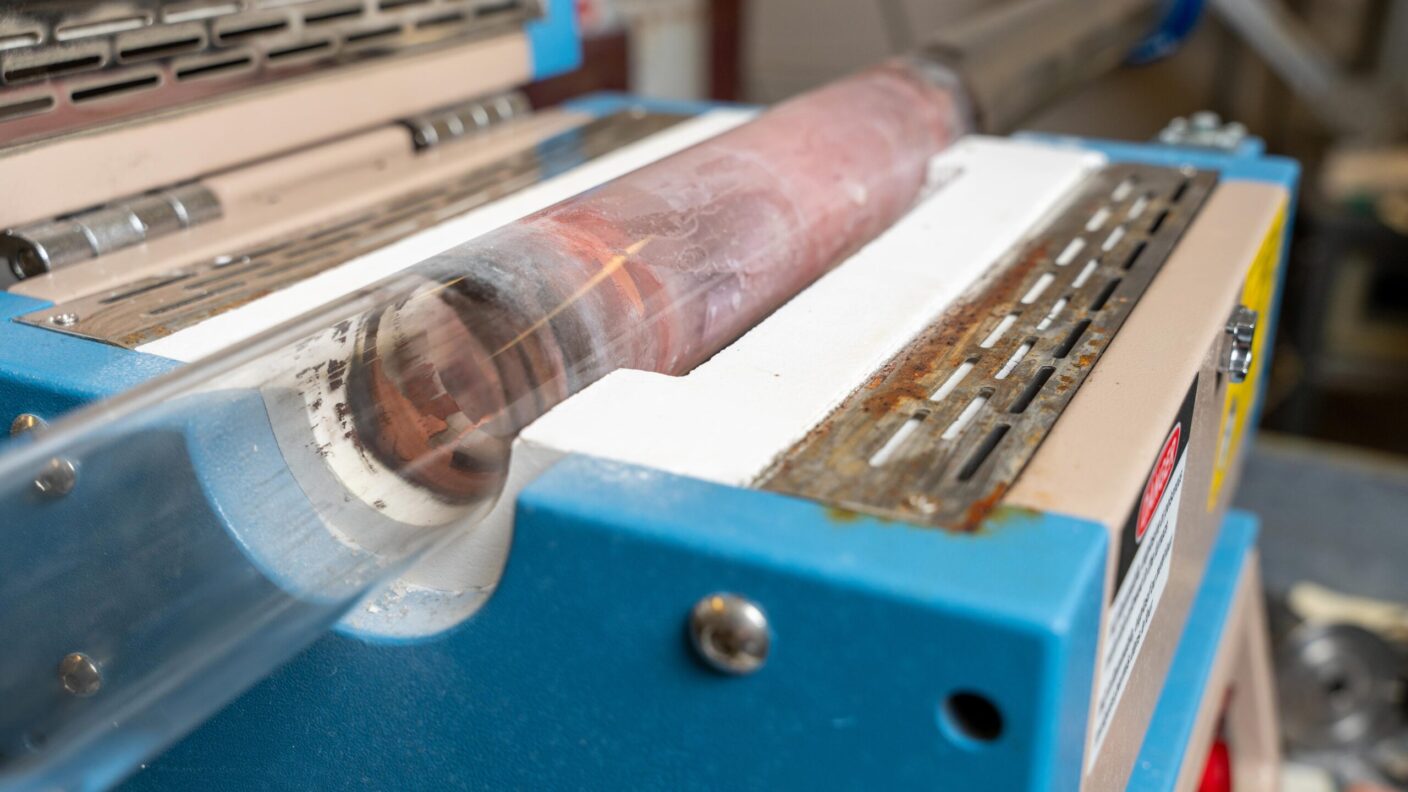
A tubular furnace heats materials within a sealed quartz tube to study phase transformations and develop next-generation metallic materials.Credit: Emily Oswald/Texas A&M University College of Engineering
<関連情報>
- https://stories.tamu.edu/news/2025/10/31/texas-am-researchers-develop-metallic-gel-that-could-transform-batteries/
- https://advanced.onlinelibrary.wiley.com/doi/10.1002/adem.202500738
液体金属電池の電極として応用される形状保存金属ゲル Shape-Preserving Metallic Gels with Applications as Electrodes for Liquid Metal Batteries
Charles Borenstein, Brady G. Butler, James D. Paramore, Karl T. Hartwig, Michael J. Demkowicz
Advanced Engineering Materials Published: 24 August 2025
DOI:https://doi.org/10.1002/adem.202500738
Abstract
Metallic composites that remain stiff and retain their shape even though their majority phase is liquid are presented. Using X-ray computed tomography, it is demonstrated that the solid minority phase forms a system-spanning, load-bearing skeleton: a behavior commonly observed in gels. Therefore, these novel composites are called “metallic gels.” To demonstrate their potential utility in liquid metal batteries (LMBs), galvanic cells are assembled with majority calcium (Ca) and bismuth (Bi) composite electrodes and iron (Fe) as the minority phase. At the operating temperature of these cells the majority phase is liquid, while the iron is solid. Conventional LMBs rely on gravitational segregation and low mutual solubility to maintain the arrangement of their electrodes and electrolyte. As a result, they cannot be reoriented, since that may cause layers to mix and short circuit. Unlike conventional LMBs, the cells can operate in a horizontal orientation without forming short circuits. Thus, metallic gel electrodes may circumvent the limitations of all-liquid cells while retaining many of their benefits.


