2025-10-16 チャルマース工科大学
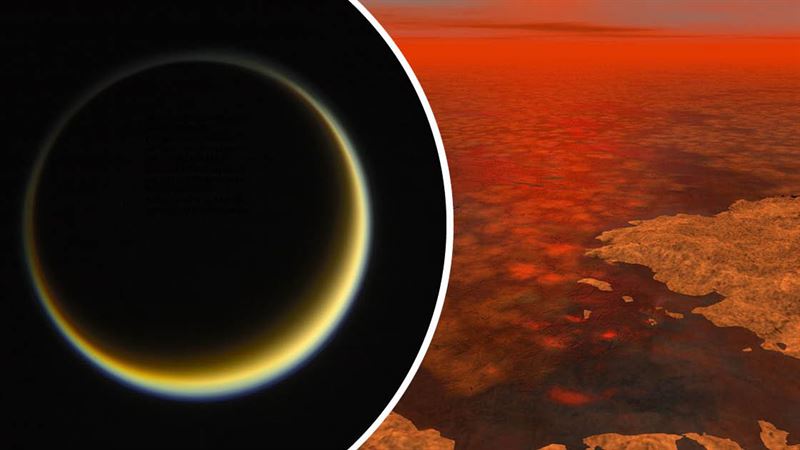
Researchers at Chalmers University of Technology in Sweden and the US space agency NASA have made an unexpected discovery that challenges one of the basic rules of chemistry and provides new knowledge about Saturn’s enigmatic moon Titan. In its extremely cold environment, normally incompatible substances can still be mixed. This discovery broadens our understanding of chemistry before the emergence of life.
<関連情報>
- https://news.cision.com/chalmers/r/unexpected-discovery-on-saturn-s-moon-challenges-our-view-on-chemistry-before-life-emerged,c4251259
- https://www.pnas.org/doi/10.1073/pnas.2507522122
タイタンではシアン化水素と炭化水素が混ざり合う Hydrogen cyanide and hydrocarbons mix on Titan
Fernando Izquierdo-Ruiz, Morgan L. Cable, Robert Hodyss, +3 , and Martin Rahm
Proceedings of the National Academy of Sciences Published:July 23, 2025
DOI:https://doi.org/10.1073/pnas.2507522122
Significance
This work uncovers the unexpected solid-state molecular mixing of nonpolar hydrocarbons—such as methane and ethane—with hydrogen cyanide (HCN), a compound more polar than water. By challenging the conventional wisdom that “like dissolves like,” this finding stands out alongside rare materials such as methane–water clathrates. It suggests different ways to think about chemical interactions with HCN at lower temperatures, potentially reshaping our understanding of processes in diverse environments across the solar system. In particular, methane, ethane, and HCN play significant roles in the environment of Saturn’s moon Titan, underscoring a potential importance of our findings for understanding chemical and geological evolution of Titan’s unique landscape.
Abstract
This work reveals a striking exception to the well-established rule in chemistry that polar and nonpolar compounds do not spontaneously mix: insertion of methane, ethane, and other small hydrocarbons into the crystal lattice of hydrogen cyanide (HCN), a highly polar molecule. By mixing these components at cryogenic temperatures, we can observe distinct shifts in vibrational modes using Raman spectroscopy. Our computational predictions confirm that cocrystal structures of HCN and ethane, which match our experimental vibrational shifts closely, are thermodynamically and kinetically stable. Given that methane, ethane, and HCN are major components of the atmosphere and surface of Saturn’s moon Titan—where they play key roles in shaping chemistry, weather, and landscape—our findings may prove instrumental for explaining Titan’s chemical and geological evolution.