2025-09-11 シンガポール国立大学(NUS)
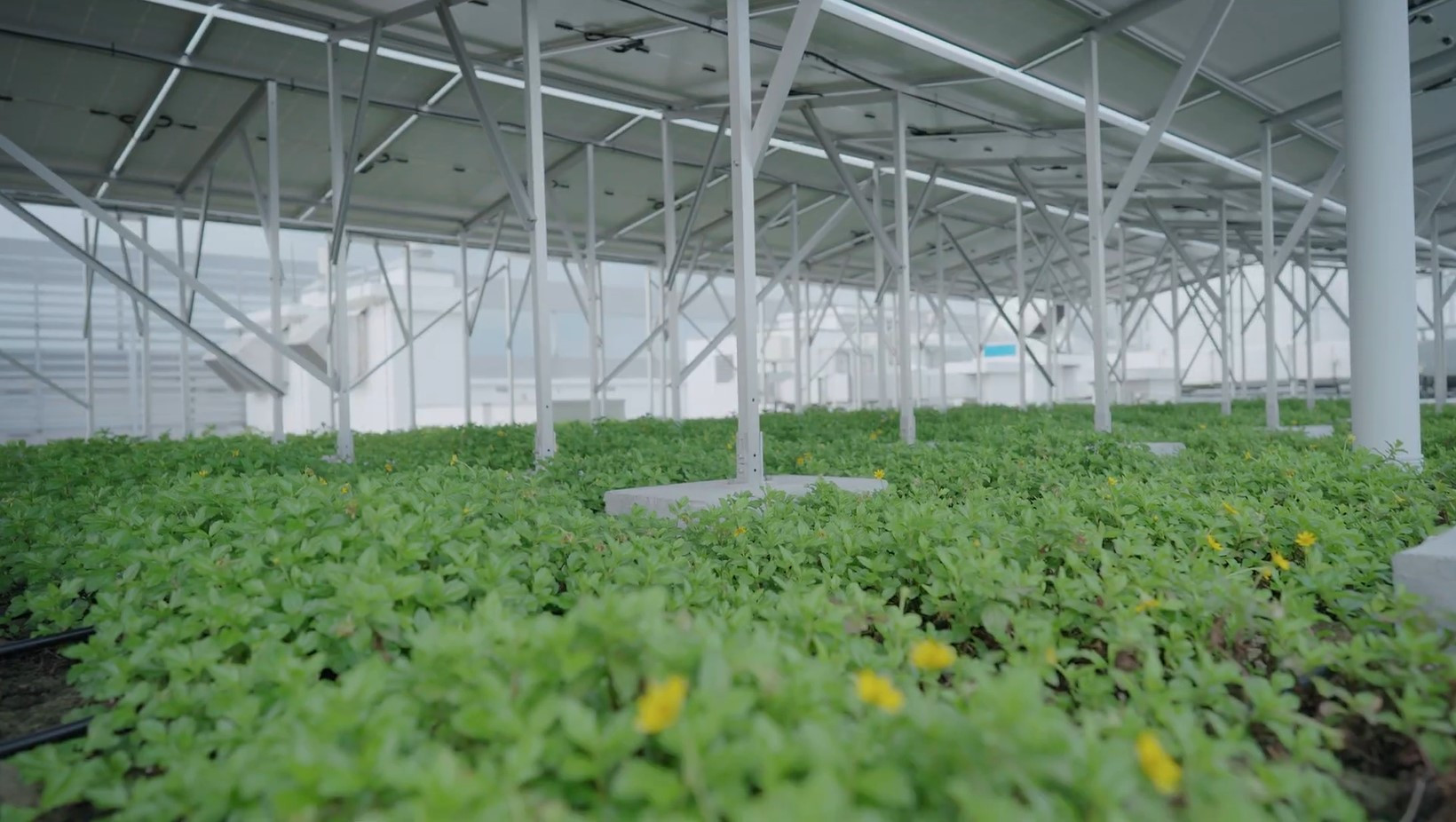 The study shows that co-locating solar panels with green roofs increases electricity generation, enhances greenery growth and cools buildings. Photo credit: NParks
<関連情報>
- https://news.nus.edu.sg/green-roofs-solar-panels-winning-combo-for-building-owners/
- https://www.sciencedirect.com/science/article/abs/pii/S0306261925008633
熱帯地域における太陽光発電設備と緑化の共存に関する包括的評価:太陽光発電出力、緑化成長、屋根表面温度に関する結果 Holistic assessment of co-located solar photovoltaics and greenery in the tropics: Results on solar photovoltaic output, greenery growth, and roof surface temperature
Faizatuzzahrah Rahmaniah, Joyce Hui Min Lim, Choon Hock Poh, Lian Sheng He, Jeb Yeo, James Wei Wang, Selvam Valliappan, Edward Ang, Zhimin Chen, Stephen En Rong Tay
Applied Energy Available online: 4 June 2025
DOI:https://doi.org/10.1016/j.apenergy.2025.126133
Highlights
- Experimental evaluation of co-located PV-GR system in the tropics over a year.
- Propose Roof Equivalent Ratio (RER) for evaluating rooftop PV-GR performance.
- PV-GR improves solar PV output, greenery coverage, rooftop and PV thermal condition.
- Four ground cover plant species exhibited improved ground coverage in PV-GR.
- PV-GR increases the RER by 2.39 times than bare concrete roof.
Abstract
Co-located solar photovoltaics and green roof systems have gained increased attention for generating renewable energy and incorporating greenery in urban environments. However, few studies approach the topic from a holistic approach of such a system in tropical climates. In this study, the impact of co-located solar photovoltaics and greenery in a tropical climate was investigated across three functional benefits: 1) solar photovoltaic output, 2) greenery growth, and 3) roof and ceiling surface temperature. Results revealed 1) an increase in photovoltaic performance ratio with greenery [absolute increase of 1.0 ± 0.8 %], 2) shade-tolerant plant species located under photovoltaic modules exhibited a significantly higher horizontal ground coverage with good health and vigour [absolute increase of 19.8 ± 8.0 %], and 3) lower roof surface temperature under co-located solar photovoltaics and greenery [reduction of 4.7 ± 0.1 °C]. To quantify the multi-functional impact of the co-located system, the Roof Equivalent Ratio is proposed, which was adapted from the Land Equivalent Ratio used in agrivoltaics, to which a roof equivalent ratio of 2.39 was obtained for the study. The results of this study could inspire similar research, especially in the tropics, to incorporate renewable energy generation through solar photovoltaic and greenery for sustainable urban environments.