2025-09-02 レンセラー工科大学 (RPI)
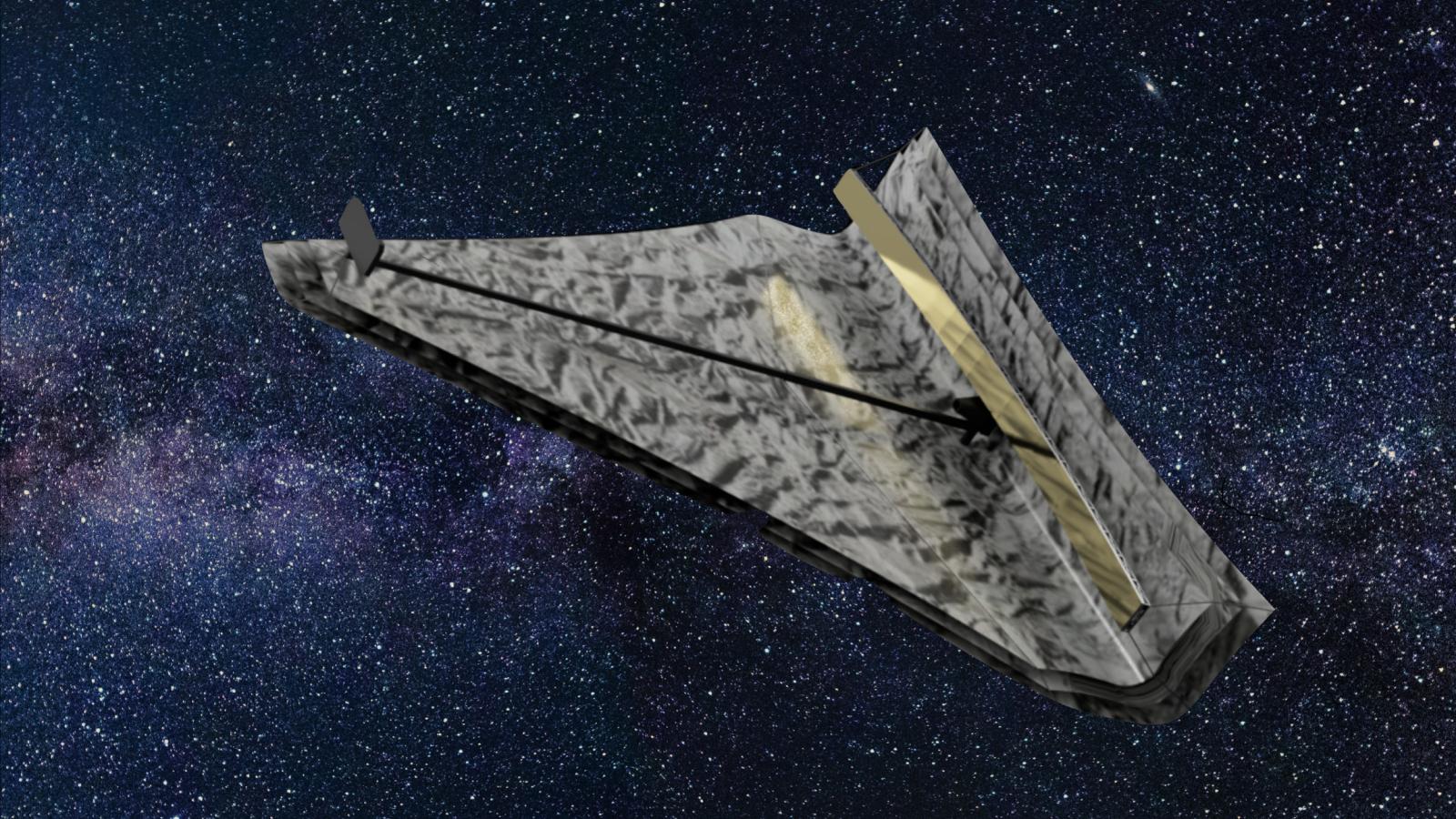
Conceptual illustration of a space telescope with a 20-meter rectangular mirror (Leaf Swordy/Rensselaer Polytechnic Institute)
<関連情報>
- https://news.rpi.edu/2025/09/02/rectangular-space-telescope-design-could-dramatically-accelerate-discovery-earth-worlds
- https://www.frontiersin.org/journals/astronomy-and-space-sciences/articles/10.3389/fspas.2025.1441984/full
惑星探査用長方形宇宙望遠鏡の有効性
The case for a rectangular format space telescope for finding exoplanets
Heidi Jo Newberg,Leaf Swordy,Richard K. Barry,Marina Cousins,Kerrigan Nish,Sarah Rickborn,Sebastian Todeasa
Frontiers in Astronomy and Space Sciences Published:01 September 2025
DOI:https://doi.org/10.3389/fspas.2025.1441984
We suggest that rectangular primary-mirror telescopes provide a clearer path to discovering habitable worlds than other designs currently being pursued. We show that a simple infrared (λ∼10 μm) telescope design with a rectangular mirror 20 m in length and 1 m in width, combined with technology already developed for JWST, can discover ∼11 habitable exoplanets and measure ozone in their atmospheres in a mission of ∼1 year. A mission of ∼3.5 years could plausibly discover ∼27 habitable exoplanets closer than 10 pc to the Earth, and determine whether there is ozone in their atmospheres. A square primary mirror with the same collecting area cannot resolve exoplanets that are within 0.23″ of the host star, making it impossible to detect most of the nearby Earth-like exoplanets. The idea of collecting light with a high aspect ratio rectangular mirror could be used at any wavelength. It is particularly useful for measuring point sources with very small angular separations, as is required for exoplanet observation.