
2025-08-26 ペンシルベニア州立大学(PennState)
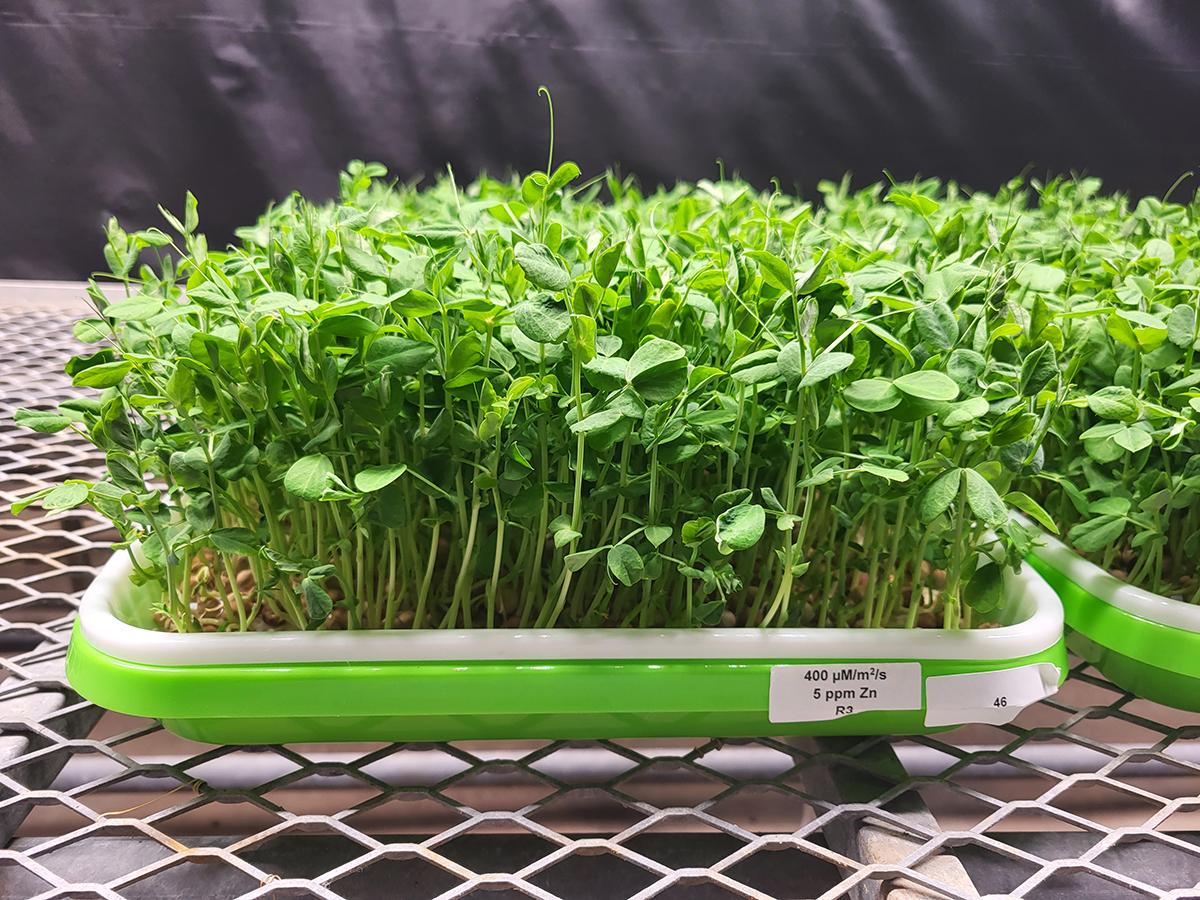
Zinc enrichment and light intensity affect the nutritional composition of radish microgreens, shown here. The researchers found that high light intensity decreased the production of plant-defense compounds while it increased the production of antioxidants. Credit: Penn State. Creative Commons
<関連情報>
- https://www.psu.edu/news/research/story/fine-tuning-zinc-supplementation-light-exposure-boost-microgreens-nutrition
- https://pubs.acs.org/doi/10.1021/acs.jafc.5c03574
- https://www.sciencedirect.com/science/article/abs/pii/S0308814625023970
亜鉛バイオフォーティフィケーションと光強度に応答するラディッシュマイクログリーンのメタボロームプロファイル Radish Microgreen Metabolomic Profile in Response to Zinc Biofortification and Light Intensity
Pradip Poudel,Kristen A. Jeffries,Jinhe Bai,Christina Dorado,Erin Rosskopf,Francesco Di Gioia
Journal of Agricultural and Food Published: June 29, 2025
DOI:https://doi.org/10.1021/acs.jafc.5c03574
Abstract
Zinc deficiency is a global health issue, and agronomic biofortification is a promising strategy to enhance the bioaccessibility of Zn in edible crops. Microgreens, with their short growth cycle, high nutrient-density, and low antinutrient content, are ideal candidates for Zn-enrichment via fertigation. While controlled environments allow light modulation to optimize yield and quality, limited information exists on how Zn-enrichment and light together influence metabolite biosynthesis. This study evaluated metabolic responses in radish microgreens grown under varying Zn (0–15 mg/L) and light intensity (100–400 μmol/m2/s) levels using targeted metabolomics. High light intensity increased flavonoid and phenolic-acid levels, suggesting enhanced antioxidant responses, while reducing amino acids and glucosinolates, indicating a resource shift toward stress mitigation. Zn enrichment modulated phenylpropanoid, nitrogen, and energy metabolism, increasing specific flavonoids, phenolic acids, essential amino acids, and ATP. These findings provide insights into optimizing Zn- and light inputs to produce biofortified, nutrient-rich microgreens with improved functional-food potential.
光強度と亜鉛バイオフォーティフィケーションがエンドウマイクログリーンのメタボロームプロファイルに異なる影響を与える Light intensity and Zinc biofortification differentially impact the metabolomic profile of pea microgreens
Pradip Poudel, Kristen A. Jeffries, Jinhe Bai, Christina Dorado, Erin Rosskopf, Francesco Di Gioia
Food Chemistry Available online: 14 June 2025
DOI:https://doi.org/10.1016/j.foodchem.2025.145146
Highlights
- Light intensity drove metabolic shifts in Zn-enriched pea microgreens.
- Both light and Zn levels influenced flavone and flavonol, and ascorbate metabolism.
- Zn biofortification enhanced branched chain and sulfur amino acids.
- PLS-DA model separated light treatment groups based on metabolic profile.
Abstract
Zinc (Zn)-enriched microgreens obtained through agronomic biofortification may be used to address Zn-deficiency affecting 17% of the global population. However, little is known on how alternative agronomic biofortification strategies may impact their metabolomic profile. We investigated the metabolic responses of Zn-enriched pea microgreens grown under varying ZnSO4 rates (0, 5, 10, and 15 mg/L) and light intensities (100, 200, 300, and 400 μmol/m2/s Photosynthetic Photon Flux Density) using targeted metabolomics. Elevated light intensity increased flavonoids and phenolic acids biosynthesis, likely driven by oxidative stress and photoinhibition. Zn-enrichment enhanced sulfur-containing amino acids, and oxalic acid, which may play a role in metal detoxification. Light intensity was the dominant factor influencing metabolic shifts in pea microgreens across different classes of metabolome compared to the Zn application. This study provides critical insights into optimizing Zn-biofortification strategies and enhancing microgreens’ nutritional and functional quality, with implications for human health and sustainable functional food production.



