
2025-08-12 NASA
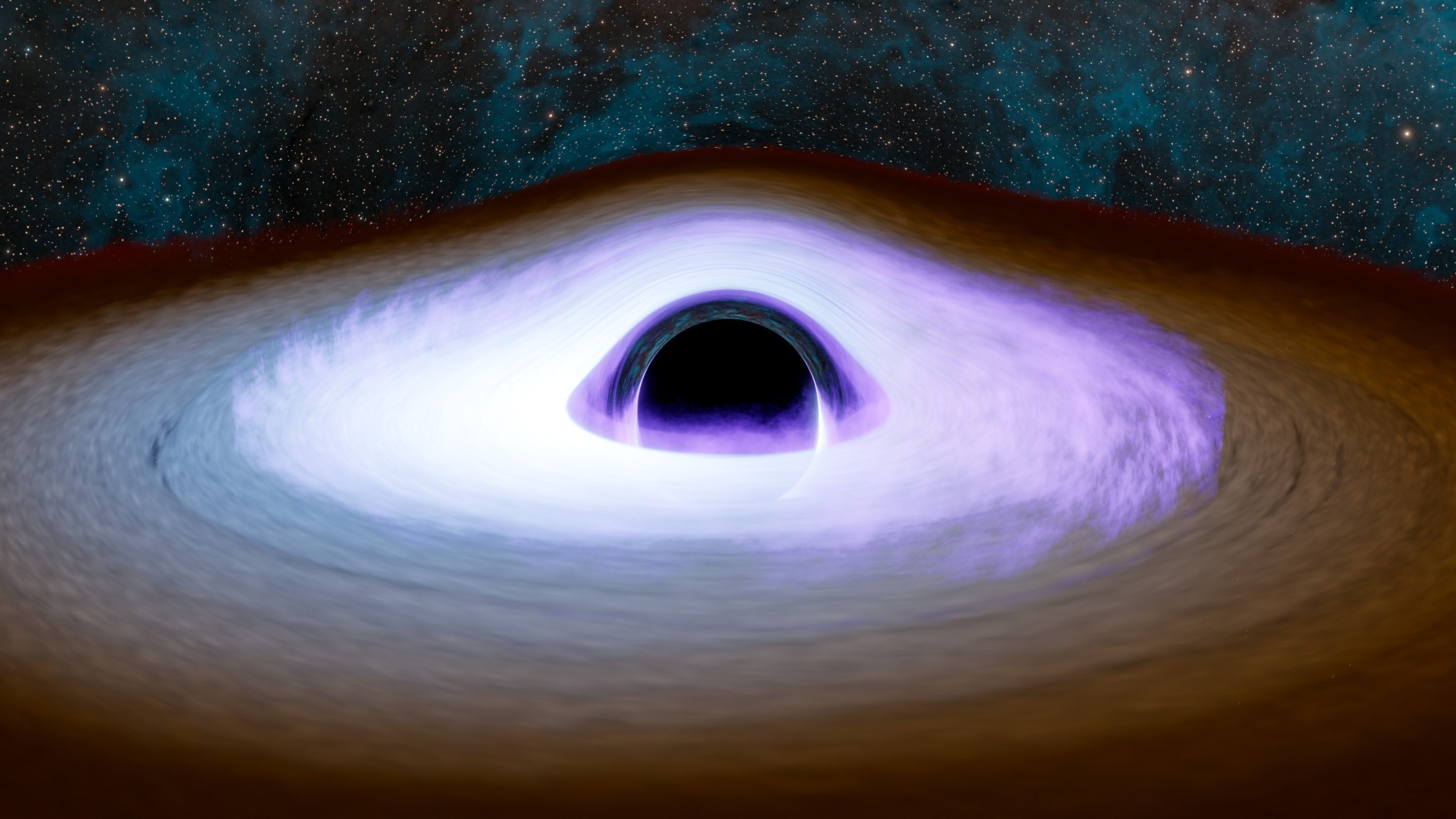
This illustration of material swirling around a black hole highlights a particular feature, called the “corona,” that shines brightly in X-ray light. In this depiction, the corona can be seen as a purple haze floating above the underlying accretion disk, and extending slightly inside of its inner edge. The material within the inner accretion disk is incredibly hot and would glow with a blinding blue-white light, but here has been reduced in brightness to make the corona stand out with better contrast. Its purple color is purely illustrative, standing in for the X-ray glow that would not be obvious in visible light. The warp in the disk is a realistic representation of how the black hole’s immense gravity acts like an optical lens, distorting our view of the flat disk that encircles it.
NASA/Caltech-IPAC/Robert Hurt
<関連情報>


