
2025-07-07 カリフォルニア大学ロサンゼルス校 (UCLA)
<関連情報>
- https://newsroom.ucla.edu/releases/do-ai-systems-socially-interact-the-same-way-living-beings
- https://www.nature.com/articles/s41586-025-09196-4
生物学的および人工知能システムにおける脳間神経ダイナミクス Inter-brain neural dynamics in biological and artificial intelligence systems
Xingjian Zhang,Nguyen Phi,Qin Li,Ryan Gorzek,Niklas Zwingenberger,Shan Huang,John L. Zhou,Lyle Kingsbury,Tara Raam,Ye Emily Wu,Don Wei,Jonathan C. Kao & Weizhe Hong
Nature Published:02 July 2025
DOI:https://doi.org/10.1038/s41586-025-09196-4
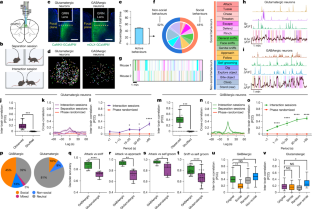
Abstract
Social interaction can be regarded as a dynamic feedback loop between interacting individuals as they act and react to each other1,2. Here, to understand the neural basis of these interactions, we investigated inter-brain neural dynamics across individuals in both mice and artificial intelligence systems. By measuring activities of molecularly defined neurons in the dorsomedial prefrontal cortex of socially interacting mice, we find that the multi-dimensional neural space within each individual can be partitioned into two distinct subspaces—a shared neural subspace that represents shared neural dynamics across animals and a unique neural subspace that represents activity unique to each animal. Notably, compared with glutamatergic neurons, GABAergic (γ-aminobutyric acid-producing) neurons in the dorsomedial prefrontal cortex contain a considerably larger shared neural subspace, which arises from behaviours of both self and others. We extended this framework to artificial intelligence agents and observed that, as social interactions emerged, so too did shared neural dynamics between interacting agents. Importantly, selectively disrupting the neural components that contribute to shared neural dynamics substantially reduces the agents’ social actions. Our findings suggest that shared neural dynamics represent a fundamental and generalizable feature of interacting neural systems present in both biological and artificial agents and highlight the functional significance of shared neural dynamics in driving social interactions.


