2026-05-07 ドイツ・サステナビリティ研究所(RIFS)
© Shutterstock/ FOTOGRIN
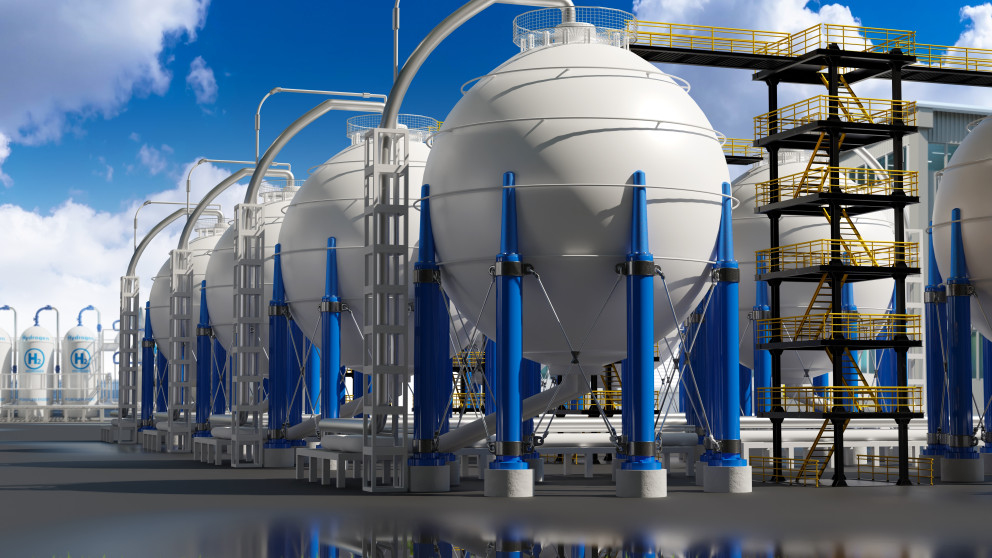
The hydrogen value chain is associated with a number of emission challenges that need to be addressed if hydrogen is to contribute to achieving climate targets.
<関連情報>
- https://www.rifs-potsdam.de/en/news/planning-hydrogen-under-geopolitical-uncertainty
- https://www.nature.com/articles/s44359-026-00164-3
再生可能水素をベースとした工業生産の地政経済シナリオ Geoeconomic scenarios of renewable-hydrogen-based industrial production
Laima Eicke,Andreas Goldthau,Rainer Quitzow,James Kneebone,Priyank Lathwal,Dolf Gielen,Nicola De Blasio,Kavita Surana & Clara Galeazzi
Nature Reviews Clean Technology Published:22 April 2026
DOI:https://doi.org/10.1038/s44359-026-00164-3
Abstract
Renewable hydrogen could have a role in decarbonizing energy-intensive industries and in achieving net-zero economies. The impacts of renewable-hydrogen production and use on industrial value chains and the geography of production are debated, as there is a mismatch between the locations of industrial clusters and potential large-scale production of renewable hydrogen. This Perspective examines the geoeconomic factors affecting the use of renewable hydrogen in industry and discusses the potential impacts on global value chains. We discuss three future scenarios of renewable-hydrogen-based production. In a fuel-switch scenario, renewable hydrogen displaces fossil fuels without major reshaping of industrial value chains, assuming that infrastructure for long-distance hydrogen transport can be deployed. Another scenario is industrial relocation, where industries shift to regions with abundant hydrogen production potential, thus reducing the need for direct hydrogen transport. Finally, a hybrid scenario describes the co-location of hydrogen production and intermediate production, with final production at existing industrial hubs. These scenarios each have geopolitical, environmental and justice implications that require thorough analysis and targeted policy responses to ensure a just hydrogen transition.
Key points
- Large-scale use of renewable hydrogen in steel and chemical industries will affect energy systems and could also reshape global industrial geographies by changing where energy-intensive production is competitive.
- The three scenarios — fuel switch, dispersed production and industrial relocation — show how transport infrastructure, geopolitics, investment conditions and green industrial policy interact to produce different distributions of industrial activity, emissions and economic benefits.
- Techno-economic studies suggest strong incentives for relocating parts of industrial value chains. Full relocation yields the lowest costs overall, but most of the cost advantage can be realized by relocating intermediate production stages while keeping advanced manufacturing in incumbent hubs.
- Many studies and policy road maps implicitly assume stable alliances and liberal trade; the scenarios here suggest that strategic planning should explicitly stress-test hydrogen and industrial strategies against alternative geopolitical futures.
- Justice and equity concerns are central: a narrow fuel-switch pathway risks reinforcing existing inequalities, while dispersed production and industrial relocation could support green industrialization in low- and middle-income countries with abundant renewable resources if backed by equitable value-sharing arrangements and robust institutions.
- For policymakers and industry, the findings highlight the need to align hydrogen strategies with broader industrial, trade and social policies to manage potential relocation, support workers and regions at risk of decline, and seize opportunities to build more geographically balanced and resilient green value chains.