2026-04-03 中国科学院(CAS)
<関連情報>
- https://english.cas.cn/newsroom/research-news/202604/t20260403_1155144.shtml
- https://www.sciencedirect.com/science/article/abs/pii/S0141635926000541?via%3Dihub
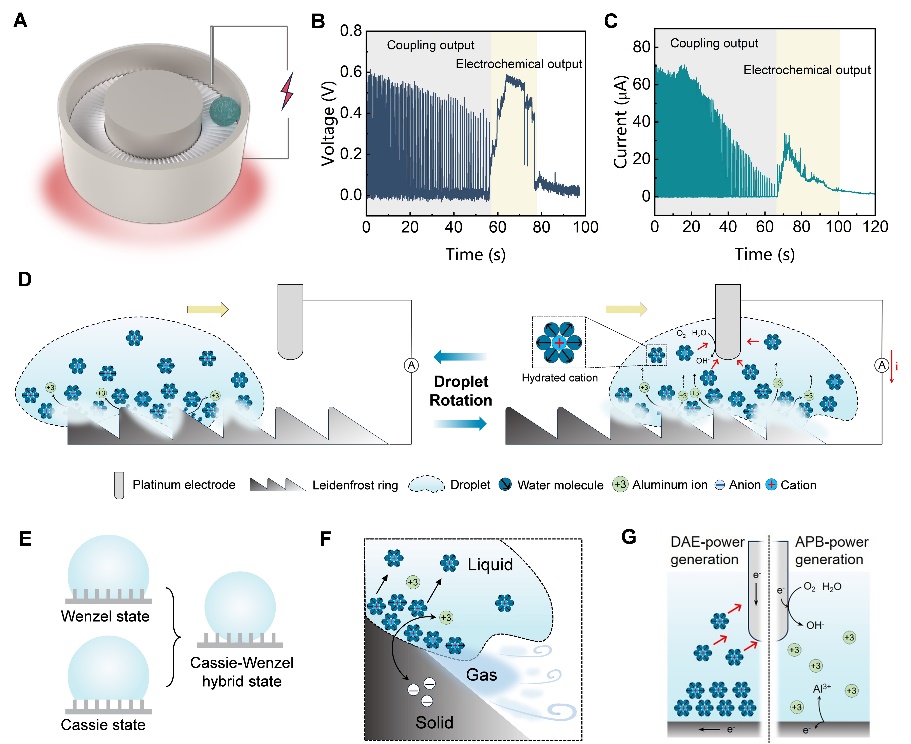
Optuna最適化表形式事前データ適合ネットワークに基づくブレードロボット研削の材料除去深さの制御モデル Self-propelled generator for low-grade heat harvesting via metastable Leidenfrost effect
Zhijian Liang, Guang Zhu, Lun Li, Tao Zhang, Jibin Zhao, Wangyang
Precision Engineering Available online: 16 February 2026
DOI:https://doi.org/10.1016/j.precisioneng.2026.02.013
Graphical abstract

Highlights
- Proposed O-TabPFN for pointwise material removal depth prediction in robotic abrasive belt grinding.
- Optuna-based hyperparameter tuning improved TabPFN prediction accuracy and robustness.
- Robot grinding platform with 3D scanning enabled precise measurement of material removal depth.
- Experiments revealed coupled effects of feed rate, curvature radius, and contact force, defining process limits.
- O-TabPFN achieved 95.81% accuracy with lower MAE, RMSE, higher R², and validation errors under 0.004 mm.
Abstract
Robot belt grinding, characterized by its flexible and cost-effective advantages, has been extensively employed in the machining of aerospace casting blades. Nonetheless, these casting blades present challenges owing to their uneven machining allowance distribution and intricate curved surface structures, necessitating precise material removal to meet the stringent processing quality standards. Consequently, the development of an intelligent grinding method for precise point-by-point material removal has become a pressing issue in the aviation sector. A control model for the material removal depth in blade robot grinding was proposed by utilizing Optuna optimized Tabular Prior-data Fitted Network (O-TabPFN). The theoretical analysis revealed that this model could accurately adjust the process parameters to optimize the grinding process. The verification experiments demonstrated a prediction accuracy of 95.81% with an average forecast error of 0.007316 mm. These findings further substantiated that the intelligent grinding method for point-by-point precise removal could flexibly adjust the processing parameters based on the allowance distribution, thereby significantly enhancing processing accuracy and surface consistency. It indicated that this method was particularly applicable to the high-precision manufacturing of complex curved surface workpieces.