2026-02-23 ワシントン大学セントルイス校
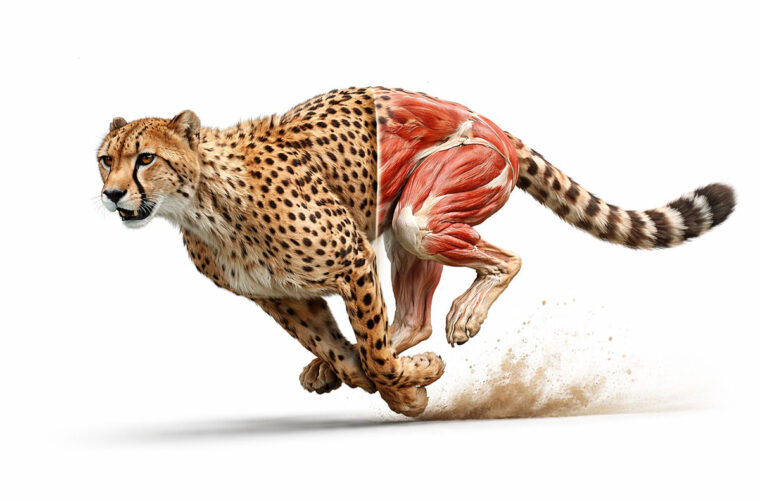
Researchers at WashU have created protein fibers inspired by various animal muscle proteins. These materials are grown in bioreactors and can be stronger than many synthetic fibers, making them ideal for active wear and biomedical implants. (Image generated in ChatGPT)
<関連情報>
- https://source.washu.edu/2026/02/putting-some-muscle-into-material-design/
- https://engineering.washu.edu/news/2026/Putting-some-muscle-into-material-design.html
- https://advanced.onlinelibrary.wiley.com/doi/10.1002/adfm.202529451
免疫グロブリンドメイン由来の筋肉に着想を得た繊維は、優れた機械的性能、エネルギー減衰、形状記憶特性を兼ね備えています Muscle-Inspired Fibers from Immunoglobulin Domains Combine Superior Mechanical Performance, Energy Damping, and Shape Memory Properties
Shri Venkatesh Subramani, Qingyue Guo, Huamin Gao, Kok Zhi Lee, Tate Darin, Faramarz Joodaki, Sinan Keten, Fuzhong Zhang
Advanced Functional Materials Published: 04 February 2026
DOI:https://doi.org/10.1002/adfm.202529451
ABSTRACT
Animal muscle is an intriguing natural material whose mechanical properties arise from sequence-diverse protein domains, many of which remain unexplored for material design. Among them, Immunoglobulin-like (Ig) domains act as molecular springs that can unfold and refold repetitively without losing function, dissipating mechanical energy as heat, making them promising building blocks for next-generation protein-based materials (PBMs). In this study, we translate these molecular features to the macroscale by fabricating fibers from microbially-synthesized Ig domains of various muscle proteins. Among them, Filamin-derived Ig fibers (MW = 123 kDa) exhibited a unique combination of high tensile strength (412 ± 22 MPa), high toughness (120 ± 17 MJ/m3), remarkable mechanical stability (∼89%) under 90% humidity, high energy damping capacity (∼80%), and complete shape recovery (∼100%) over repeated loading–unloading cycles. Our results further revealed molecular mechanisms underlying these properties: (i) Ig domain hydrophobicity strongly correlates with fiber assembly and tensile strength, (ii) reversible unfolding–refolding of Ig domains enables efficient energy dissipation and self-recovery, and (iii) hydrogen-bonding networks within the amorphous matrix regulate humidity-induced weakening. Together, these findings establish Ig domains as a new class of PBMs combining advantageous mechanical and physical properties, offering a versatile platform for developing advanced materials with tunable performance.