2026-01-29 カリフォルニア大学サンディエゴ校(UCSD)
<関連情報>
- https://today.ucsd.edu/story/plastic-pollution-promotes-hazardous-water-conditions-new-study-finds
- https://www.nature.com/articles/s44458-025-00014-6
マイクロプラスチック汚染は実験池で藻類の大量発生を引き起こすが、バイオプラスチックはそれほど有害ではない Microplastic pollution induces algae blooms in experimental ponds but bioplastics are less harmful
Scott G. Morton,Gabriel Vucelic-Frick,Jonathan R. Dickey,Bhausaheb S. Rajput,Cody J. Spiegel,Dahlia A. Loomis,Sara L. Jackrel,Michael D. Burkart & Jonathan B. Shurin
Communications Sustainability Published:19 January 2026
DOI:https://doi.org/10.1038/s44458-025-00014-6
Abstract
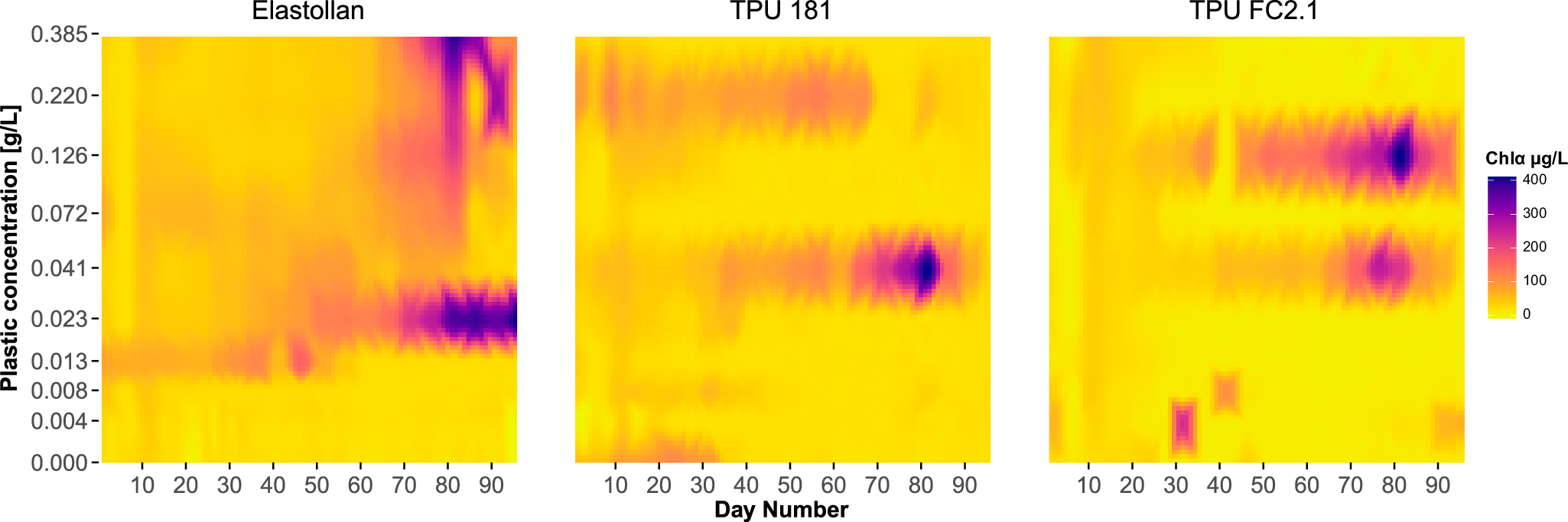
An ever-growing sea of plastic waste permeates even the most remote ecosystems; however, its ecological impact is unclear. Less persistent bioplastic alternatives are available but also have unknown environmental effects. We conducted a three-month experiment exposing plankton in experimental ponds to 10 concentrations of three different thermoplastic polyurethane microplastics, including two biodegradable bioplastics. Algal blooms with dense chlorophyll occurred consistently at high concentrations of the petroleum-derived thermoplastic polyurethane, but only occasionally with the two bioplastics. Herbivorous zooplankton density was strongly reduced by typical thermoplastic polyurethane and only weakly by bioplastics, therefore the effect on algae is at least partly due to reductions in top-down grazing pressure. Microbial communities exhibited compositional shifts in response to all three plastic types, with petroleum-derived plastic associated with the most pronounced differences across both prokaryotic and eukaryotic domains. Our results show that plastic pollution may contribute to the growing global problems of eutrophication, coastal hypoxia and harmful algae blooms, and that biodegradable plastics may have smaller environmental footprints.