2025-12-15 北海道大学,国立極地研究所
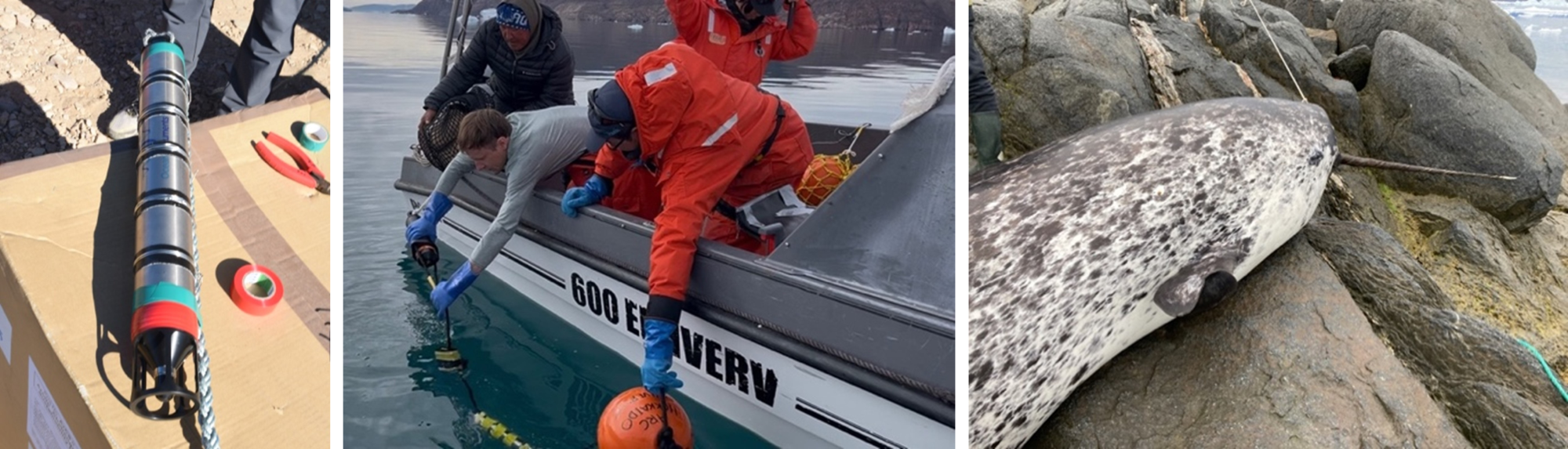
写真左 水中録音機器。長さ53 cm、直径6 cmの機器(大槻真友子撮影)
写真中 水中録音機器を海に投入するところ(小川萌日香撮影)
写真右 調査地で先住民の伝統的な捕鯨活動によって捕獲されたイッカクのオス(大槻真友子撮影)
<関連情報>
- https://www.hokudai.ac.jp/news/2025/12/post-2145.html
- https://www.hokudai.ac.jp/news/pdf/251215_pr2.pdf
- https://www.nature.com/articles/s42003-025-09106-4
イッカクが係留施設と繰り返し接触することで、北極圏における受動音響監視の安全性の想定が揺らぐ Repeated narwhal interactions with moorings challenge safety assumptions of passive acoustic monitoring in the Arctic
Evgeny A. Podolskiy,Monica Ogawa,Mayuko Otsuki,Kohei Hasegawa & Shin Sugiyama
Communications Biology Published:12 November 2025
DOI:https://doi.org/10.1038/s42003-025-09106-4
Abstract
Passive-acoustic monitoring is known as a non-intrusive and transformative tool for ecology and has been increasingly used for conservation and biodiversity monitoring. This study, however, identifies a high level of curiosity in narwhals (Monodon monoceros) with respect to scientific moorings and partially explains recent cases of narwhal entanglements. Using acoustic data from different locations and years together with stomach content analysis, it is shown that foraging narwhals engaged in repeated hits on seafloor moorings (11 times per day), presumably out of curiosity or due to confusion with food items. It is a behavior previously unknown for odontocetes. These results imply that oceanographic monitoring might alter the behavior of whales and poses a risk to their well-being, which should be investigated and accounted for in design. Our findings reveal the intrusive nature of a key scientific method, with implications for the management and conservation of vulnerable marine mammals.