
2025-08-19 パシフィック・ノースウェスト
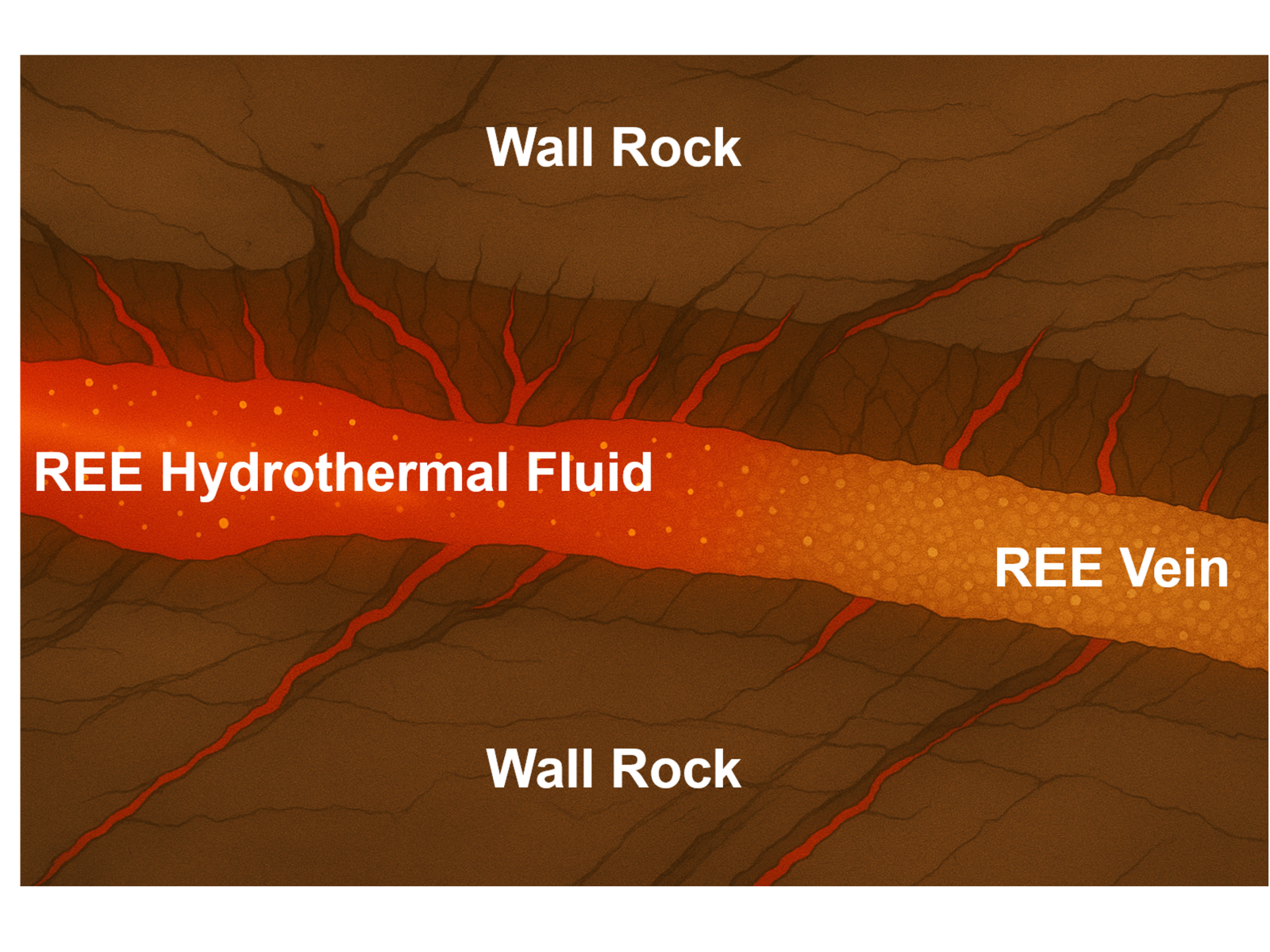 Ytterbium undergoes a temperature-driven transformation in hydrothermal fluid, affecting the formation of rare Earth element ores.(Image by Xiaodong Zhao | Pacific Northwest National Laboratory)
<関連情報>
- https://www.pnnl.gov/publications/molecular-insights-rare-earth-element-transformations-hydrothermal-fluids
- https://www.sciencedirect.com/science/article/abs/pii/S0016703725003643
X線吸収スペクトルに基づく第一原理分子動力学シミュレーションにより得られた知見から、硫酸を含む熱水流体中のYb(III)の種分化に関する分子レベルでの洞察 Molecular insights into Yb(III) speciation in sulfate-bearing hydrothermal fluids from X-ray absorption spectra informed by ab initio molecular dynamics
Xiaodong Zhao, Duo Song, Sebastian T. Mergelsberg, Micah P. Prange, Daria Boglaienko, Zihua Zhu, Zheming Wang, Carolyn I. Pearce, Chengjun Sun, Kevin M. Rosso, Xiaofeng Guo, Xin Zhang
Geochimica et Cosmochimica Acta Available online: 9 July 2025
DOI:https://doi.org/10.1016/j.gca.2025.07.010
Abstract
Rare earth elements (REEs) are critical for advanced technologies, yet in hydrothermal aqueous solutions the molecular level details of their interaction with ligands that control their geochemical transport and deposition remain poorly understood. This study elucidates the coordination behavior of Yb3+ in sulfate-rich hydrothermal fluids using in situ extended X-ray absorption fine structure (EXAFS) spectroscopy and ab initio molecular dynamics (AIMD) simulations. By integrating multi-angle EXAFS with AIMD-derived constraints, we precisely resolve Yb3+ coordination structures and ligand interactions under hydrothermal conditions. At room temperature, Yb3+ is coordinated by five water molecules and two sulfate ligands (coordination number, CN = 8), forming a distorted square antiprism geometry. Increasing temperature induces progressive dehydration, reducing the hydration shell and favoring stronger sulfate complexation. At 200°C, sulfate ligands reorganize around Yb3+, shifting its geometry to a capped octahedron (CN = 7). At 300 °C, sulfate binding dominates, leading to structural reorganization that parallels the onset of sulfate mineral precipitation, consistent with the retrograde solubility of REE sulfates. These findings provide direct molecular-scale evidence that sulfate acts as both a transport and deposition ligand, critically influencing REE mobility in geochemical environments. Our results can also help to refine thermodynamic models of REE speciation in high-temperature hydrothermal fluids and improve our understanding of REE ore formation processes in nature.

