
2025-08-13 インペリアル・カレッジ・ロンドン(ICL)
<関連情報>
- https://www.imperial.ac.uk/news/267393/signs-recent-life-mars-could-detected/
- https://www.nature.com/articles/s44453-025-00006-9
完全な極性脂質は、生存可能な地球外生命の有機バイオマーカーとして機能する Intact polar lipids as organic biomarkers of viable extraterrestrial life
Solomon Hirsch & Mark A. Sephton
npj Space Exploration Published:13 August 2025
DOI:https://doi.org/10.1038/s44453-025-00006-9
Abstract
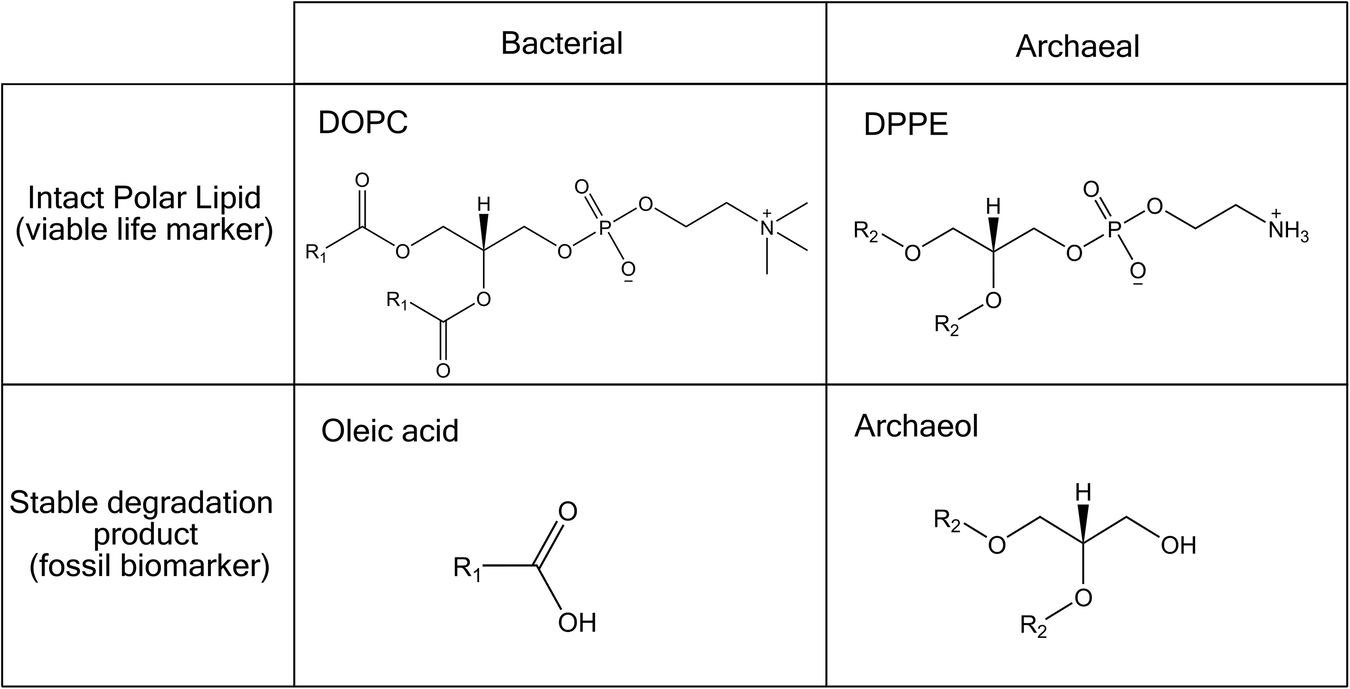
The detection of viable life is a key objective for both in situ astrobiological experiments on extraterrestrial bodies, and for planetary protection protocols on Earth following sample return. We evaluated the potential for common bacterial and archaeal intact polar lipids (IPLs) to be used as viable life markers owing to their particularly fast rate (hours to days) of post-mortem degradation. We determined the chemical signatures of IPLs using pyrolysis-gas chromatography-mass spectrometry experiments (with and without derivatisation), to simulate the results of in situ pyrolytic organic analyses. Monoglycerides, formed as pyrolysis products of typical bacterial IPLs, were the strongest signature for the parent compounds, and were identified in both the pyrolysis of a phospholipid mixture and freeze-dried bacterial culture. Our results demonstrate that relatively rapid and elegant pyrolysis techniques can reveal the presence of IPLs, and therefore evidence of viable life in extraterrestrial samples.

