2026-04-02 中国科学院(CAS)
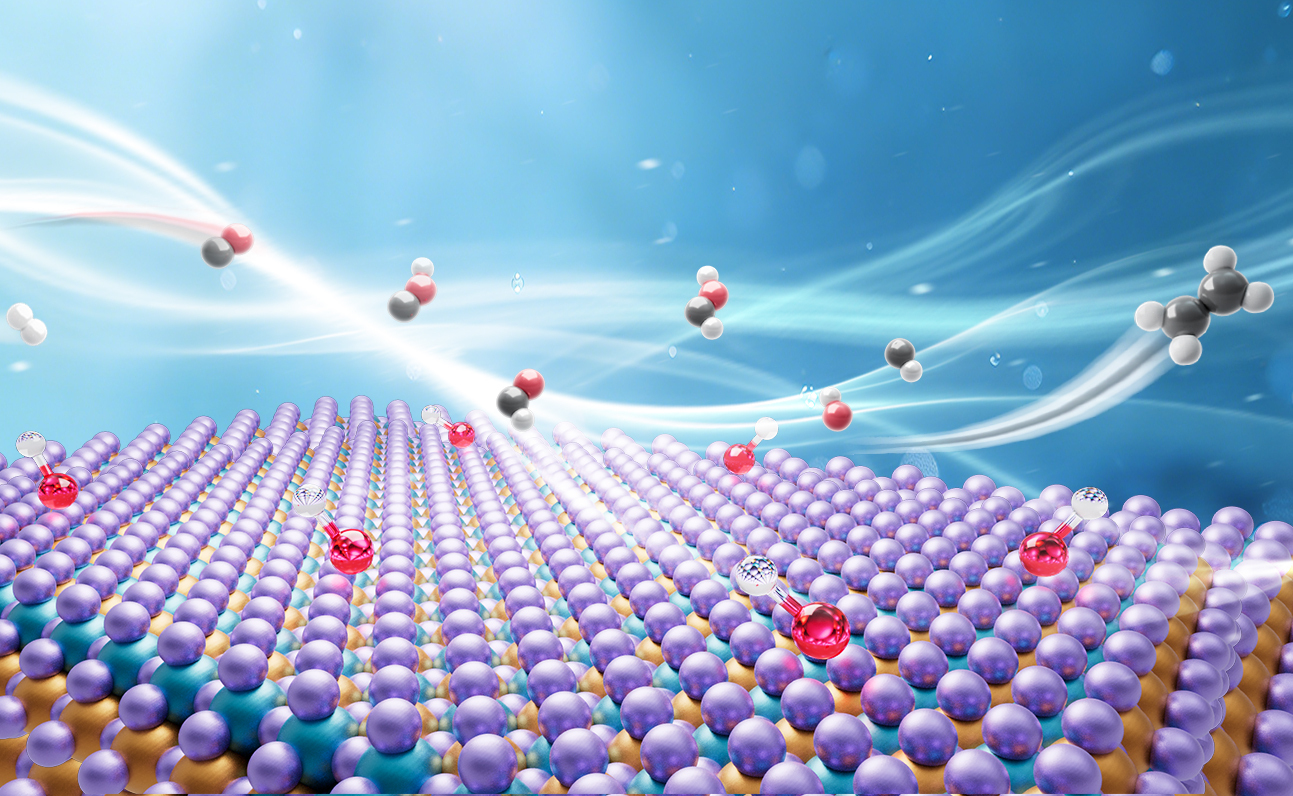
Schematic of hydroxy-induced oxides for syngas to light olefins. (Image by DICP)
<関連情報>
- https://english.cas.cn/newsroom/research-news/202603/t20260327_1154060.shtml
- https://www.nature.com/articles/s41586-026-10204-4
合成ガスから軽質オレフィンへの変換のための水酸化物誘起コバルト酸化物 Hydroxy-induced cobalt oxides for syngas to light olefins
Yu Han,Jiafeng Yu,Jian Wei,Chuanyan Fang,Jianxiang Han,Yannan Sun,Huaican Chen,Wen Yin,Li Tan,Ning Wang,Qingjie Ge & Jian Sun
Nature Published:01 April 2026
DOI:https://doi.org/10.1038/s41586-026-10204-4
Abstract
Light olefins—ethylene, propylene and butylene (C2=–C4=)—are essential building blocks in the chemicals industry and are traditionally produced by thermal or catalytic cracking of hydrocarbon feedstocks. Directly converting syngas (CO and H2) into light olefins under mild conditions is attractive but challenging1,2,3,4. Prismatic cobalt carbide (Co2C) and associated hydrophobic modifications have shown potential for selective light-olefin synthesis under mild conditions5,6. Here we show another hydrophilic-promotion strategy in which a set of hydroxy promoters, exemplified by hydroxyapatite (Ca5(PO4)3(OH), HAP), fumed silica (SiO2(F)) and amorphous boehmite (AlO(OH), AB), is physically mixed with a Co2MnO4 precursor, inducing synergistic cobalt–manganese (Co–Mn) oxides and Co2C for syngas conversion. The induced anorthic Co–Mn oxides may serve as active phase for adsorbed-hydrogen-assisted CO dissociation to CHx/CHxO intermediates, whereas induced Co2C or the Co2C–oxide interface may mediate C–C coupling of these intermediates to form light olefins. This design achieved 70–82% CO conversion with light-olefins selectivity of more than 60% at 250–260 °C, 0.1 MPa with H2/CO ratios of 1–2, giving light-olefins carbon utilization efficiency up to 13%, among the highest reported for syngas to light olefins. This simple hydrophilic strategy for facilitating CO activation may provide useful insights for improving industrial Fischer–Tropsch processes.