2026-03-24 チャルマース工科大学
<関連情報>
- https://news.cision.com/chalmers/r/the-food-commodities-driving-deforestation-globally,c4324932
- https://www.nature.com/articles/s43016-026-01305-4
商品需要に起因する森林破壊とそれに伴う炭素排出量の世界的なパターン Global patterns of commodity-driven deforestation and associated carbon emissions
Chandrakant Singh & U. Martin Persson
Nature Food Published:23 February 2026
DOI:https://doi.org/10.1038/s43016-026-01305-4
Abstract
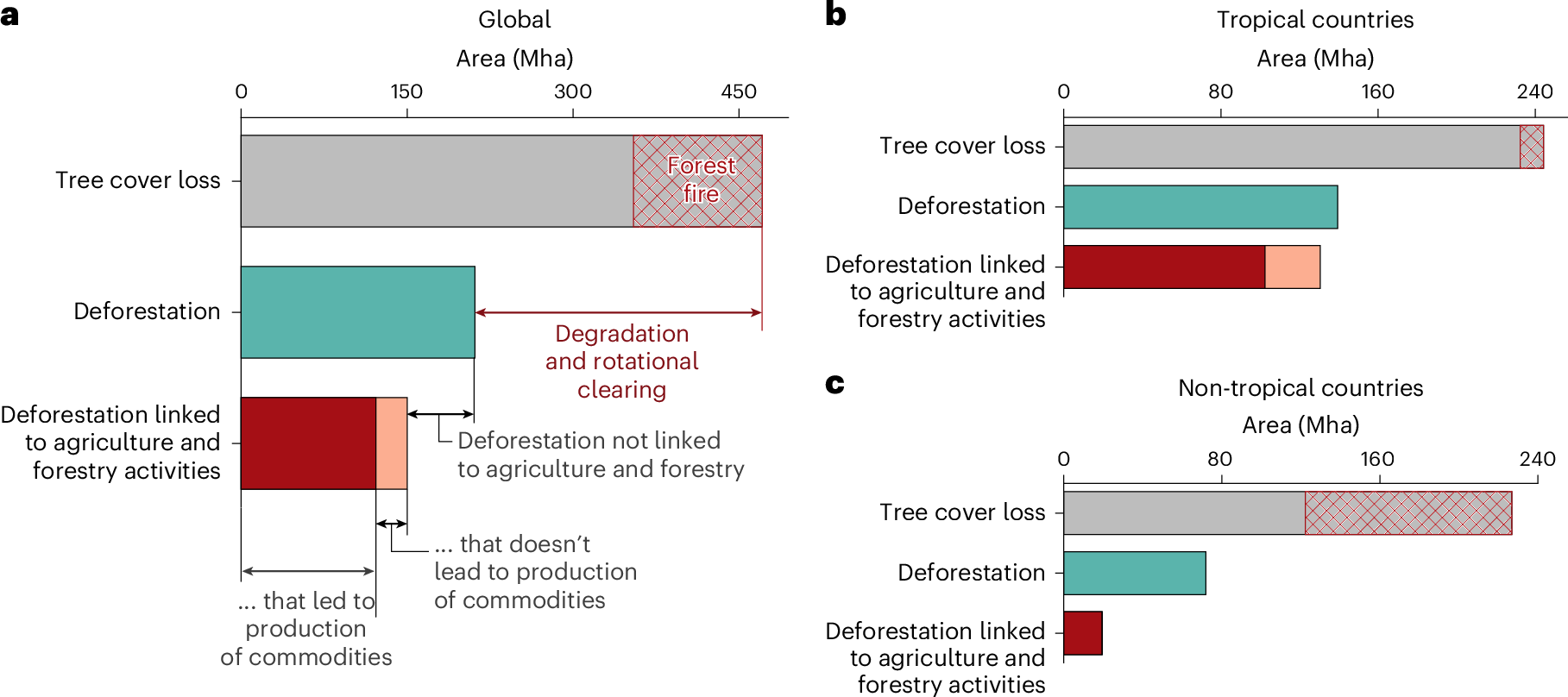
Rapid agriculture-driven deforestation poses considerable challenges to achieving climate and biodiversity targets. However, the limited scope and comprehensiveness of the datasets available for linking deforestation to food production restrict their effectiveness in supporting forest conservation and climate change mitigation efforts. By integrating the best available spatial and statistical datasets, our deforestation attribution framework (DeDuCE) provides a detailed quantification of deforestation associated with the production of agricultural and forestry commodities. DeDuCE reports 9,332 unique country–commodity deforestation–carbon footprints across 179 countries and 184 commodities annually from 2001 to 2022. Our findings indicate that while global efforts to curb deforestation appropriately focus on cattle meat, oil palm, rubber, soya, cocoa and coffee, global monitoring efforts have largely overlooked staple crops such as rice, maize and cassava. Given their substantial contribution to deforestation and carbon emissions, balancing food security with forest and climate conservation will require greater attention to these crops.