2026-03-18 スウェーデン王立工科大学(KTH)
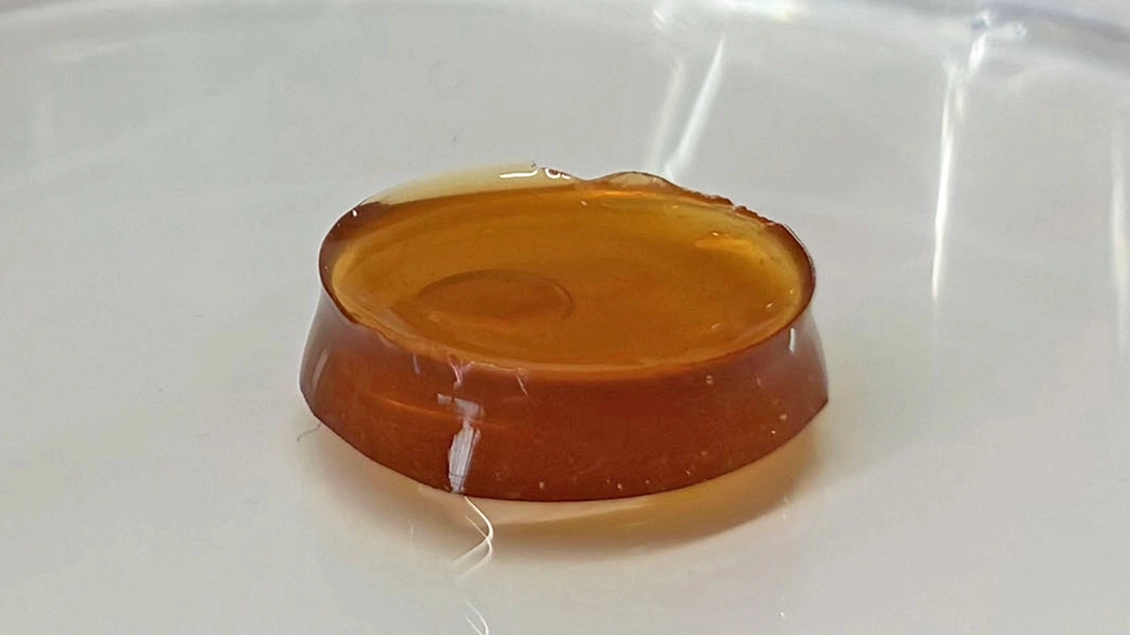
The study marks the first time wheat gluten protein—rather than animal-based protein—has been successfully incorporated into bran-based hydrogels (pictured). Photo: David Callahan
<関連情報>
- https://www.kth.se/en/om/nyheter/centrala-nyheter/research-shows-fiber-and-protein-rich-food-gels-can-be-entirely-plant-based-1.1463506
- https://www.sciencedirect.com/science/article/pii/S0268005X25008902?via%3Dihub
酵素酸化と再生によりレオロジー特性を調整可能なアラビノキシラン-グルテンヒドロゲル Arabinoxylan-gluten hydrogels with tunable rheological properties via enzymatic oxidation and regeneration
Niklas Wahlström, Marjorie Ladd Parada, Secil Yilmaz-Turan, Pramod Sivan, Mikael S. Hedenqvist, Francisco Vilaplana
Food Hydrocolloids Available online: 3 September 2025
DOI:https://doi.org/10.1016/j.foodhyd.2025.111930
Highlights
- Preparation of wheat arabinoxylan-gluten hydrogels via enzymatic crosslinking.
- Tunable rheological properties through protein content and regeneration.
- Gluten fractions do not seem to participate in the enzymatic crosslinking.
- Gluten impacts the physical interactions of AX populations through phase separation.
Abstract
Side streams from wheat processing, such as the bran and gluten fractions, show great potential as a feedstock for the production of novel food ingredients and materials. In this study, we prepared hybrid polysaccharide-protein hydrogels via enzymatic crosslinking of wheat bran arabinoxylan and gluten fractions. Arabinoxylan was first isolated from wheat bran via subcritical water extraction, which preserved the covalently bound ferulic acid moieties to the arabinoxylan core amenable for laccase crosslinking. Gluten was fractionated into its main protein components (glutenin and gliadin) via treatment with aqueous ethanol. Hydrogels with different contents of arabinoxylan and gluten were prepared, demonstrating the integration of the protein fractions within the polysaccharide gel network. Increased addition of gluten led to gradually softer hydrogels, suggesting that the gluten fractions were not involved in the covalent crosslinking with the ferulic acid moieties to any noticeable level. Freeze-drying and regeneration of the hydrogels led to a 3-fold–10-fold increase in the storage and loss moduli, depending on the sample. Analysis of the structure of the hydrogels revealed that the addition of gluten upon enzymatic crosslinking impacted the physical interactions and crystallinity of the arabinoxylan populations, resulting in phase separation of the protein and polysaccharide components. This study demonstrates that tunable hydrogels can be prepared from cereal side streams, with potential as functional plant-based food hydrocolloids with improved nutritional properties, combining dietary fibre and protein components.