2026-03-13 中国科学院(CAS)
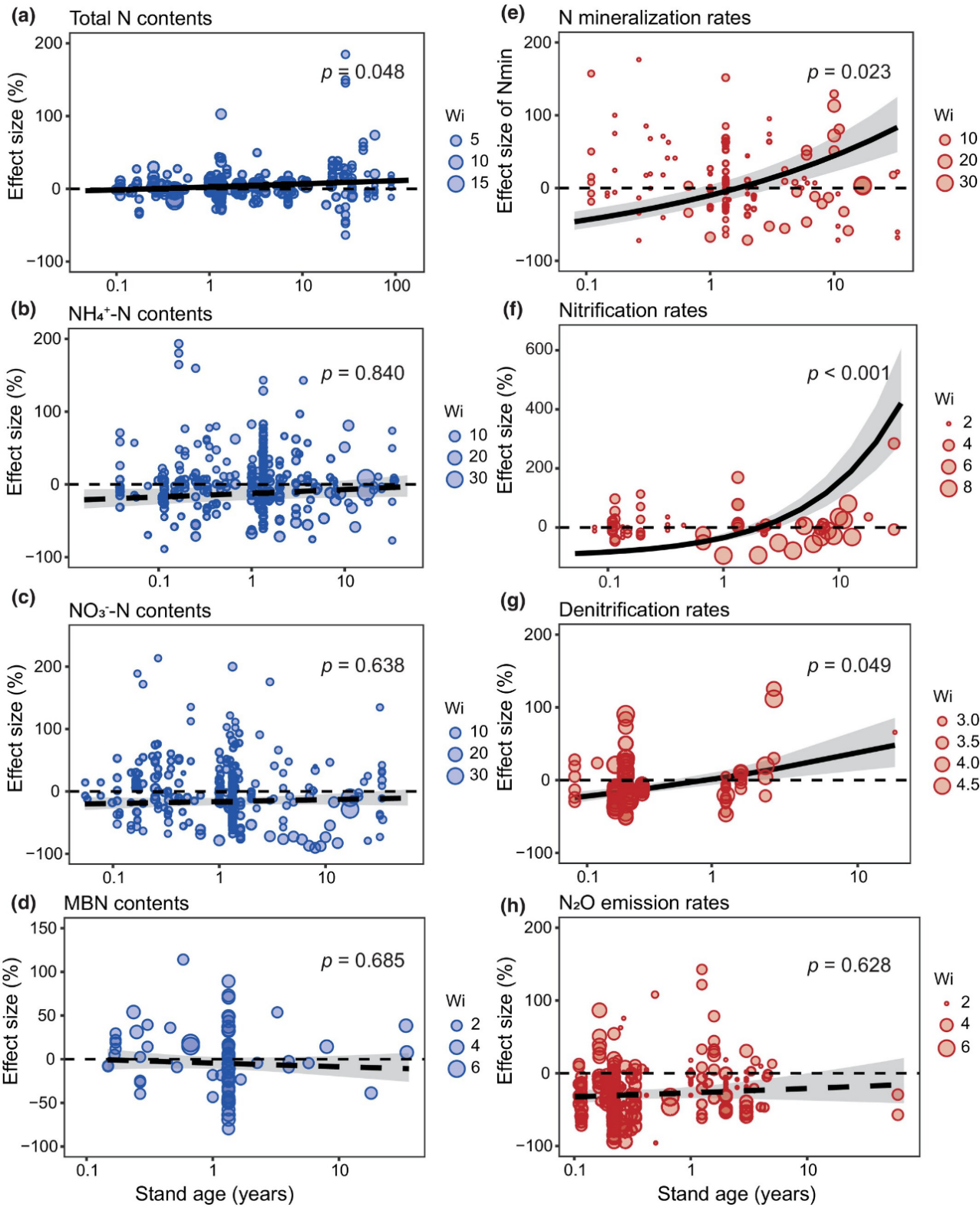
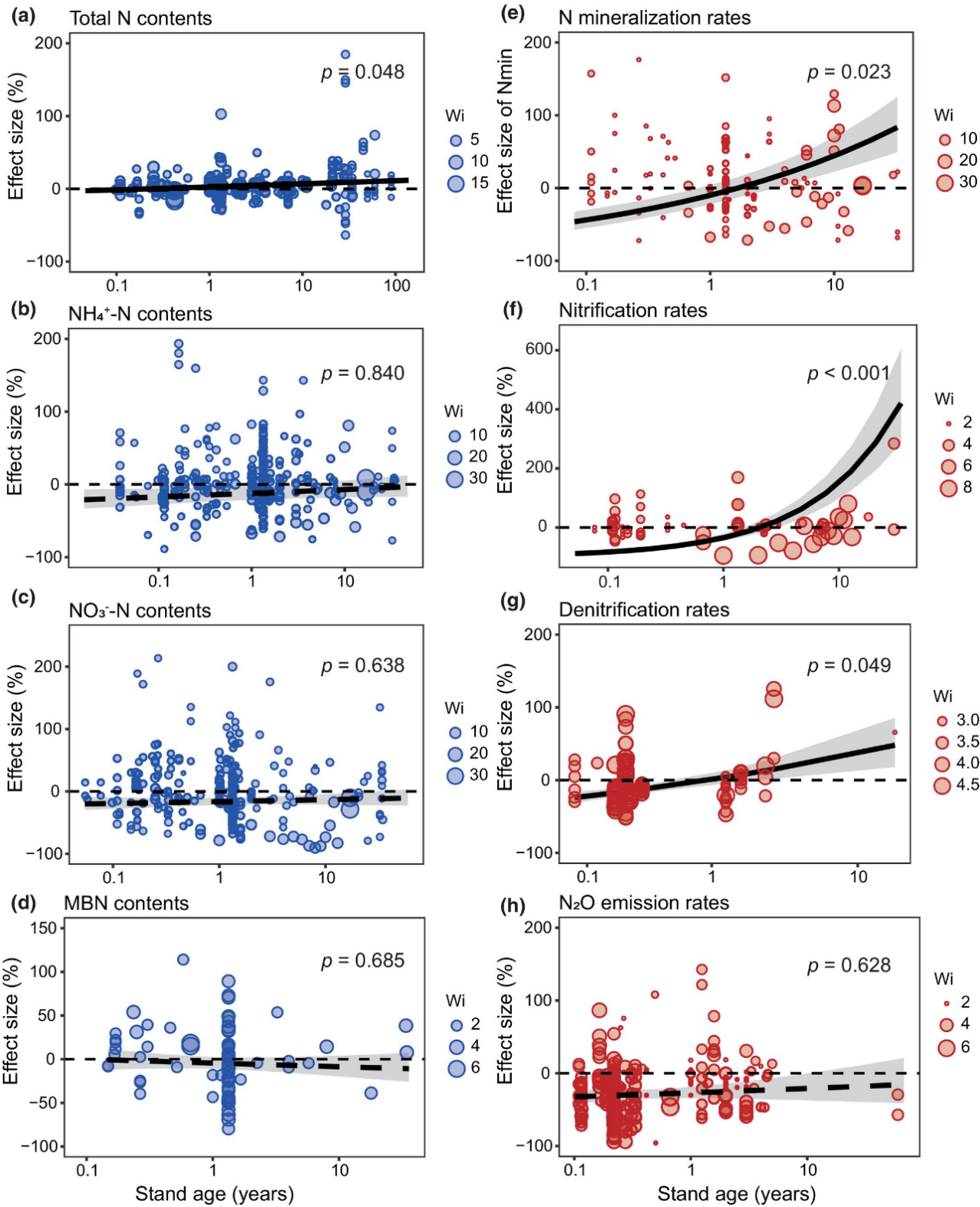
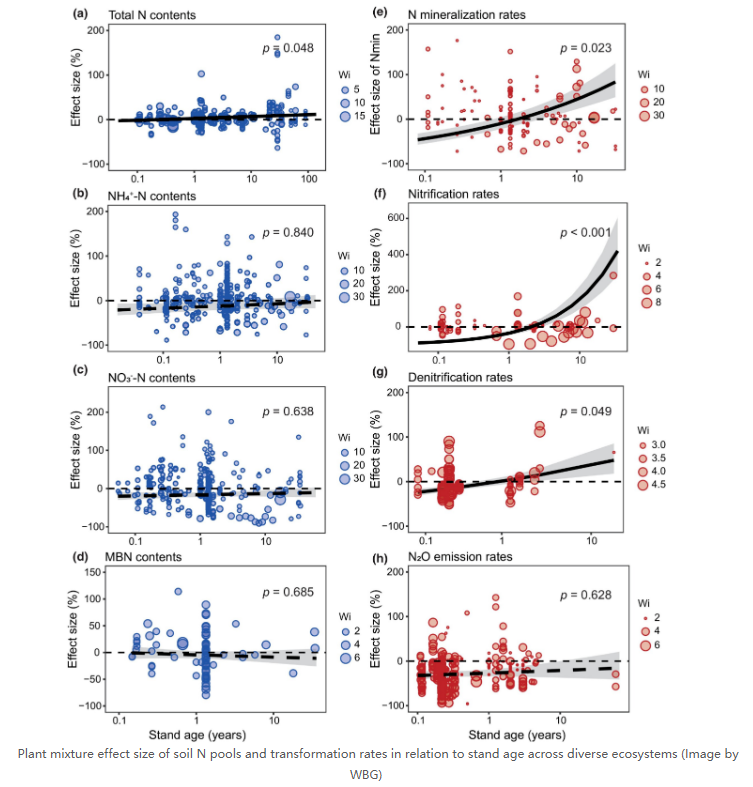
中国科学院武漢植物園の水圏生態系プロセス研究グループは、植物多様性が土壌窒素循環に与える影響を明らかにするため、世界の陸上生態系の研究データを統合したメタ分析を実施した。混植と単一栽培の比較データを用いた分析の結果、植物混合群集は土壌窒素量および窒素変換過程(鉱化、硝化、脱窒)に強い影響を与え、その効果は時間の経過とともに負から正へと変化することが分かった。一方で、土壌中の硝酸態窒素(NO3⁻-N)含有量と温室効果ガスであるN₂O排出量は一貫して減少する傾向が示された。これらの結果は、植物多様性の維持が土壌窒素循環の持続性を高め、N₂O排出削減を通じて気候変動リスクの緩和に寄与する可能性を示している。
<関連情報>
世界の陸上生態系における植物多様性に対する土壌窒素循環応答の時間的変化 Temporal shifts in soil nitrogen cycling responses to plant diversity across global terrestrial ecosystems
Miaomiao Cai, Caifang Zhang, Han Y. H. Chen, Caroline N. Ndungu, Daoliang Shi, Wenzhi Liu
Journal of Applied Ecology Published: 15 February 2026
DOI:https://doi.org/10.1111/1365-2664.70310
Abstract
- Nitrogen (N) is essential to all life on Earth. Despite ongoing biodiversity loss, the influence of plant diversity on soil N cycling over time remains uncertain, which limits our ability to predict terrestrial N pools and transformations globally.
- To determine the long-term effects of plant diversity on soil N pools and N transformations, we conducted a global synthesis using 2129 paired observations of plant mixtures and corresponding monocultures from 135 studies across 32 countries.
- On average, plant mixtures have 3.1% higher soil total N content than monocultures, but 7.7% to 31.6% lower soil ammonium content, nitrate content and rates of soil N mineralization, nitrification, denitrification and N2O emissions. Notably, the effects of plant mixtures on soil total N content and rates of N mineralization, nitrification and denitrification shift rapidly over time from negative to positive. However, their effects on soil nitrate content and N2O emissions are consistently negative. Furthermore, these plant mixture effects remain consistent across ecosystems.
- Synthesis and applications. These findings suggest that conserving and restoring plant diversity can enhance long-term N transformation rates and total soil N content, while reducing N2O emissions, collectively promoting soil N cycling sustainability and mitigating climate change-related risks.