2026-01-28 ペンシルベニア州立大学(Penn State)
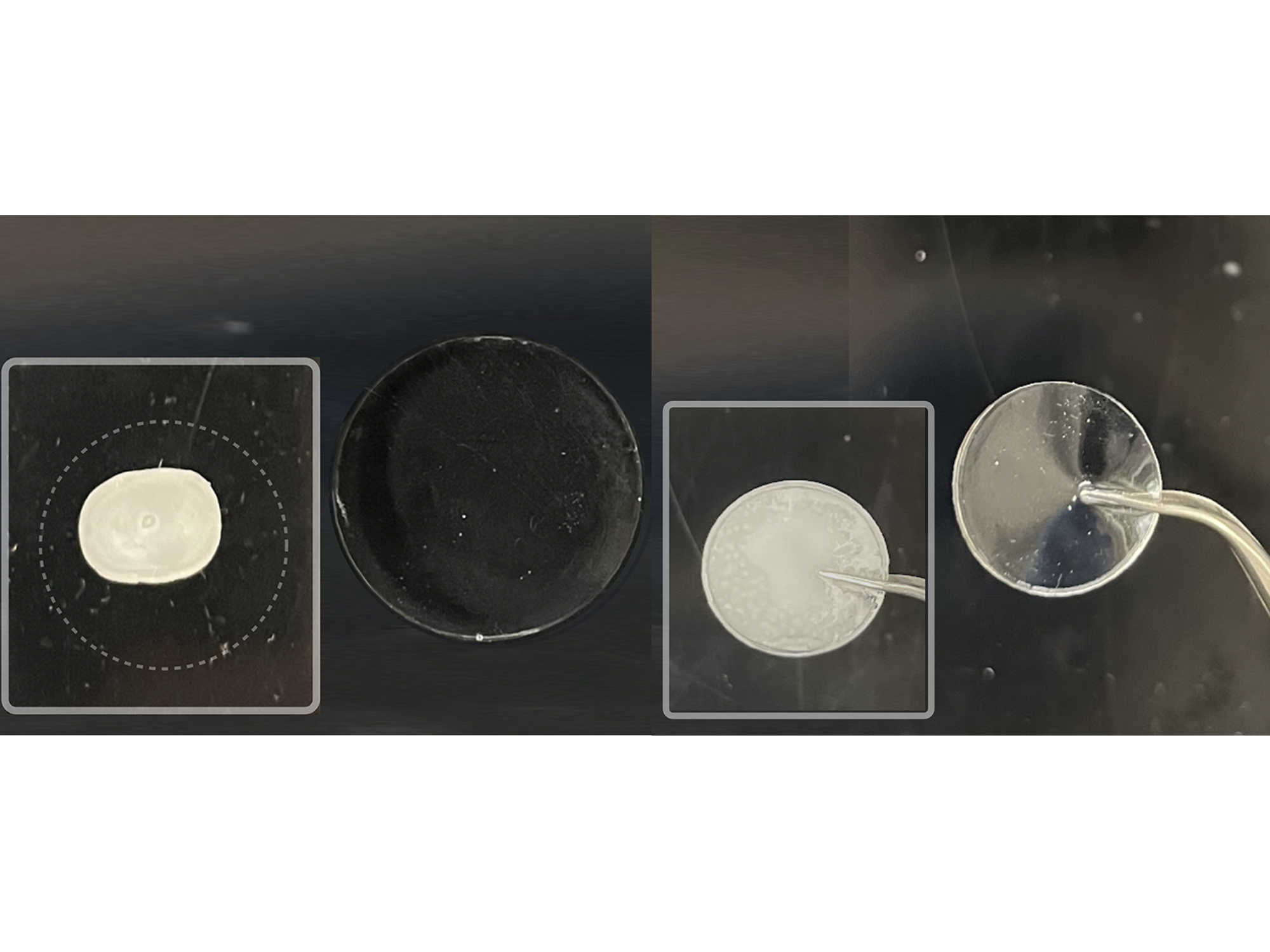
A hydrogel solution using the traditional chemical makeup (left) dehydrates after exposed to air for five days, while the team’s adjusted hydrogel (right) remains hydrated. The figure to the right demonstrates how traditional hydrogel (left) freezes solid in low temperatures, while the team’s adjusted hydrogel (right) remains unfrozen. Credit: Provided by Dor Tillinger. All Rights Reserved.
<関連情報>
- https://www.psu.edu/news/research/story/electric-eel-biology-inspires-powerful-gel-battery
- https://advanced.onlinelibrary.wiley.com/doi/10.1002/advs.202519348
電気魚に着想を得た薄型ハイドロゲル発電細胞が高出力密度と耐環境性を実現 Electric-Fish-Inspired Thin Hydrogel Electrocytes Achieve High Power Density and Environmental Robustness
Dor Tillinger, Wonbae Lee, Haley M. Tholen, Derek M. Hall, Joseph S. Najem
Advanced Science Published: 07 December 2025
DOI:https://doi.org/10.1002/advs.202519348
Abstract
Electric-fish-inspired hydrogel-based power sources offer a promising platform for powering soft, wearable, and implantable electronics due to their compliance, biocompatibility, and biodegradability. They typically consist of high- and low-salinity gel layers separated by anion- and cation-selective gel compartments, generating an electric potential that emulates the diffusion-based energy mechanisms of electrocytes in electric fish. However, their development has been hindered by high internal resistance, limited power density, and poor environmental stability. Here, a scalable layer-by-layer spin-coating strategy is introduced to fabricate hydrogel electrocytes with precise thickness control, yielding 106.1 µm-thick units comparable to biological electrocytes. This thin architecture significantly reduces resistance and enables high instantaneous power density (44.0 kW m−3) with low area-normalized resistance (2.0 × 10⁻³ Ω m2.). By tailoring the hydrogel composition with a glycerol–carboxylated chitosan mixture, long-term hydration (>98.7% after 120 h at 60% RH) and antifreezing performance down to −80 °C are achieved without encapsulation. Furthermore, varying layer thickness provides tunable energy density, while integration of PEDOT:PSS hydrogel electrodes preserves material compliance and yields robust, ready-to-use power systems. These advances overcome critical barriers in hydrogel-based energy storage, establishing a versatile, scalable pathway toward stable, bioinspired power sources for next-generation wearable, implantable, and autonomous devices.