2025-12-12 カリフォルニア大学サンタバーバラ校(UCSB)
<関連情報>
- https://news.ucsb.edu/2025/022288/global-measure-underestimates-severity-food-insecurity
- https://www.nature.com/articles/s43016-025-01267-z
世界の食糧不安に関する公式推定では、深刻な飢餓が過小評価されている Official estimates of global food insecurity undercount acute hunger
Erin Lentz,Kathy Baylis,Hope Michelson & Chungmann Kim
Nature Food Published:12 December 2025
DOI:https://doi.org/10.1038/s43016-025-01267-z
Abstract
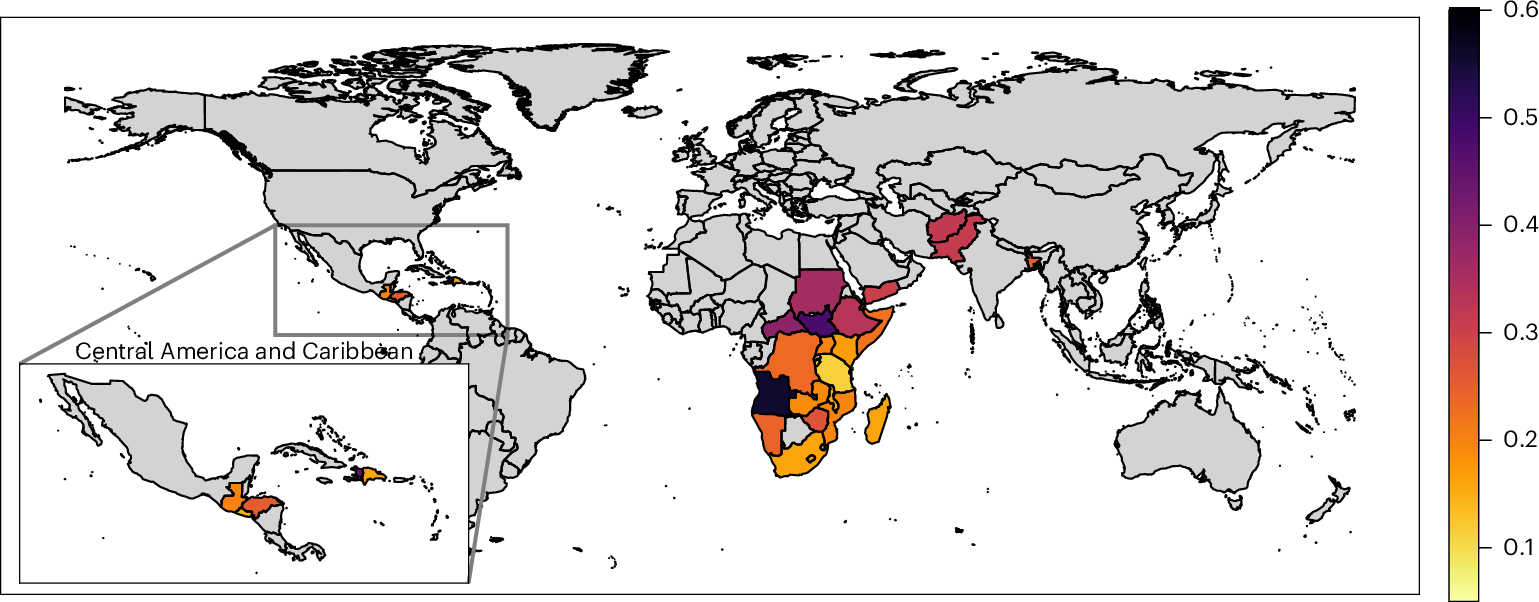
The Integrated Food Security Phase Classification (IPC) system is the official global method for classifying food insecurity. As of 2023, international agencies and governments use IPC analyses to allocate more than US$6 billion of humanitarian assistance annually. Here we evaluate data from approximately 1 billion people in more than 10,000 IPC subnational analyses conducted between 2017 and 2023. We find that IPC estimates understate the extent and severity of crises. Our primary estimates indicate that IPC subnational analyses underestimate the number of acutely hungry people in the world, missing approximately one in five. We find evidence of under-classification around the IPC threshold that determines whether an area is classified as ‘stressed’ or ‘in crisis’—a threshold meant to trigger deployment of humanitarian resources. Contrary to widely held assumptions, our findings suggest that IPC analyses are conservative; the prevalence and severity of acute hunger is probably considerably higher than global estimates indicate.